2026 Best Granite Support Blocks for Global Buyers
Choosing the 2026 best granite support blocks requires more than comparing prices or polished photographs. Global buyers need stable materials, accurate dimensions, reliable packaging, and suppliers who communicate clearly.
Granite support blocks help distribute weight beneath machinery, structural components, monuments, and heavy equipment. Their performance depends on stone density, surface flatness, compressive strength, and resistance to moisture. A block that looks flawless may still have hidden cracks or uneven bearing surfaces. Request test reports, dimensional tolerances, quarry details, and recent production photographs before ordering. Small details matter.
Packaging matters too.
Long-distance shipments may face vibration, humidity, rough handling, and temperature changes. Strong wooden crates, corner protection, moisture barriers, and clear labeling can reduce avoidable damage. Buyers should also confirm block dimensions, custom cutting options, inspection procedures, and replacement policies. Regional standards and project requirements can differ, so one specification may not suit every market.
There is no universal best choice. That deserves attention. A dense black granite may suit demanding industrial applications, while a lighter stone may offer better visual consistency for architectural projects. Some suppliers advertise exceptional strength without explaining testing conditions. That is a warning sign, though not always proof of poor quality. Experienced buyers compare evidence, not promises.
This guide examines material quality, supplier reliability, customization, logistics, and total landed cost. It also considers practical buying mistakes, including unclear drawings, weak packaging instructions, and overlooked installation conditions. The goal is simple: help global purchasers select granite support blocks with greater confidence, while recognizing that careful verification remains essential.
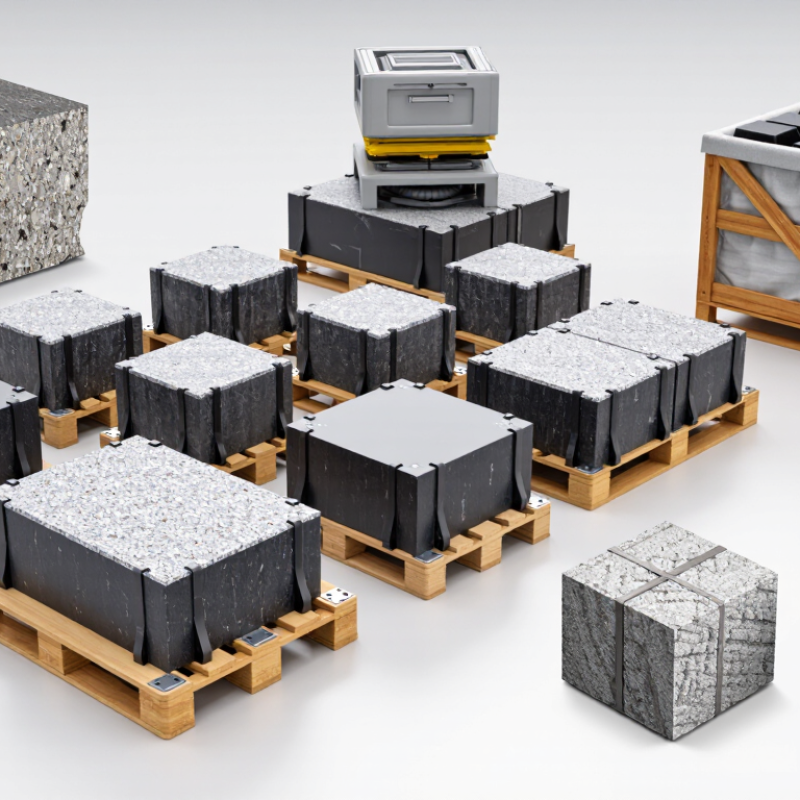
What Granite Support Blocks Are and How They Work
Granite support blocks are compact stone or engineered units placed beneath granite slabs, steps, sills, and heavy countertop sections. They transfer weight toward the cabinet, wall, or foundation below. Unlike decorative pieces, their main purpose is stability. They are not decorative.
A support block usually works by creating a firm contact point under a vulnerable area, such as a long overhang or a joint. Installers check the block’s height, bearing surface, alignment, and condition before setting the granite. A small height error can create pressure on one corner. Fit matters. The supporting surface should be clean, dry, and free from loose material. Cracks, uneven edges, or trapped debris may reduce performance over time.
In practical installations, blocks can help limit flexing when people lean against a counter or place heavy equipment nearby. However, they cannot correct weak cabinets or poor wall construction. The required size and spacing depend on the slab thickness, load, span, and installation layout. Local building requirements may also apply. I have found that extra support is often safer than a visually cleaner gap, although too many blocks can complicate leveling and drainage. That trade-off deserves careful review. Buyers should request clear dimensions, load guidance, material information, and inspection records. A reliable supplier should explain limitations instead of promising universal performance.
How to Evaluate Strength, Durability, and Surface Quality
For global buyers, granite support blocks must meet more than a pleasing visual standard.
They must carry loads safely over time. Do not trust appearance alone. Ask for compressive strength results from a qualified, independent laboratory. Confirm the sample size, test method, and testing date. Compare results with the project’s actual load requirements.
A strong block can still fail if corners are chipped or dimensions vary. Measure several pieces, not just one.
Durability begins with stone selection and manufacturing control. Dense granite usually resists abrasion, moisture, and temperature changes well. Yet quarry variation matters. Check water absorption, open pores, mineral seams, and repaired areas. Ask for freeze-thaw performance when blocks will face cold climates.
Coastal or industrial locations may also expose stone to salt and polluted moisture. These checks are not optional. Packaging deserves attention too, because hidden edge damage can appear after long-distance transport.
Surface quality affects stability and installation accuracy.
Measure flatness with a straightedge and feeler gauge. Look for rocking, uneven grinding, and raised mineral grains. A polished face may look excellent but can reduce grip in some applications. A lightly textured finish may provide better contact, depending on the design.
Confirm dimensions, edge chamfers, and corner tolerances in writing. I would also inspect a random batch before shipment, although this method cannot reveal every internal weakness. Small flaws deserve documented review rather than quick acceptance. Reliable records help buyers question inconsistent results and improve future orders.
Global Sourcing Standards, Certifications, and Import Requirements
For global buyers, granite support blocks should be sourced against documented performance, not appearance alone. The ISO Survey 2022 recorded 1,265,216 ISO 9001 certificates worldwide, showing how common quality systems have become. However, a certificate alone is not proof. Ask for recent batch records, compressive-strength results, dimensional tolerances, and photographs of pallet loading.
Import compliance depends on the destination and product classification. Buyers should confirm the correct HS code, commercial invoice, packing list, country-of-origin statement, and transport documents before shipment. The World Customs Organization recommends accurate classification because duties and inspection rules depend on it. For stone products, some markets may also request safety data, fumigation evidence for wooden packaging, or declarations confirming legal extraction. Check the destination authority directly. Rules change.
In practical inspections, measure block length, width, and height at several points. Uneven edges can create unstable contact under heavy granite slabs. Request a test report from an accredited laboratory, preferably to ISO/IEC 17025 requirements. ISO 45001 and ISO 14001 can strengthen supplier evaluation, but they do not replace product testing. I would also verify quarry origin and traceability documents. This step is often skipped. It should not be. A small crack may remain invisible during loading, then widen after vibration, moisture, and repeated pressure during international transport. Suppliers sometimes provide excellent paperwork but weak packaging. That is an uncomfortable gap worth testing.
Selecting the Best Supplier for Price, Delivery, and Long-Term Value
For global buyers, choosing granite support blocks starts with the supplier, not the lowest quotation. A cheap unit price can hide cutting waste, port charges, weak packaging, or costly delays. Experienced suppliers should provide clear details on dimensions, tolerance, density, surface finish, and load capacity. Ask for recent production photos and a small sample before approving a large order.
Delivery reliability matters just as much. A supplier should explain the production schedule, inspection date, packing method, and shipping terms in writing. Strong wooden crates, corner protection, and moisture control can reduce damage during long sea transport. Request carton or pallet dimensions early. They affect freight calculations. A supplier who answers slowly during sampling may create larger problems after payment. That concern deserves attention.
Long-term value also depends on consistency. Compare test results from different production batches, not one perfect sample. Third-party inspection can verify size, cracks, color variation, and quantity before loading. I once focused too heavily on the purchase price and underestimated replacement freight. That mistake changed my evaluation method. Now I compare total landed cost, delivery performance, communication quality, and after-sales support. Some suppliers promise very short lead times, but unrealistic speed can signal rushed finishing or poor quality control. Honest limits are more useful than impressive promises. The best choice may cost slightly more, yet provide stable specifications, fewer claims, and predictable planning across future projects.
2026 Best Granite Support Blocks for Global Buyers
Selecting the best supplier requires balancing delivered cost, delivery reliability, technical quality, and long-term value.
The chart presents a practical procurement weighting model for international granite support block purchases. Total landed cost and delivery performance are prioritized, while compressive strength, dimensional consistency, documentation, and after-sales support help reduce installation risk and lifecycle cost.