2026 Top Botanical Garden Light Show Manufacturers
A botanical garden light show must do more than brighten a path. It has to work around living plants, uneven ground, changing weather, and visitors moving at different speeds. For 2026, this guide examines manufacturers through practical criteria: lighting quality, installation flexibility, weather resistance, energy use, maintenance support, and experience with outdoor displays. A supplier’s portfolio matters, but so do the details behind it. Can fixtures be aimed away from delicate foliage? Are cables and control systems planned for long garden routes? Small oversights can spoil a beautiful scene.
Light artist Bruce Munro, known for immersive outdoor installations, has described his creative aim this way: “I like the idea of taking something familiar and making it unfamiliar.” That idea suits a botanical garden light show: a familiar tree can feel new when carefully lit, while a glowing pond can become the evening’s quiet focal point. Yet spectacle is not the only measure. A display may photograph beautifully and still create glare, crowd bottlenecks, or difficult maintenance. Some trade-offs are easy to miss on a proposal.
The manufacturers featured here are considered for design capability, technical execution, customization, and project support—not just dramatic renderings. The right partner should explain how a concept will fit the garden’s landscape and operational needs. Ask for comparable project examples, clear specifications, and a realistic maintenance plan. Then visit a live installation, if possible. Nighttime tells the truth.
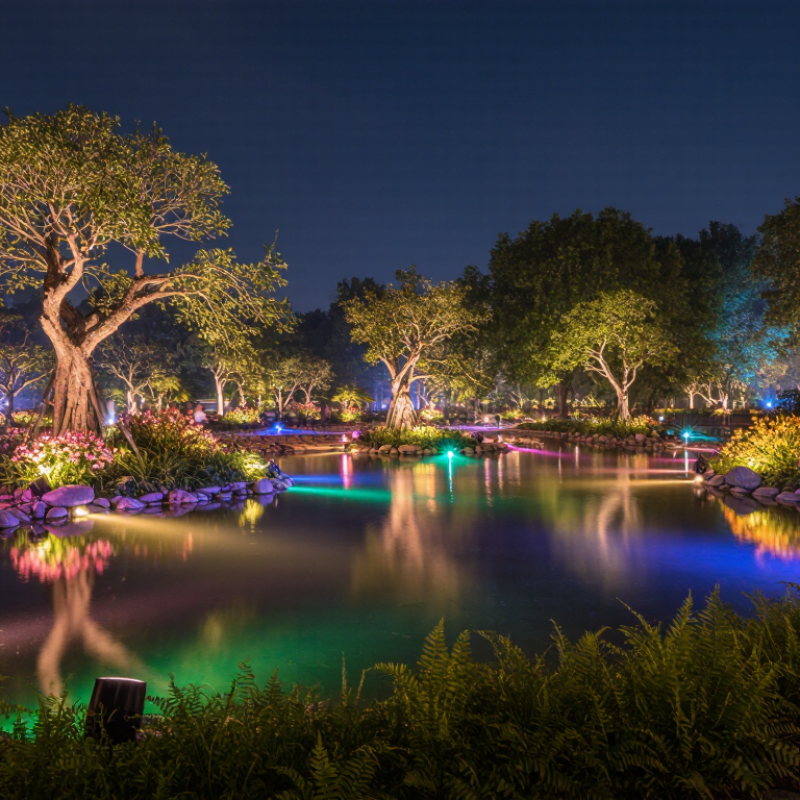
Botanical Garden Light Shows: Scope, Seasons, and Exhibit Types
2026 Top Botanical Garden Light Show Manufacturers
Botanical Garden Light Shows: Scope, Seasons, and Exhibit Types
A botanical garden light show can range from a few illuminated paths to a site-wide evening experience. The right scope depends on garden size, visitor routes, power access, and plant sensitivity. Seasonal timing matters, too. Winter displays can use bare branches and early sunsets, while spring shows should avoid disrupting fresh growth. Summer events need careful planning around heat, rain, and later closing times. A schedule that works in one season may not fit another.
Exhibits may include glowing flower forms, lantern installations, canopy lighting, and gently lit water features. Each type brings different needs. Overhead elements require secure mounting and safe clearance; path lighting should reveal steps without washing out surrounding plants. Check how equipment handles moisture and temperature changes, and confirm that installation plans protect roots and irrigation lines. One detail is easy to misjudge: visitors pause for photos, so narrow paths may feel crowded even when a route looks wide on a plan.
Tips: Walk the site after dark before finalizing placement. Keep paths clear. Test lighting from several viewing angles. Small mock-ups help, though they cannot predict every crowd pattern. Revisit the layout after opening night.
2026 Botanical Garden Light Shows: Exhibit Types and Scope
Illustrative share of featured installations in a sample botanical garden light show.
The example mix highlights a range of visitor experiences, from illuminated tree canopies and walk-through displays to projections, water features, and interactive pieces. Percentages are illustrative planning estimates, not measured industry-wide data.
How Manufacturers Use DMX512’s 512-Channel Universe to Control Displays
A botanical garden light show may place hundreds of glowing fixtures along winding paths, around ponds, and beneath tree canopies. DMX512 gives operators a practical way to control those fixtures in coordinated scenes. ESTA’s ANSI E1.11-2008 (R2018) standard defines a DMX512 data link with up to 512 slots per universe. A basic RGB fixture uses three slots; an RGBW fixture uses four. That means one universe can theoretically address 128 RGBW fixtures, before accounting for extra controls such as dimming or movement.
That is the ceiling, not a sensible design target.
Manufacturers and show designers map each fixture’s starting address, then divide large displays across multiple universes. A controller can send those universes through compatible network nodes to separate garden zones, helping keep a pond’s slow color fades independent from a nearby canopy’s flickering effects. Careful addressing matters. One offset can make several fixtures display the wrong colors.
Installers also need to plan for cable runs, weatherproof connections, and signal distribution; these details are easy to underestimate on a site walk. The ESTA standard provides the technical baseline, but the garden’s layout determines the actual system. Even a well-documented patch can need adjustment after dusk. Some surprises remain.
Outdoor Protection: IEC 60529 IP65 Ratings and L70 Lifetime Data
For a botanical garden light show, IP65 is a useful starting point for outdoor protection. Under IEC 60529, the rating indicates dust-tight construction and resistance to water jets under defined test conditions. It does not mean a fixture can be submerged. That distinction matters. Rain, irrigation spray, and damp pathways can expose weak seals, especially where cables enter the housing.
L70 describes the estimated time until light output falls to 70 percent of its initial level. It does not mark the moment a fixture stops working. Ask whether the figure applies to the complete luminaire or only its LED components. Check the stated ambient temperature, operating current, and test method. Numbers can mislead. A long L70 estimate without its conditions is difficult to compare fairly.
In practice, inspect gaskets, cable glands, and connector covers before installation, then recheck them after seasonal maintenance. A cracked seal may matter more than a strong headline rating. Keep records of fixture locations and operating hours; they help identify dimming patterns over time. Even careful specifications cannot account for every garden’s exposure. Shaded beds, direct spray, and frequent cleaning create different conditions. One detail is easy to overlook: protection depends on the assembled unit, not just its enclosure.
Comparing 2026 Manufacturers by Customization, Compliance, and Capacity
Comparing 2026 botanical garden light-show manufacturers starts with how well each can adapt designs to a real landscape. Ask how they handle narrow paths, mature tree canopies, wet lawns, and quiet zones near wildlife habitats. Request a sample scene or scaled layout showing fixture positions, cable routes, and viewing angles. Small details matter. A warm glow on a trunk can look inviting, while glare across a pond may distract visitors.
Compliance should be checked against the destination’s current electrical, fire-safety, and environmental requirements. Ask for relevant test reports, material specifications, and written installation guidance, not just a general claim of compliance. Confirm whether outdoor components have suitable ingress protection for local weather. Requirements vary by location. Documentation also needs to match the actual equipment supplied; mismatched model numbers are easy to overlook.
Capacity is more than a factory’s stated output. Compare engineering support, prototype timing, spare-parts planning, and the ability to replace a failed fixture during installation. Ask for a realistic production schedule and evidence of quality checks across batches. A large order may fit a manufacturer’s volume, yet still strain its design team. That part is less visible. I would compare proposed schedules with a small pilot area before committing the full garden, while recognizing that pilots cannot reveal every seasonal or site condition.
Procurement Metrics: Power Use, Installation, Maintenance, and Total Cost of Ownership
Build the bid around measured load, not fixture count. Record each circuit’s wattage, nightly operating hours, dimming schedule, and seasonal calendar. The U.S. Department of Energy reports that LED products use at least 75% less energy than incandescent lighting. They can last up to 25 times longer. Treat these as benchmarks, not guarantees for every garden display. At roughly $0.13/kWh, close to the U.S. Energy Information Administration’s 2024 commercial average, a 10-kW display running 360 hours uses about $468 in electricity, before demand charges. Small loads add up.
For procurement, request installation labor hours by zone, lift access, cable lengths, connector counts, and commissioning time. Track maintenance hours per season, replacement-part lead times, and failures. Total cost of ownership should include equipment, freight, installation, energy, repairs, storage, and removal across the planned service life. It is not glamorous. A spreadsheet can still miss wet soil, wind exposure, or hurried cable repairs; use site-specific allowances rather than pretending those risks are predictable.
Tips: Ask for a load schedule and itemized labor estimate. Compare costs across the same operating hours and service period. Measure twice. Then revisit your assumptions after the first season.