2026 Top Mens Rain Coat Manufacturers for Global Buyers
Choosing a reliable Mens Rain Coat manufacturer takes more than comparing prices and product photos. Global buyers need to assess fabric performance, construction quality, production capacity, and communication before placing an order. A jacket may look waterproof on a screen, yet leak where poorly sealed seams meet the shoulders. Small details matter.
This guide introduces manufacturers serving different markets and outlines practical points for evaluating them. Buyers can compare options such as coated polyester, breathable laminates, seam-taping methods, storm flaps, and adjustable cuffs. Ask for recent samples and clear test information, including the conditions behind any waterproof or breathability claims. A specification sheet helps, but it cannot replace checking the garment in person.
Supplier selection also depends on order quantities, customization needs, lead times, and quality-control procedures. Some factories may suit large seasonal programs, while others offer more flexibility for smaller runs. Neither is automatically better. Confirm who manages material sourcing, sample revisions, and inspection before shipment. Request evidence of relevant certifications when they matter to your market, and verify their scope with the issuing organization. This overview is a starting point, not a guarantee of performance. Even an experienced supplier can miss a detail; careful sampling and direct questions reduce uncertainty.
Understanding the 2026 Men’s Rain Coat Manufacturing Market
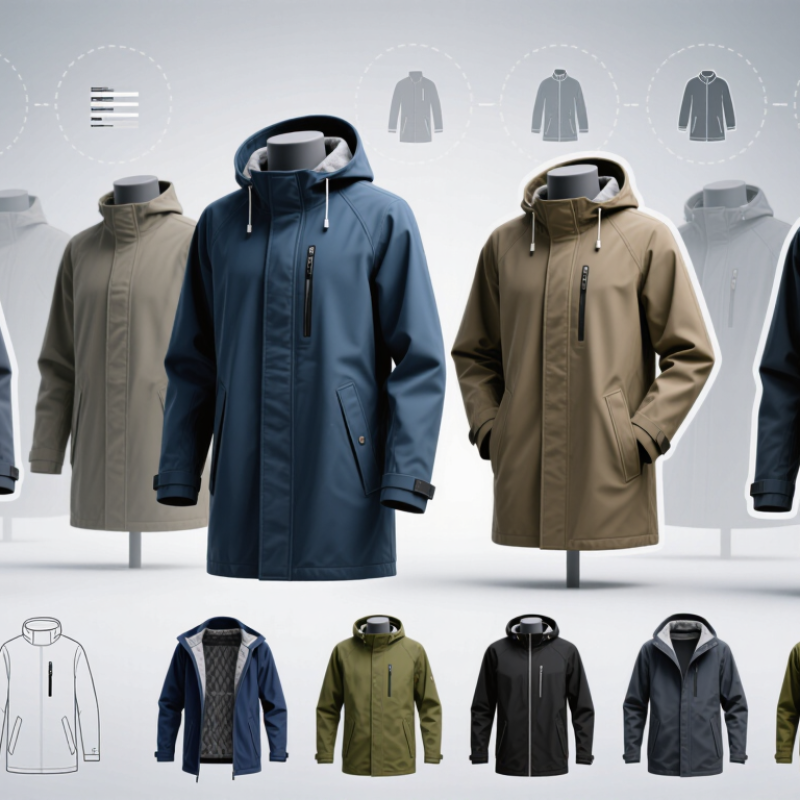
Understanding the 2026 men’s rain coat manufacturing market means looking beyond waterproof labels. Buyers should compare seam sealing, fabric weight, breathability, and performance after repeated washing. A jacket can repel a brief shower yet feel clammy during a long commute. The details matter.
Textile Exchange’s Materials Market Report 2024 estimates global fiber production reached 124 million tonnes in 2023. Polyester accounted for about 57%. This signals broad material availability, not guaranteed recycled content or consistent quality. WMO’s State of the Global Climate 2024 report places 2024 at about 1.55°C above the 1850–1900 average. That figure signals climate pressure, not proof of higher rainwear sales. Manufacturers still need regional weather and sales data. Ask suppliers for fabric test results, production lead times, and clear material specifications. A sample may look convincing under showroom lights. It may perform differently in a cold, windy downpour. That gap deserves attention.
Key Features and Materials Used in Men’s Rain Coats
Men’s rain coats work best when their materials match the conditions they face. A tightly woven nylon or polyester shell helps block wind and shed light rain. Many coats add a polyurethane coating or waterproof membrane for heavier showers. These layers vary in breathability, so a highly waterproof coat may feel clammy during a brisk walk. No shell is perfect.
Check the seams, not just the fabric. Sealed seams help stop water entering through needle holes, especially across the shoulders and hood. A durable water-repellent finish encourages droplets to bead on the surface, but it can wear down with washing and regular use. That is not enough. A sound care label and clear reproofing guidance matter too. Try the hood with a cap, and check whether the cuffs close snugly around your wrists.
Lining and ventilation affect comfort on longer journeys. A mesh lining can keep fabric away from the skin, while underarm vents may release heat during movement. Lightweight coats pack easily, but thin fabrics can feel less reassuring against sharp wind or a loaded backpack strap. Feel the material and inspect the zipper flap before choosing. A spec sheet can make a coat look better than it feels. The best balance depends on local rainfall, activity, and how much warmth you need underneath.
How to Evaluate Manufacturers for Quality and Production Capacity
2026 Top Mens Rain Coat Manufacturers for Global Buyers
How to Evaluate Manufacturers for Quality and Production Capacity
A capable raincoat manufacturer should prove performance, not just present a polished sample. Ask for fabric specifications, seam-sealing details, and recent test results for water resistance and colorfastness. Textile Exchange’s Materials Market Report 2024 estimates that global fiber production reached 124 million tonnes in 2023, with polyester accounting for about 57%. This scale makes material traceability and consistent fabric sourcing important checkpoints. A sample can pass inspection while bulk production varies.
Check production capacity with evidence: current line schedules, monthly output by product type, and records from comparable orders. Request a pre-production sample and inspect taped seams, zipper covers, hood adjustment, and stitching around pocket corners. Agree on measurable acceptance criteria before placing an order. Capacity claims are easy to make. Batch consistency is harder. A tidy factory visit may still fail to reveal seasonal bottlenecks, so verify lead times and quality-control records across more than one production run when possible.
Tips: Ask how defects are recorded and corrected, not only how many inspectors work on the line. Confirm who approves material substitutions. Keep one sealed sample as a reference for bulk checks, and document any compromise in writing. Perfect paperwork is not proof; production evidence matters.
Comparing Manufacturing, Customization, and Sourcing Options
A useful comparison of men’s rain coat manufacturers starts with construction, not catalog photos. Ask what face fabric, coating, and seam-sealing method each factory uses. These choices affect weight, noise, breathability, and protection during steady rain. Request fabric specifications and a sample with finished seams. Details matter. A smooth surface alone does not prove reliable performance.
Customization can range from color and lining changes to pocket placement, hood shape, and branded trims. Confirm which options use existing materials and which require new development. The difference can affect sampling time, minimum order quantities, and cost. Ask for a size set, measurement chart, and clear tolerance ranges. Small fit issues matter. A hood that blocks side vision, for example, may look fine on a product sheet but feel awkward outdoors.
Sourcing options also deserve close comparison. Some manufacturers handle fabric procurement, pattern development, and packing; others expect buyers to coordinate parts of the process. Request a written timeline covering samples, revisions, production, and inspection. Ask how defects are recorded and corrected, rather than relying on broad quality promises. Not always. A lower quoted price may exclude testing, packaging, or shipping preparation, so compare complete cost breakdowns. Keep room for uncertainty: sample approval reduces risk, but it cannot guarantee every unit will match perfectly.
2026 Raincoat Sourcing Benchmark: EN 343 Water Penetration Classes
A technical reference for global buyers comparing rainwear manufacturing specifications.
Bars show the minimum water-penetration resistance thresholds for EN 343:2019 classes, expressed as millimetres of water column. These are standard performance thresholds, not test results or ratings for any manufacturer. When evaluating customization and sourcing options, request current test reports for the specific fabric and finished garment.
Global Buyer Checklist for Selecting a Reliable Supplier
A reliable raincoat supplier should prove performance, not just describe it. Ask for fabric-level results from ISO 811 hydrostatic-pressure testing and garment-level rain testing, such as AATCC TM35. Request the test date, laboratory, fabric batch, and pass criteria. A number without its test method is hard to compare. Ask for seam-tape samples and inspect the inside of a jacket after repeated bending; weak bonding can show up at shoulders and cuffs. Check whether the supplier can repeat the same test on bulk production, not only on a showroom sample. Ask for proof.
Materials and traceability deserve equal attention. Textile Exchange’s Materials Market Report 2024 estimates global fiber production reached 124 million tonnes in 2023, with polyester representing 57% of the total. That scale makes clear material specifications important: ask for fiber composition, recycled-content documentation where relevant, and batch-level records. Compare sample and bulk lead times, minimum order quantities, colorfastness results, and the written process for handling defects. A factory visit or independent audit can help verify capacity and working conditions, but neither guarantees every order will be consistent. No checklist catches everything. Keep a sealed reference sample and agree in writing how changes to fabric, trims, or coating will be approved before production.