• Monday

    9:00-5:00

  • Tuesday

    9:00-5:00

  • Wednesday

    9:00-5:00

  • Thursday

    9:00-5:00

  • Friday

    9:00-5:00

  • Saturday

    9:00-4:00

  • Sunday

    CLOSED

7 Best Silver Inks for Screen Printing in 2026

Silver can look effortless on a product page. On a press, it is less forgiving. Mesh, squeegee pressure, fabric color, and ink deposit all affect the finish. A bright sample may turn dull on black cotton. A heavy deposit can feel stiff. Small differences matter.

This guide compares seven options for Silver Ink For Screen Printing in 2026, with attention to metallic brightness, opacity, print feel, curing needs, and practical use. Screen-printing consultant Marshall Atkinson is a useful industry reference for production-minded decisions; as a paraphrase of that approach: test the ink on the actual garment, under real shop conditions. A swatch is not the whole story. The same ink can behave differently on a smooth tee and a textured hoodie.

Expect trade-offs. Some inks deliver a sharper metallic flash but require careful handling. Others are easier to print yet appear softer under bright light. We look beyond label claims and consider what matters at the press: coverage, consistency, cleanup, and the finished hand. Results still depend on equipment and technique. That is worth remembering. The “best” silver is not always the brightest one; it is the ink that suits the garment, artwork, and production run.
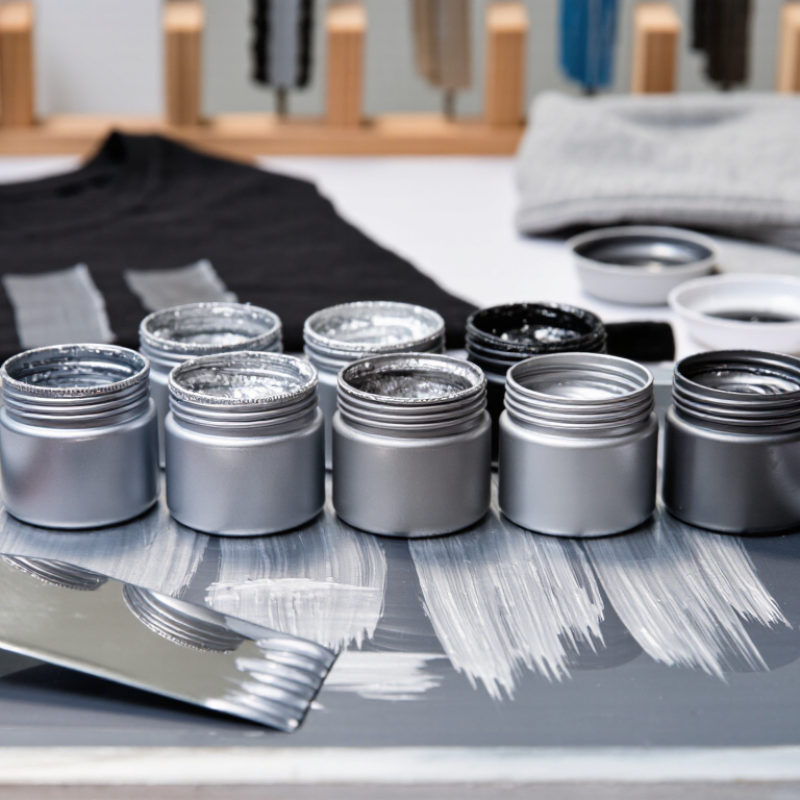
7 Best Silver Inks for Screen Printing in 2026

What Silver Inks Are and How They Work in Screen Printing

Silver screen-printing ink is not one universal formula. Decorative silver inks usually rely on reflective metallic flakes suspended in a binder; some use aluminum pigments, while conductive versions contain silver particles. These are not interchangeable. A shiny surface does not mean an ink can carry an electrical current.

During printing, the squeegee pushes ink through mesh onto the substrate. Flake shape, deposit thickness, mesh opening, and squeegee pressure affect how evenly the particles lie. Their alignment creates the metallic flash. Tiny flakes. Big difference. Too much shear or a fine mesh can dull the effect, while a heavy deposit may lose detail. The right balance depends on the ink and material, so check its technical sheet and test a small print. That is where the neat theory gets messy.

FESPA’s 2023 Print Census gathered 1,778 responses from 120 countries, reflecting the range of businesses and print conditions in the industry. It does not set a universal silver-ink recipe. On fabric, stretch and curing matter; on paper or plastic, surface smoothness and adhesion can change the result. Inspect the print under angled light, then rub and stretch it if the substrate requires that test. A single sample is not proof of consistency. Recheck after the ink has fully cured.

Key Features to Compare When Choosing Silver Inks in 2026

Silver ink selection is a balance of sparkle, coverage, press stability, and durability. Fine metallic flakes usually create a smoother finish, while larger flakes produce stronger shimmer but may struggle through fine mesh. Compare the supplier’s recommended mesh range, viscosity, and cure schedule before running a full job. A shiny test print can still fail after washing.

Check adhesion and rub resistance on the actual substrate, not just a sample card. ASTM D3359 rates coating adhesion from 0B to 5B; 5B indicates no coating removal in the cross-cut test. ASTM D5264 provides a method for assessing printed-material rub resistance. These are useful comparison tools, not guarantees: fabric texture, ink deposit, and curing conditions affect results. Record those variables alongside each test.

Tips: Print a small swatch using your production mesh, then cure it exactly as planned. Let it cool before checking for flaking, dull patches, or pigment transfer onto a clean cloth. Ask for technical data on metallic-particle size and recommended curing conditions. If the ink looks perfect but feels stiff, reconsider the deposit; I would not treat appearance alone as proof of a successful print.

Seven Silver Inks for Screen Printing: Types and Uses

Silver inks differ in pigment, carrier, and curing needs. Metallic plastisol is a common choice for cotton shirts and hoodies; its reflective flakes create a bright, slightly raised print. Water-based metallic ink feels softer on fabric, though its shine may appear more subdued. Pearlescent silver gives a satin-like glow rather than a mirror finish. It suits designs where a softer highlight matters more than maximum brightness.

For paper and packaging, metallic acrylic ink can provide clean detail on compatible stocks. Solvent-based silver is often formulated for vinyl and other flexible surfaces, while UV-curable metallic ink can work on selected rigid materials. Silicone-based silver is intended for compatible silicone prints or treated performance fabrics. These are not interchangeable formulas. Check the ink maker’s substrate and curing guidance before production.

Silver can be fussy. Pigment may settle, so stir gently and regularly; aggressive mixing can introduce bubbles. A screen with an overly fine mesh may hold back larger metallic particles, reducing coverage. Run a small test on the actual substrate, then check adhesion, wash resistance, and finish after curing. Even a vivid wet print can dry dull if the layer is thin or the cure is incomplete. I’d also compare the result under ordinary room light, not just bright studio lamps.

7 Best Silver Inks for Screen Printing in 2026 — Seven Silver Inks for Screen Printing: Types and Uses

Silver Ink Type Typical Applications Suitable Substrates Finish or Key Property Curing and Practical Notes
Metallic Plastisol Apparel graphics, lettering, and decorative textile prints Commonly used textiles, subject to the ink’s specifications Opaque, metallic appearance from reflective metal flakes Requires the specified heat cure. Metallic particles can produce a heavier hand, and the printed surface may feel less soft than a standard textile ink.
Water-Based Metallic Soft-hand textile designs and prints on suitable paper or fabric Absorbent textiles and paper compatible with the formulation Metallic sheen with a water-based carrier Must be dried and cured according to the product instructions. Absorbent substrates can reduce brightness; test the fabric and wash performance before production.
Solvent-Based Metallic Decorative graphics, signs, and selected packaging or product surfaces Compatible plastics, coated materials, and other nonporous surfaces Metallic effect suited to surfaces that may not absorb water-based ink Drying commonly involves solvent evaporation. Check substrate compatibility, ventilation requirements, and applicable handling and safety guidance.
UV-Curable Metallic Short-run graphics and decorative printing on rigid products Compatible plastics, glass, and coated or treated surfaces Metallic finish with rapid curing when exposed to the specified UV source Requires suitable UV-curing equipment. Adhesion depends on the substrate and preparation, so test before running a production job.
Two-Component Epoxy Metallic Durable decorative markings on products and industrial components Compatible glass, metal, and rigid plastics Hard, durable film after the components chemically cure Mixing ratios and working time matter. Follow the technical instructions for preparation, cure conditions, and substrate testing.
Conductive Silver Ink Printed circuits, electrical contacts, sensors, and other electronic applications Substrates specified for the ink, such as selected films or rigid boards Designed to conduct electricity; not primarily chosen for a decorative metallic effect Electrical performance depends on the ink formulation, print thickness, substrate, and cure process. Verify resistance and adhesion in the finished application.
Retroreflective Silver or Gray Ink Visibility graphics, safety markings, and selected performance-textile designs Compatible textiles or other substrates specified for the formulation Reflects light back toward its source when illuminated; appearance differs from mirror-like metallic ink Often relies on reflective glass beads. Print and cure settings can affect the reflective effect, so test performance under the intended conditions.

How to Print and Cure Silver Ink on Different Materials

Silver ink needs a smooth deposit, clean screens, and careful curing. Metallic flakes can settle, so stir gently before printing. Avoid aggressive mixing; it may trap air and dull the finish. A thin, even layer usually reflects better than a heavy one. Grand View Research’s 2024 screen-printing market report estimates the global market reached USD 4.8 billion in 2023, underscoring the value of reliable production methods.

On cotton, test a small print and cure the full ink film according to its technical data sheet. Measure the ink’s actual temperature, not just the dryer setting. Polyester can release dye during heating, so choose a compatible low-cure system and check for color bleed. Paper absorbs ink quickly; use controlled pressure and avoid flooding the screen. Thin deposits matter.

Glass, metal, and plastic need clean surfaces and ink formulated for the specific material. Use an adhesion promoter only when the ink supplier recommends one; cure by the specified oven or UV method. Test it first. After cooling, check adhesion and rub resistance. ASTM D3359 cross-cut testing can help assess coating adhesion on suitable rigid panels, but it is not a substitute for testing the actual production material. This step is easy to rush—and often worth repeating.

Storage, Safety, and Care for Silver Screen-Printing Inks

Silver screen-printing ink needs careful storage because metallic particles can settle, while exposed ink may thicken or form a skin. Keep the container tightly closed between printing runs. Store it upright in a cool, dry place, away from direct sunlight, heaters, and damp floors. Follow the label’s temperature limits; silver inks can use different formulations. Record when the container was opened, and check for dried material around the lid or changes in consistency before use. A quick stir can make settled ink look uniform, but appearance alone does not confirm that it is still usable. That is easy to overlook.

Before printing, mix slowly with a clean tool to reduce splashing and avoid introducing debris. Wear the protective equipment specified on the product label or safety data sheet, and provide suitable ventilation. Do not assume an ink is harmless because it seems mild or has little odor. Keep food and drinks away from the work area. Clean screens and tools using the recommended method, and collect leftover ink and wash residue according to product and local waste guidance. If the ink has dried out, separated unusually, or changed noticeably, pause and check the manufacturer’s instructions rather than trying to revive it by guesswork.