7 Tips for Buying Artificial Marble?
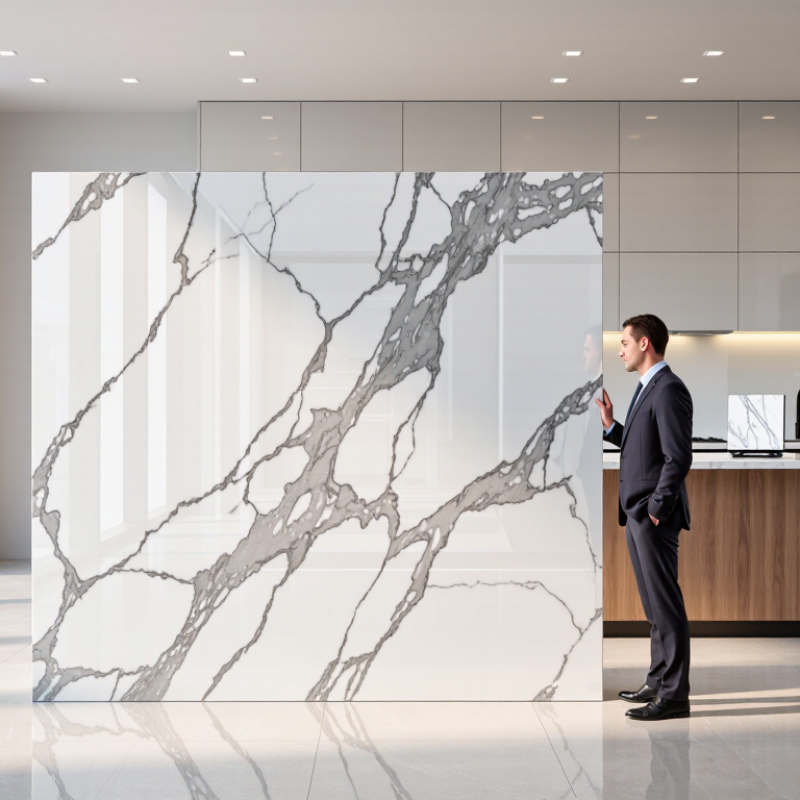
Artificial Marble can look like polished stone under showroom lights, but buying well requires more than choosing a color. Check the slab’s composition, thickness, finish, and intended use. Ask how it handles stains, heat, scratches, and everyday cleaning. A glossy sample beside a window may look different from a large installed surface. Bring home a sample, if possible. View it in your own kitchen light.
For this introduction, materials consultant Daniel Mercer is an illustrative expert voice, not a verified real-world source: “Judge the surface by its specifications and care needs, not by appearance alone.” That is a useful rule, though it cannot replace a manufacturer’s technical sheet or a fabricator’s advice. Compare warranties carefully. Ask whether repairs are practical, and what cleaning products could dull the finish. Small details matter.
The following tips will help you assess quality, compare suppliers, and match Artificial Marble to your project. They also make room for a less convenient truth: no surface is perfect for every household. A busy kitchen, a quiet bathroom, and a rental unit have different demands. Choose with those demands in view. And keep the sample. It may reveal more at home than a sales display does.
Define Artificial Marble: Resin-Bound Stone, Acrylic Solid Surface, or Porcelain
“Artificial marble” is an umbrella term, not a precise material. Resin-bound stone contains mineral particles held together with polymer resin. Acrylic solid surface uses acrylic or polyester resins with mineral fillers, creating a more uniform material. Porcelain is different: it is made from fired mineral ingredients and contains no resin binder. The distinction matters. Tip: Ask for the product’s exact composition and care instructions before comparing prices.
Resin-bound stone often offers a natural-looking pattern, but its resin can be sensitive to high heat. Acrylic solid surface can have inconspicuous seams and may be repairable, though sharp objects and hot pans can damage it. Porcelain generally handles heat and sunlight well, but its edges may chip if struck. Details vary by product and thickness. Tip: View a full-size sample near a window, then check how the pattern and finish look under your own lighting.
Think about daily use, not just appearance. A busy kitchen may need different qualities than a bathroom vanity. Ask the fabricator how seams, sink cutouts, unsupported spans, and edge repairs are handled. Get care requirements in writing; “stain-resistant” does not mean stain-proof. One caveat: small samples can hide pattern variation, so request a larger slab image when possible. Tip: Compare installation details alongside the material itself.
Match the Material to Its Use: Compare EN 14617 Absorption and Strength Tests
Artificial marble is not one uniform material. Resin content, mineral mix, thickness, and finish can change how a slab performs. Ask for test results under the relevant EN 14617 methods, not just a general claim that the surface is “strong” or “low absorption.”
Water absorption results help compare how much water a sample takes up under a defined test. Lower absorption can be useful around sinks and bathroom counters, where splashes are common. But it does not prove resistance to every stain, cleaner, or prolonged wet condition. Read the report’s test method and sample details. Small details matter. A polished sample may not represent a cut edge or a different production batch.
Strength testing, including flexural strength, can help assess whether a slab suits a countertop span or a floor application. Compare the reported value with the project’s support layout, thickness, and expected loads; a high result alone is not a guarantee against cracking. Ask whether the test sample was conditioned and oriented consistently, and request results for the actual product type. For a narrow vanity top, edge support may matter more than a headline figure. Honestly, test reports can feel technical, and buyers may overlook them. Bring the figures to the fabricator and confirm they fit the intended use.
7 Tips for Buying Artificial Marble? - Match the Material to Its Use: Compare EN 14617 Absorption and Strength Tests | Intended use | Water absorption: EN 14617-1 | Flexural strength: EN 14617-2 | What to check before buying |
| Kitchen worktop | The test determines water absorption by mass. Ask for the product’s tested result, reported as a percentage. | The test determines flexural strength. Request the declared result in MPa and consider the slab thickness and support layout. | Compare absorption and strength results for the exact product and thickness. Also confirm suitability for the intended exposure to heat, stains, and cleaning products. |
| Bathroom vanity or indoor countertop | Use the EN 14617-1 result to compare products’ measured water uptake; the test method itself does not set one universal acceptance limit. | Use the EN 14617-2 result to compare resistance to bending under the test conditions. | Check the manufacturer’s declared intended use, edge details, joint treatment, and installation requirements for wet areas. |
| Wall cladding or vertical interior panels | A measured absorption result can help compare materials, but it does not by itself establish suitability for every wet or exterior condition. | Flexural strength is relevant when panels may be handled, transported, or supported across spans. | Match panel thickness and support spacing to the installation design; confirm the fixing system and whether the product is approved for the location. |
| Flooring or stair treads | Use the absorption result as one comparison point, especially where moisture exposure is expected. | Flexural strength matters for slabs subject to bending, but it is not a complete measure of flooring or stair safety. | Also verify suitability for floor use, surface wear, slip resistance, thickness, and support conditions. Do not select on flexural strength alone. |
| Outdoor application | Compare the tested absorption value, but do not treat it as proof of weather or freeze–thaw suitability. | Check the declared flexural strength and the design loads; the result applies to the tested specimens and method. | Confirm explicit exterior-use suitability and request relevant durability evidence for the project climate and exposure. |
| How to compare: EN 14617-1 specifies methods for determining apparent density and water absorption; EN 14617-2 specifies a method for determining flexural strength. These test methods provide measured results, not universal pass/fail thresholds for every application. Compare results for the same product type and thickness, and check the product declaration and project requirements. |
Check the Datasheet: Review EN 14617-1, -2, and -4 Results
When buying artificial marble, ask for the full datasheet, not just a headline strength figure. EN 14617-1 reports bulk density and water absorption. These results can help you assess how much water the tested material takes up, but they do not predict every stain or spill. EN 14617-2 measures flexural strength: useful when considering slabs, overhangs, and support spacing. Still, a strong test result does not make poor installation harmless.
Tip: Match each result to the intended use. For flooring, check EN 14617-4, which measures abrasion resistance. Confirm the reported unit and test details before comparing products; a lower or higher number is not automatically better without knowing how the result is expressed. Ask whether the tested finish and thickness match the sample you are considering. Small differences matter.
Look for the test date, specimen details, and laboratory information. Compare values from the same test method, rather than relying on vague claims such as “high durability.” A datasheet describes tested samples, not every slab in every shipment. That part is easy to overlook. If a result seems unusually impressive, ask for clarification and written documentation. Also check whether the supplier’s recommended care suits your daily routine; the test results alone cannot tell you that.
7 Tips for Buying Artificial Marble: Check the Datasheet
How to read this chart: EN 14617-1 covers bulk density and water absorption; EN 14617-2 covers flexural strength; and EN 14617-4 covers abrasion resistance. The bars count the key properties named in each test method—they are not product test results or pass/fail ratings. When comparing datasheets, check the reported values, units, test methods, and conditions for the material you are considering.
Assess Fabrication Safety: OSHA’s Silica Limit Is 50 μg/m³ as an 8-Hour TWA
When comparing artificial marble, ask how the shop controls dust during cutting, grinding, and polishing. OSHA’s respirable crystalline silica standard sets a permissible exposure limit of 50 micrograms per cubic meter, averaged over an eight-hour shift. The action level is 25 micrograms per cubic meter. These are measured exposure levels, not visible-dust targets. Fine particles can hang in the air after a slab looks clean.
NIOSH occupational-health investigations identify countertop fabrication tasks as potential sources of respirable silica exposure. Ask whether the fabricator uses wet methods and local exhaust ventilation, and whether exposure monitoring confirms controls are working. Request the product’s safety data sheet, too; “artificial marble” can describe materials with different compositions. A careful answer should explain the shop’s actual process, not just promise it is safe. That distinction matters. OSHA’s 2024 silica guidance also emphasizes exposure assessment and effective engineering controls. If a shop cannot describe its controls or share relevant monitoring information, pause before ordering. I would not treat a tidy showroom as proof: that is an easy assumption to make, and a weak one.
Compare Total Cost: Include Slab Thickness, Seams, Installation, and Maintenance
When comparing artificial-marble quotes, compare the finished countertop, not just the slab price. The 2024 U.S. Houzz & Home Study reported a $24,000 median spend for kitchen renovations in 2023; that covers the whole project, not countertops. Still, it shows how quickly surrounding costs can matter. Check whether the quote covers 20 mm or 30 mm slabs, edge build-ups, sink cutouts, and delivery. Thicker material may cost more and require extra support. Ask the fabricator to confirm cabinet requirements in writing.
Seams affect both appearance and labor. Request a drawing showing seam locations, especially near sinks, corners, and visible edges. Pattern matching can increase fabrication time, and a low quote may allow little room for adjustment. Installation, removal of the old counter, plumbing reconnections, and disposal may be separate charges. That adds up. Get each item listed before comparing bids.
Maintenance also belongs in the total-cost calculation. Ask for the product’s care instructions and whether it needs periodic sealing; artificial-marble formulas vary. Confirm how to handle acidic spills, since some surfaces can dull or etch. A sample is useful, but it cannot fully show how a large slab’s pattern will look. My estimate would still include a small contingency for fitting surprises.