• Monday

    9:00-5:00

  • Tuesday

    9:00-5:00

  • Wednesday

    9:00-5:00

  • Thursday

    9:00-5:00

  • Friday

    9:00-5:00

  • Saturday

    9:00-4:00

  • Sunday

    CLOSED

10 Best Grill Cookware Sets for Every Need?

A good grill session depends on more than flame and seasoning. The right Grill Cookware can keep delicate vegetables from slipping through the grates, help fish release cleanly, and give small cuts a more even sear. But “best” depends on what you cook, how you grill, and how much space you have. A heavy cast-iron pan behaves differently from a perforated stainless-steel basket. Neither is perfect for every meal.

Barbecue authority and author Steven Raichlen has written extensively about live-fire cooking. A useful paraphrase of his practical approach is: “Choose the tool that suits the food, the heat, and the moment.” That idea guides this look at the 10 Best Grill Cookware Sets for Every Need. We consider material, handle comfort, cleanup, durability, and the kinds of food each set handles well. Look for sturdy edges, secure grips, and pieces sized for your grill. Small details matter. A basket that is awkward to turn can make dinner harder than it needs to be.

Some cookware claims sound impressive but do not tell the whole story. A set may be versatile and still feel bulky in a small kitchen. We’ll point out those trade-offs, too. Use this guide to match cookware to your habits, not to chase a perfect set. There may not be one.
10 Best Grill Cookware Sets for Every Need?

What Grill Cookware Sets Include and How Their Components Differ

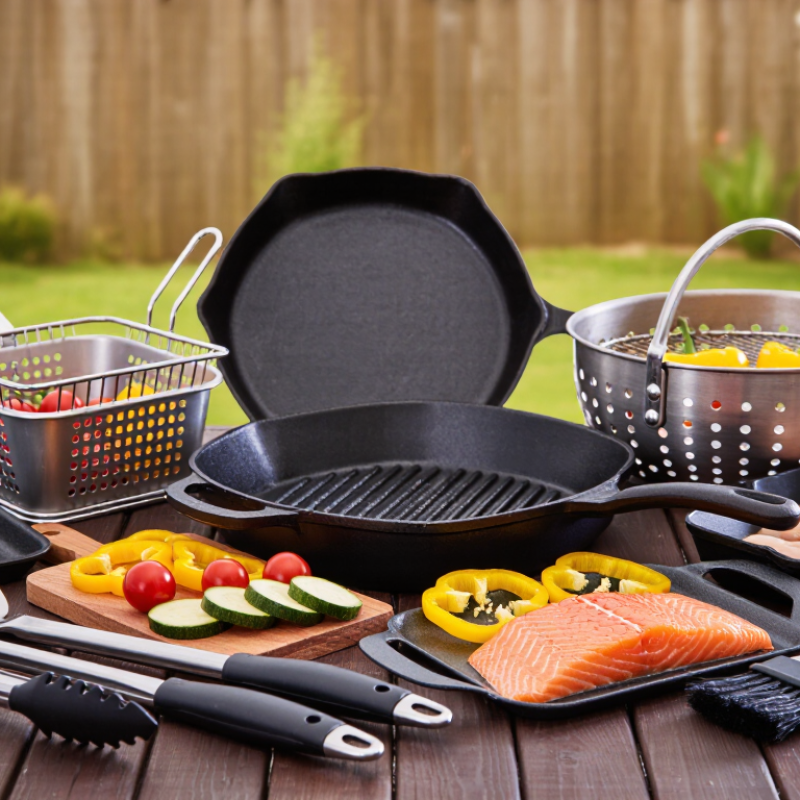
A grill cookware set is not one fixed package. The most useful sets pair a perforated basket, a solid griddle or tray, and long-handled tools. The basket lets heat and smoke reach small vegetables while keeping them from slipping through the grates. A solid tray suits delicate fish, and a griddle handles eggs or chopped foods that need a flat surface. Some sets add skewers, a press, or a thermometer; these extras matter only if they fit your usual meals.

Material and construction change how each piece performs. Stainless steel resists rust when cleaned and dried, while cast iron holds heat well but needs more care. Thin trays can warp over high heat. Check handle length, edge height, and whether parts fit your grill before buying. Small details matter.

The National Fire Protection Association reported that grills, hibachis, and barbecues were involved in an average of 10,600 home fires annually from 2014 to 2018. That figure is a reason to favor stable, heat-safe cookware and keep handles away from flames. It does not mean every accessory improves safety.

Some sets look comprehensive but include pieces too small for real portions; I would measure the cooking area first, even if that makes shopping less exciting.

How Material Conductivity Compares: Aluminum ~205 vs. Stainless Steel ~16 W/m·K

Thermal conductivity helps explain why grill cookware heats unevenly or responds quickly to a burner. Near room temperature, reference values are about 205 W/m·K for aluminum and 16 W/m·K for stainless steel. ASM International’s ASM Handbook, Volume 2, and the Aluminum Association’s material-property data provide useful context for these figures. They are representative values, not guarantees for every cookware alloy.

That gap matters at the grill. Aluminum spreads heat rapidly, so a thin pan can warm quickly across its base. It can also lose heat fast when cold food lands on it. Stainless steel conducts heat more slowly, which may create hotter spots unless the pan has a thick base or a conductive core. Feel the handle, too; it may stay cool, but construction matters. Details matter.

Conductivity alone does not predict cooking results. Pan thickness, alloy composition, contact with the grill, and food moisture all affect temperature. A thick stainless-steel pan may perform more evenly than a very thin aluminum one. For searing vegetables, a responsive aluminum surface can be handy; for sturdy, repeated use, shoppers may prefer layered construction. I would not choose by the number alone. Room-temperature reference data cannot fully describe a pan over live heat, and that limitation is easy to overlook.

10 Best Grill Cookware Sets for Every Need? — How Material Conductivity Compares: Aluminum ~205 vs. Stainless Steel ~16 W/m·K

These are representative, brand-free set configurations rather than rankings of specific products. Piece counts are example combinations. Conductivity figures are approximate reference values for the base metals near room temperature; actual cookware alloys, coatings, thicknesses, and layered constructions can differ.

Example set Typical pieces Main material Approx. base-metal conductivity Practical strengths Considerations A good fit for
1. Lightweight aluminum grill set Ridged grill pan, flat griddle, perforated grill basket Aluminum About 205 W/m·K Aluminum transfers heat well and is relatively lightweight, making cookware easier to handle. Cookware suitability depends on its construction and grill-safe temperature rating; thin pieces can warp under high heat. Frequent grilling when low weight and responsive heating are priorities.
2. Hard-anodized aluminum set Grill pan, griddle, small roasting pan Hard-anodized aluminum substrate Aluminum reference: about 205 W/m·K Combines an aluminum body with a hardened surface layer; aluminum beneath the surface conducts heat efficiently. Anodizing is a surface treatment, not a guarantee that every pan is suitable for direct grill flames. Check the maker’s temperature guidance. Grill-side cooking where a sturdy aluminum pan is preferred.
3. Stainless-steel set with aluminum core Clad grill pan, lidded sauté pan, roasting pan Stainless-steel outer layers with an aluminum core Stainless steel: about 16 W/m·K; aluminum: about 205 W/m·K The aluminum core can spread heat while stainless-steel surfaces provide a durable cooking surface. Performance depends on the number and thickness of layers; the stainless-steel conductivity value alone does not describe the whole pan. People seeking durable, versatile cookware for both grill and kitchen use.
4. Cast-iron grill set Grill pan, reversible griddle, small skillet Cast iron Approximately 50–55 W/m·K; composition varies Cast iron stores substantial heat, which can help maintain cooking temperature when food is added. It is heavy and heats more slowly than aluminum; bare cast iron needs seasoning and care to limit rust. High-heat searing and cooks who value heat retention.
5. Enameled cast-iron set Grill pan, covered casserole, small griddle Cast-iron body with an enamel coating Cast-iron substrate: approximately 50–55 W/m·K The iron body retains heat, while enamel provides a glass-like surface that does not require seasoning. Enamel can chip if struck or thermally shocked; not every enameled piece is approved for direct grill use. Slow, steady cooking and cooks who prefer an unseasoned surface.
6. Carbon-steel grill set Flat-top griddle, shallow grill pan, wok-style pan Carbon steel Approximately 45–55 W/m·K; varies by composition Generally lighter than cast iron and can respond to temperature changes more quickly. Bare carbon steel needs seasoning and should be dried after washing to help prevent rust. Griddling, stir-frying, and cooks comfortable maintaining seasoned cookware.
7. Copper-core clad set Clad grill pan, sauté pan, small roasting pan Copper core with stainless-steel cooking surfaces Copper: about 385 W/m·K; stainless steel: about 16 W/m·K Copper conducts heat very well; in clad cookware, the core works with the other layers to distribute heat. Conductivity of the core does not equal finished-pan performance; construction, thickness, and grill-use limits matter. Temperature-responsive cooking when a layered pan is approved for the intended grill.
8. Stainless-steel grill-basket set Perforated vegetable basket, fish basket, skewers Stainless steel About 16 W/m·K for a common stainless-steel reference Perforations let heat and smoke reach food while helping contain smaller ingredients. Stainless steel conducts heat less readily than aluminum or copper; basket shape and grill temperature affect cooking. Grilling vegetables, seafood, and other foods that could fall through the grate.
9. Mixed-material grill set Aluminum griddle, stainless-steel basket, cast-iron grill pan Aluminum, stainless steel, and cast iron Approximate references: aluminum 205; stainless steel 16; cast iron 50–55 W/m·K Different pieces suit different tasks: a griddle for broad contact, a basket for small foods, and iron for heat retention. Each piece may have different care instructions and grill-use limits; check them individually. Households wanting a range of cookware shapes and cooking styles.
10. Ceramic-coated aluminum set Coated grill pan, griddle, shallow roasting pan Aluminum substrate with a ceramic-based nonstick coating Aluminum substrate reference: about 205 W/m·K The aluminum body conducts heat efficiently; the coating can help release food when used as directed. The coating is not the heat-conducting base metal and may be damaged by excessive heat, abrasion, or unsuitable utensils. Lower-stick cooking, provided the cookware is explicitly rated for grill temperatures.

Which Grill Cookware Sets Suit Gas, Charcoal, Pellet, and Electric Grills?

Gas grills heat quickly and often develop hot spots, so choose sturdy stainless-steel baskets or cast-iron pans with short, all-metal handles. They hold vegetables in place while leaving room for flame and airflow. For charcoal, use thick cast iron or perforated steel; intense radiant heat can scorch thin pans and damage coatings. Leave space between cookware and coals. It matters.

Pellet grills usually provide steadier, indirect heat, making solid roasting pans and deeper grill baskets practical for fish, vegetables, or small cuts. Check the cookware’s temperature limit and the grill manual, since lid clearance can be tight. Electric grills often have smaller cooking surfaces and less airflow. Use compact, flat-bottomed pans, and avoid covering the whole grate. I would not assume a pan is safe just because it fits.

The Hearth, Patio & Barbecue Association’s 2024 State of the Barbecue Industry report says about 80% of U.S. households own a grill or smoker, underscoring how varied home setups can be. Match cookware to your heat source, not just the food. Handles need heat protection, but silicone parts may have limits; verify their rating. For food safety, USDA guidance recommends 145°F for whole cuts of beef, pork, and lamb, followed by a three-minute rest. A quick-read thermometer is more reliable than guessing from grill marks.

Temperature Ranges to Consider When Choosing Grill Cookware

Typical cooking temperatures vary by grill type, so check that cookware is rated for the heat you plan to use.

Approximate common cooking ranges in °F; actual temperatures vary with grill design, settings, fuel, and cooking conditions. Always follow the cookware manufacturer’s heat limits.

10 Best Grill Cookware Sets by Need, From Searing to Delicate Foods

Choosing grill cookware by the food you cook is more useful than buying the largest set. Cast iron suits thick steaks and holds heat well. Stainless steel is a practical all-rounder for sturdy tools and easy cleanup. Carbon steel heats quickly, though it needs careful drying to limit rust. Keep handles clear of direct flame.

For smaller ingredients, a perforated basket helps keep sliced peppers from slipping through the grates. A grill pan gives shrimp and chopped vegetables a flatter cooking surface. A fish basket holds fillets together for turning. Skewers are handy for evenly sized pieces, while a vegetable tray keeps delicate produce from scorching. A flat plancha works well for foods that need broad, steady contact. A small, grill-safe covered dish can gently warm sauces or melt butter.

That makes ten useful options, but a set should match your grill’s size and your storage space. Check temperature limits, handle materials, and cleaning instructions before buying. Coated cookware is not automatically grill-safe, so verify its stated use. A set can look complete and still miss the one piece you need.

A little annoying.

How to Check Grill-Safe Temperatures, Sizes, and Care Requirements

When comparing grill cookware sets, check the stated maximum temperature for every piece, not just the pan. A set may include lids, handles, or utensils with lower heat limits. Grill-safe does not mean safe over every flame. Keep the product instructions nearby, and use a grill thermometer to check the cooking surface. Labels can be vague. If the temperature limit is unclear, contact the maker before heating the cookware.

Choose sizes that match your grill and the meals you actually cook. Measure the usable grate, leaving room for air to move and for turning food. A wide pan can crowd the grate, while a tiny basket may need several batches. Check depth, too: shallow trays suit vegetables, but deeper pans help contain juices. I have learned that listed dimensions can include handles, so compare the cooking area itself when possible.

Care affects how long a set performs. Let hot cookware cool gradually; plunging it into cold water can warp some materials or crack glass. Follow the cleaning directions for coated surfaces, and avoid abrasive pads unless the instructions allow them. Dry metal pieces fully before storage. Inspect handles and coatings now and then. A small chip is easy to miss. If damage appears, stop using the affected piece until you confirm it remains suitable for grilling.