Choosing hotel access technology is not simply a hardware decision. For global buyers, Hotel Electronic Locks must support security, guest comfort, and reliable daily operations. A lock may look impressive in a showroom, yet fail when batteries weaken or network coverage drops. This guide introduces leading solutions through practical buying criteria, not marketing claims alone.
Experienced hotel engineers assess more than unlocking speed. They examine credential types, audit trails, emergency override procedures, battery alerts, door compatibility, and maintenance access. RFID cards, NFC phones, PIN codes, and mobile credentials each suit different properties. Cloud management can simplify oversight, but it also requires stable connectivity and careful account control. Local installation support matters. So do warranty response times, replacement parts, and staff training.
Small details matter.
Global buyers should request test reports, integration information, warranty terms, and documented lifecycle costs. They should also confirm compatibility with property management systems, elevators, energy controls, and existing door hardware. Regional data protection and safety requirements may differ, so qualified local advice remains important. This introduction cannot cover every building type or operating condition. That limitation is real. A pilot installation can reveal problems that brochures hide, especially in humid coastal hotels, busy resorts, and older properties. Reliable decisions come from comparing evidence, observing real use, and questioning attractive promises. The best Hotel Electronic Locks are not always the most feature-heavy. They are the systems that remain dependable when guests arrive late, staff change shifts, and routine maintenance is unavoidable.
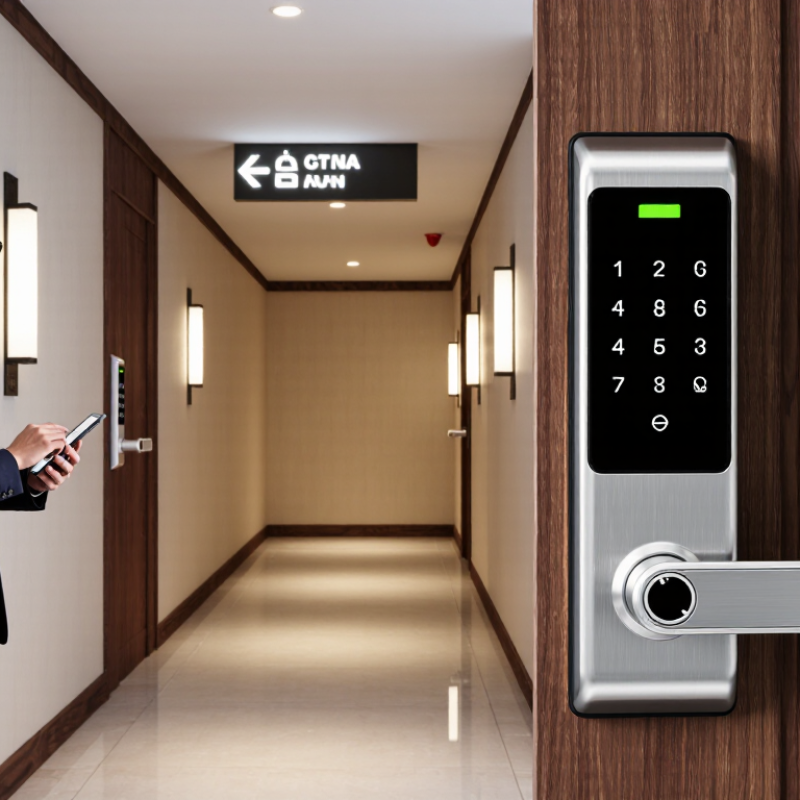
Hotel electronic locks are access-control devices designed for guest rooms, staff areas, and selected service doors. They replace traditional metal keys with cards, mobile credentials, PINs, or biometric verification. Each credential contains coded access information. A reader checks that information before releasing the lock.
When a guest taps a card, the reader communicates with the lock’s control unit. If the credential is valid, a small motor retracts the latch for several seconds. The system then records the event, including the room, time, and credential used. Many locks can work offline, storing permissions inside the lock until staff synchronize the data. That feature matters when wireless coverage is weak. It also reduces dependence on a constant network connection.
A reliable installation needs more than a modern reader. Batteries require scheduled checks, and door alignment must remain precise. A slightly tilted door can make a healthy lock appear defective. That sounds simple. It is often missed. During practical inspections, technicians should test low-battery warnings, emergency power access, latch movement, and credential cancellation. Lost cards should stop working quickly, while authorized staff access should remain traceable. Some systems connect with hotel management software, but integration can create delays or incorrect permissions when settings are poorly maintained. Electronic locks improve control, yet they are not maintenance-free. Their security depends on hardware, software, trained staff, and careful daily procedures.
| Lock Type | How It Works | Common Credential or Technology | Typical Hotel Uses | Main Advantages | Important Limitations |
|---|---|---|---|---|---|
| RFID Card Lock | A reader identifies an encoded card and releases the motorized or solenoid-driven locking mechanism after authorization. | Contactless RFID cards, commonly operating at 13.56 MHz for modern high-frequency systems. | Guest rooms, staff entrances, meeting rooms, and controlled back-of-house areas. | Fast access, reusable credentials, configurable access rights, and no exposed key slot. | Cards can be lost or damaged; the hotel needs a card-encoding and access-management process. |
| Mobile-Enabled Lock | A smartphone exchanges encrypted access data with the lock, usually through Bluetooth Low Energy, and the lock verifies the digital key locally or through a connected system. | Bluetooth Low Energy in the 2.4 GHz radio band; some systems also support NFC or QR-based workflows. | Digital check-in, premium rooms, serviced apartments, and properties seeking reduced front-desk workload. | Convenient for guests, supports remote credential management, and can integrate with hotel software. | Requires phone compatibility, sufficient battery power, secure software administration, and a fallback access method. |
| Keypad PIN Lock | The guest enters an approved PIN; the electronic controller compares it with stored permissions and activates the lock if valid. | Numeric keypad with programmable or time-limited PIN codes. | Small hotels, staff-only areas, storage rooms, short-stay units, and properties without card issuance equipment. | No physical card is required, and codes can be changed without replacing hardware. | PINs may be shared or observed; frequent code management is essential for guest security. |
| Biometric Lock | A sensor captures a biometric feature, such as a fingerprint, and compares it with an enrolled template before granting access. | Fingerprint, facial, or other biometric recognition, depending on the system and local regulations. | Restricted staff areas, executive facilities, laboratories, and high-security rooms rather than general guest rooms. | Users do not need to carry cards or remember PINs; access can be assigned to individuals. | Higher privacy, hygiene, enrollment, and compliance requirements; recognition performance can vary with environmental conditions. |
| Magnetic-Stripe Lock | A magnetic stripe is read when the card is inserted or swiped, and the lock checks the encoded access information. | Magnetic-stripe card with an electronically encoded access period. | Older installations and properties replacing legacy systems in stages. | Established operating method and relatively simple card issuance. | Cards can demagnetize, the reader has moving or exposed contact areas, and security is generally lower than modern contactless systems. |
| Online Networked Lock | The lock communicates with a central access-control platform through a wired or wireless network, allowing permissions and events to be updated centrally. | Ethernet, Wi-Fi, gateway-based wireless communication, or other property network connections. | Large hotels, multi-building properties, staff access points, and facilities requiring real-time monitoring. | Central administration, faster credential cancellation, event monitoring, and easier multi-site management. | Higher installation and network-maintenance requirements; connectivity and cybersecurity must be managed continuously. |
| Offline Electronic Lock | The lock stores access rules locally and validates a card, PIN, mobile key, or other credential without requiring a permanent network connection. | Local memory, programmable credentials, and periodic data transfer through a card, handheld device, or mobile connection. | Independent hotels, guest rooms, retrofit projects, and locations with limited network infrastructure. | Lower infrastructure demand and continued operation during temporary network outages. | Permission changes and event collection may not be immediate unless the lock is periodically synchronized. |
| Typical Power System | Batteries power the reader, controller, indicator, and actuator; the lock normally remains secured when power is unavailable, subject to its fail-safe or emergency design. | Replaceable alkaline or lithium batteries; many residential-style hotel locks use four AA cells, but requirements vary by design. | Most standalone room locks and many retrofit electronic locks. | Avoids dedicated power wiring and simplifies retrofit installation. | Battery life depends on traffic, temperature, credential technology, motor load, and maintenance practices; low-battery alerts are important. |
| Emergency Access Features | A permitted emergency method supplies temporary access or mechanical override while preserving security and, where supported, an event record. | Mechanical override key, external emergency power contacts, authorized service credential, or fire-alarm interface. | Guest rooms, accessible rooms, staff areas, and doors covered by emergency procedures. | Supports guest safety, maintenance access, and business continuity during battery or system problems. | Emergency functions must be coordinated with local fire, accessibility, building, and life-safety requirements. |
| Buyer Evaluation Criteria | Compare the complete door solution rather than the lock body alone, including credential security, software, installation, maintenance, and emergency operation. | Door thickness and preparation, handing, lock case dimensions, communication method, access software, audit trail, battery type, and replacement parts. | New construction, retrofit projects, small independent hotels, large properties, and multi-country deployments. | Improves compatibility, lifecycle planning, guest experience, and total cost control. | Certification and installation requirements differ by country; verify applicable standards such as EN 14846 or ANSI/BHMA requirements with local authorities and qualified installers. |
Note: Specifications, battery life, communication methods, and certification requirements vary by model, door type, climate, usage intensity, and local regulations. Buyers should confirm technical compatibility and life-safety compliance before purchase.