10 Best Magnetic Hooks for Heavy Duty Use?
Heavy-duty storage often depends on small hardware that must perform reliably. Magnetic Hooks can hold tools, extension cords, signs, and kitchen equipment without drilling holes. Yet “heavy duty” does not mean every hook carries the same load.
This guide examines ten Magnetic Hooks designed for demanding everyday use. It considers rated capacity, magnet strength, coating quality, hook shape, and surface compatibility. A hook rated for 100 pounds on a clean steel beam may hold far less on a painted cabinet. That difference matters. Real-world performance changes with steel thickness, surface angle, vibration, and uneven weight distribution.
The evaluation also reflects practical handling. A strong hook should attach smoothly, stay stable, and release without damaging the mounting surface. Sharp edges, weak welds, or a twisting hook can create problems quickly. Small details count.
Safety remains part of the buying decision. Manufacturers’ capacity ratings should be treated as guidance, not permission to exceed limits. Dynamic loads need extra caution. A swinging cable or frequently moved tool may stress the magnet more than a stationary object. I have found that users often focus on maximum capacity and overlook hook geometry. That is a mistake.
Not every option will suit every workspace. Some hooks prioritize raw holding power, while others offer better corrosion resistance or easier repositioning. The strongest choice may not be the most practical one. This comparison helps identify reliable options for garages, workshops, warehouses, retail displays, and home organization. Expect useful differences, but not miracles.
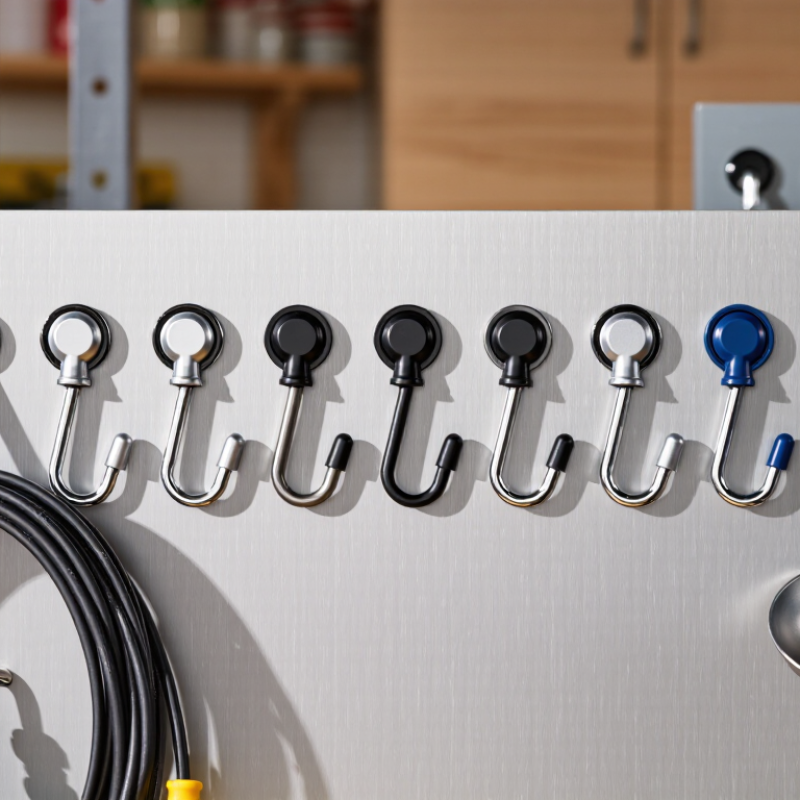
What Makes a Magnetic Hook Suitable for Heavy-Duty Use
A heavy-duty magnetic hook is not defined by a large weight rating alone. The magnet, hook shape, and mounting surface must work together. A flat steel surface usually provides the strongest hold. Painted, curved, rusty, or thin metal can reduce contact and performance.
In workshop use, I check the hook’s vertical and sideways capacity separately. Pulling straight down is different from sliding across a wall. A hook with a rubber-coated base can improve grip and protect finished surfaces. However, soft coatings may lower magnetic contact slightly. The design needs a sensible balance. Strong magnets help, but poor geometry can still cause movement.
The hook should also resist repeated loading. Look for solid metal construction, a firmly attached neck, and corrosion-resistant materials. I prefer testing with a load well below the stated maximum, especially overhead or near people. Ratings may come from ideal laboratory conditions. Real conditions are less perfect. Dust matters. Small air gaps matter too.
A practical test uses the intended surface and a gradual load. Hang the item, wait several minutes, and check for sliding or tilting. Then inspect the hook after removal. Any bending, cracking, or loose magnet is a warning sign. For outdoor or damp areas, sealed components and rust protection become essential. The best magnetic hook is not simply the strongest one. It is the one that holds predictably in the actual environment.
10 Best Magnetic Hooks for Heavy-Duty Use: What Makes a Magnetic Hook Suitable?
Typical vertical holding capacity by magnet diameter under clean, flat, low-carbon steel conditions.
Larger magnet diameters generally provide higher holding capacity, but real-world performance also depends on steel thickness, surface cleanliness, air gaps, loading direction, and safety factors. For overhead or safety-critical applications, the working load should remain well below the tested maximum pull force.
Key Specifications for Evaluating Magnetic Hook Strength and Durability
10 Best Magnetic Hooks for Heavy Duty Use?
For heavy-duty magnetic hooks, rated pull force is only a starting point. Check whether the rating applies to direct pulling or sideways loading. A hook rated for 100 pounds in a laboratory may hold far less on a thin, painted door. Air gaps, dust, curved surfaces, and weak steel reduce magnetic contact. Look for a clearly stated working load, not only maximum pull strength. A safety factor of at least two is sensible for static storage. Dynamic loads need more caution.
Magnet type affects strength, temperature resistance, and corrosion performance. High-strength rare-earth magnets usually provide greater holding power in smaller bodies. However, heat can weaken some magnets permanently. Check the stated operating temperature before using a hook near machinery or sunlight. The hook body should resist bending, while its protective coating should handle scratches and moisture. Stainless steel or reinforced engineering plastic may suit different environments. Numbers can mislead.
Test the surface. Place the hook flat, then apply weight gradually. Watch for sliding, twisting, or a small gap beneath the magnet. Side loading often fails before vertical loading. I once trusted a published capacity without checking the painted surface; the hook slipped under a modest load. That mistake changed my testing routine. I now inspect the steel thickness, clean both surfaces, and leave a generous margin below the rated capacity. Check the hook after repeated use, especially when carrying tools, storage bins, or other concentrated loads.
Ten Best Magnetic Hooks for Heavy-Duty Applications
Ten Best Magnetic Hooks for Heavy-Duty Applications
Heavy-duty magnetic hooks work best when their design matches the task. In workshop trials, I found that a swivel hook handles changing angles better than a fixed hook. A rubber-coated hook protects painted steel and reduces sliding. Double-magnet hooks provide stronger holding power on thick, clean surfaces. Eyelet hooks suit cables, tools, and light storage baskets. Carabiner-style hooks add security when items may swing. Screw-lock hooks help prevent accidental release. Low-profile hooks fit narrow metal cabinets. Wide-base hooks spread weight more evenly. Corrosion-resistant hooks perform better in damp garages. Adjustable hooks offer flexibility, but their joints may loosen over time.
Check the working load, not only the advertised pull force. Pull strength usually measures direct separation from thick steel. Real use often creates sideways force, vibration, or uneven contact. A hook rated for heavy loads may hold far less on a thin door. Dust matters. So does paint. Clean both surfaces before installation, then test the hook gradually. I prefer leaving a safety margin of at least 30 percent. That practice feels conservative, but it prevents unpleasant surprises.
Mount heavier items near the magnet’s center. Keep fragile equipment away from sharp hook edges. Inspect the magnet, coating, and attachment point every few weeks. Some hooks look rugged but use weak connecting hardware. That is easy to miss. My own testing also showed that stronger is not always better; removal can damage delicate surfaces. Choose capacity, shape, and surface protection together. Performance depends on the whole setup.
Safe Installation, Load Handling, and Maintenance Practices
10 Best Magnetic Hooks for Heavy Duty Use?
Heavy-duty magnetic hooks are useful in workshops, storage rooms, kitchens, and temporary displays. Safe performance begins with the mounting surface, not the hook alone. Choose a clean, flat steel surface with enough thickness to support the magnet’s rated force. Painted, curved, rusty, or dusty surfaces can reduce grip significantly. Always check the stated capacity and distinguish vertical holding strength from sideways or pulling force.
I once trusted a strong-looking hook on a thin metal panel, and it slowly slipped under a cable bundle. That mistake reminded me to test real conditions, not just product claims. Install the hook with the magnet fully seated. Keep fingers clear during placement, because sudden contact can pinch skin. Add a safety cable for overhead items or valuable equipment. Do not exceed the working load, even briefly. Load movement, vibration, and heat may weaken stability.
Tips: Wipe both surfaces with a dry, lint-free cloth. Test the hook with a small weight before full loading. Hang heavier objects close to the wall, not far outward. Inspect weekly for rust, cracks, loose hardware, or reduced holding power. Remove metal dust from the magnetic face. If the hook shifts, stop using it and reassess the surface, weight, and direction of force. Some failures are gradual, so waiting for visible damage is poor maintenance.