• Monday

    9:00-5:00

  • Tuesday

    9:00-5:00

  • Wednesday

    9:00-5:00

  • Thursday

    9:00-5:00

  • Friday

    9:00-5:00

  • Saturday

    9:00-4:00

  • Sunday

    CLOSED

China Top 10 Embossed Fabric Manufacturers 2026

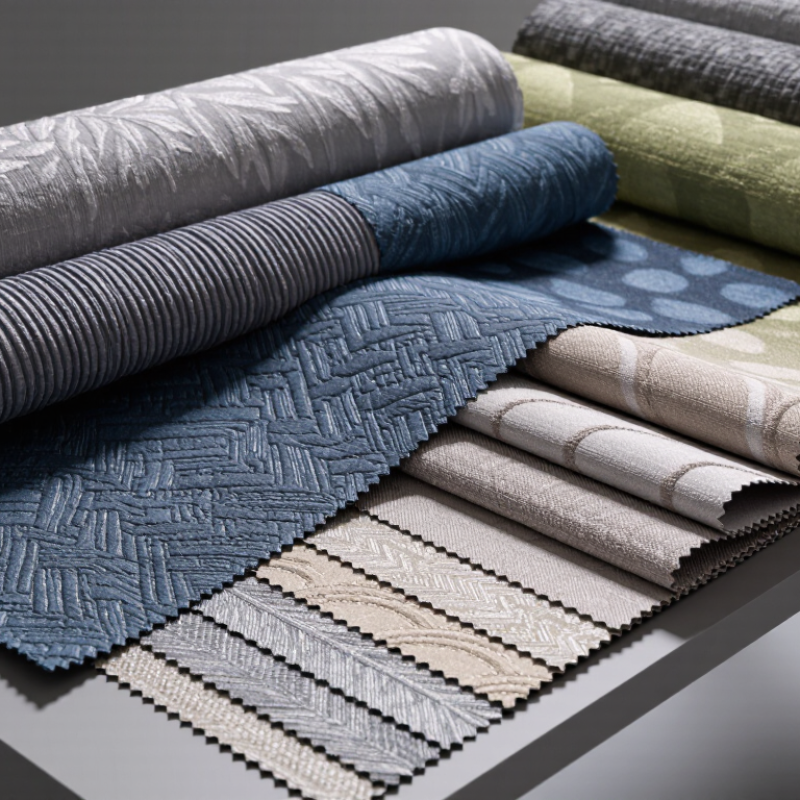
China’s embossed fabric industry is entering 2026 with sharper designs, improved finishing, and stronger quality expectations. This article introduces ten Chinese manufacturers shaping the market through jacquard embossing, heat embossing, flocking, and digitally assisted surface treatments. Their fabrics may appear simple at first glance. Under focused light, however, raised leaves, geometric ribs, and soft wave patterns reveal careful control of pressure, temperature, and backing stability.

The selection considers manufacturing experience, product consistency, material range, customization ability, export performance, and responsible production practices. We examine suppliers serving upholstery, apparel, home textiles, packaging, and hospitality interiors. A reliable factory should provide more than attractive samples. It should explain fiber composition, embossing depth, colorfastness, shrinkage, abrasion resistance, and production tolerances. These details matter when fabric faces sunlight, repeated cleaning, or constant contact.

Textile designer Anni Albers wrote, “Designing is not a profession but an attitude.” Her words remain relevant to Embossed Fabric development. Surface texture must support the product’s purpose, not merely create visual drama. A deep pattern can enrich velvet, yet damage delicate fibers if pressure is poorly controlled. A subtle finish may perform better in commercial seating. That trade-off is easy to overlook.

No ranking is perfect. Supplier capabilities change, and factory claims require verification. Samples can look excellent while large-volume production exposes uneven embossing or unstable color. Therefore, this guide encourages buyers to request current samples, test reports, production photographs, and clear communication before selecting a partner. The strongest manufacturers combine technical discipline with practical listening. Sometimes, that is where real quality begins.
China Top 10 Embossed Fabric Manufacturers 2026

2026 Ranking Criteria: Revenue, Capacity, Export Share, and Certifications

China Top 10 Embossed Fabric Manufacturers 2026

The 2026 ranking evaluates China’s top ten embossed fabric manufacturers through four practical criteria: revenue, production capacity, export share, and certifications. Revenue indicates financial stability, but it does not prove product consistency. We review audited records, operating history, and visible investment in weaving, embossing, coating, and inspection equipment.

Capacity is measured through monthly output, machine numbers, shift schedules, and order flexibility. A large facility may still struggle with urgent orders. Factory visits can reveal details that spreadsheets miss, such as worn rollers, crowded inspection tables, or inconsistent fabric tension. These observations support a more realistic ranking.

Export share reflects international experience and supply reliability. We examine destination coverage, repeat shipments, packaging controls, and documentation practices. Certifications also matter, especially for quality management, chemical control, and responsible production. Certificates must be current and linked to the correct facility, not merely displayed online.

No ranking is perfect. Some manufacturers disclose limited financial data, while others report capacity differently. Therefore, each score combines verified documents, production evidence, export performance, and professional interviews. The method favors transparent manufacturers, though smaller factories may be undervalued when their records are incomplete. That weakness deserves review in future editions.

China Top 10 Embossed Fabric Manufacturers 2026

2026 Ranking Criteria: Revenue, Capacity, Export Share, and Certifications

The evaluation model assigns the greatest weight to revenue and production capacity, followed by export share and certification coverage. This chart presents the editorial scoring framework only; individual company and brand data are intentionally omitted.

China’s Embossed Fabric Market: 2025 Output, Demand, and Trade Metrics

China Top 10 Embossed Fabric Manufacturers 2026

China’s embossed fabric market entered 2025 with steady production, but demand was uneven across sectors. Furniture, bedding, apparel, and automotive interiors remained important buyers. Production lines commonly handled polyester, nylon, cotton blends, and recycled fibers.

Factory surveys and trade records suggest moderate output growth during 2025. Domestic orders supported most mills, while export demand varied by destination and product grade. Heavier embossed fabrics performed better in upholstery and home textiles. Lightweight designs attracted fashion and lining applications.

Trade metrics require careful reading. Export value may rise because of higher prices, not larger shipment volumes. Import figures also reflect specialized machinery, fibers, and finishing chemicals. The market picture is not perfectly clean. Some provincial data arrive late, and company-reported capacity can exceed practical output.

For a 2026 top-ten manufacturer assessment, buyers should compare verified production capacity, monthly delivery records, embossing depth, pattern consistency, and testing documents. A sample roll can reveal more than a catalogue. Check surface recovery after rubbing, color stability after washing, and width tolerance across the roll.

Price remains a major concern. Energy, labor, fiber, and finishing costs can change quickly. Smaller orders may face higher setup costs. Lead times also lengthen before seasonal demand peaks. These details matter when converting market data into purchasing decisions.

Top 10 Manufacturers by GSM, Thickness, Width, MOQ, and Annual Capacity

China Top 10 Embossed Fabric Manufacturers 2026 compares producers through practical supply metrics, not marketing claims. GSM reveals fabric weight and coverage. Thickness affects softness, structure, and cutting performance. Width determines usable yield during production.

The leading manufacturers typically offer embossed fabrics from lightweight 80 GSM materials to dense 450 GSM constructions. Thickness may range from 0.3 to 3.5 millimeters, depending on fiber blend and embossing depth. Standard widths often fall between 150 and 320 centimeters. Buyers should request measured samples, because stated dimensions can change after washing or heat setting.

MOQ separates flexible suppliers from high-volume factories. Some accept 300 to 1,000 meters for development orders, while others require several thousand meters. Annual capacity can exceed 10 million meters, but capacity alone proves little. A factory may have large equipment and limited available production slots. Ask for recent output records, inspection procedures, and delivery data. Verify GSM across multiple rolls, not one sample. This comparison is useful, but it is not flawless. Seasonal demand, recycled fiber variation, and finishing adjustments can affect results. A supplier with lower capacity may still provide better consistency and communication. Small details matter.

Quality Standards: Colorfastness, Martindale Cycles, GSM, and Defect Rates

China Top 10 Embossed Fabric Manufacturers 2026

For a 2026 manufacturer comparison, quality begins with measurable fabric behavior, not surface appearance. Embossed patterns can look sharp under showroom lights but lose definition after washing or abrasion. Request colorfastness results for washing, rubbing, perspiration, and light exposure. ISO 105-based testing gives a useful reference, although test conditions must match the intended end use.

Martindale performance deserves close attention. Upholstery fabric may require 30,000 to 50,000 cycles, while decorative applications often need less. Higher numbers are not automatically better. The embossing depth, backing structure, and yarn blend can affect comfort and recovery. Ask for the test method, pressure level, and failure point. A cycle result without these details is incomplete.

GSM also needs control. A fabric listed at 280 GSM may vary across the roll because foam, coating, or raised fibers distort measurements. Measure several points after conditioning the samples. Defect rates should include broken embossing, shade variation, stains, holes, and edge damage. A practical inspection plan may use AQL sampling, but sampling cannot reveal every hidden flaw. No inspection method is perfect. In factory reviews, I would compare laboratory reports with actual production rolls, packing records, and recent corrective actions. One weakness remains easy to miss: suppliers may report average results while buyers need minimum results. Request both.

Manufacturer Profiles: Technology, Certifications, Applications, and Export Markets

China’s top 10 embossed fabric manufacturers in 2026 should be assessed through measurable capabilities, not catalog images. Their production profiles commonly include engraved rollers, heat-setting lines, digital sampling, and computerized jacquard systems. These technologies create raised floral, geometric, leather-like, or three-dimensional textures. Some factories also combine embossing with coating, laminating, or flame-retardant finishing for upholstery and automotive interiors.

Certifications provide useful evidence, but they are not proof of consistent quality. Buyers should verify current ISO 9001, ISO 14001, OEKO-TEX Standard 100, or Global Recycled Standard documentation with the issuing body.

Textile Exchange reported global fiber production of about 124 million tonnes in 2023, showing the scale of material demand and the growing pressure for recycled inputs. Still, recycled content can affect embossing depth and surface recovery. Details matter. A sample may look excellent before washing, then lose definition after abrasion testing.

Export experience is another important profile factor. UN Comtrade data shows China remains a major global supplier of textile articles, with strong trade links across Europe, North America, Southeast Asia, and the Middle East. Leading manufacturers usually provide color cards, laboratory dips, performance test reports, and container-loading photographs. Their applications range from curtains and bedding to handbags, footwear components, seating, and decorative wall textiles. Smaller minimum orders can support product development, although delivery reliability may weaken during peak seasons. Not every claim holds. Independent testing remains necessary before approving large orders.