China’s salon furniture industry has become a serious sourcing destination for global beauty businesses. Many manufacturers now combine factory-scale production with custom design, export experience, and flexible order volumes. This makes the search for a reliable salon furniture factory more complex than comparing prices alone.
A practical shortlist should examine product quality, frame materials, upholstery, hydraulic systems, factory capacity, certifications, and after-sales support. Salon chairs may look similar in photographs. Their differences often appear after months of daily use. Weak stitching, unstable pumps, and poor packaging can quickly damage a salon’s reputation.
Vernon Pierre, a recognized salon-equipment entrepreneur, has emphasized that “the best equipment should support the stylist without distracting from the client experience.” This idea remains useful when evaluating Chinese manufacturers. A good factory should understand workflow, comfort, cleaning routines, and the pressure of commercial use.
This guide reviews ten leading China-based manufacturers and explains where each one may fit. Some excel at large-volume orders. Others are stronger in custom finishes, barber equipment, or premium interior projects. No factory is perfect. Even an experienced supplier may have slower communication or limited customization in certain product lines.
The ranking considers manufacturing experience, design capability, quality control, export performance, product range, and buyer feedback. It also recognizes practical concerns, including minimum order quantities and replacement-part availability. These details are not glamorous. They matter greatly after installation.
Readers should verify current certifications, samples, lead times, and warranty terms before signing a contract. Factory visits or independent inspections can reduce uncertainty. A polished catalog is only a starting point.
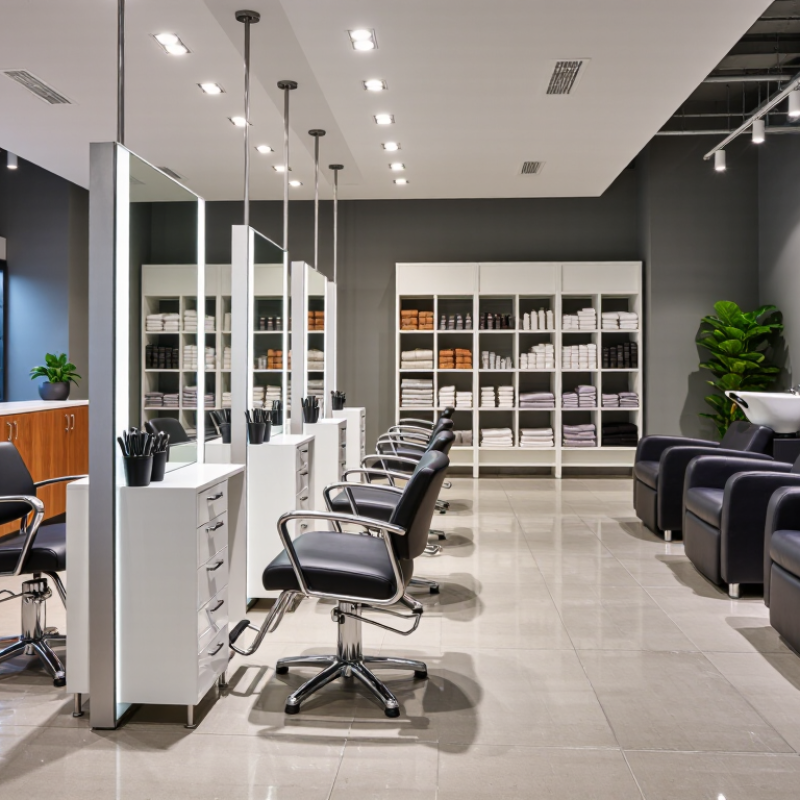
China Top 10 Salon Furniture Factory Manufacturers?
China’s furniture industry has remarkable export strength. According to ITC data, China’s furniture exports reached US$75.4 billion in 2023. This figure reflects a mature supply chain, not salon furniture alone. It includes upholstery, wood products, metal frames, and commercial interiors. For salon buyers, this scale can support flexible sourcing, competitive pricing, and faster component replacement.
A serious top-ten evaluation should examine more than showroom appearance. Check production capacity, material traceability, welding quality, foam density, and upholstery stitching. Ask for factory audit records and recent product samples. A reliable manufacturer should explain load testing, moisture protection, packaging design, and warranty handling clearly. Small details matter. For example, a shampoo unit may look attractive but fail if its drainage seal is weak. Lead times also deserve attention, especially during export seasons. A polished catalog can mislead. Buyers should compare actual samples with approved specifications before placing large orders.
Tips: Request a video inspection of cutting, assembly, and quality-control areas. Confirm carton dimensions before shipping. Test reclining mechanisms repeatedly. Review spare-parts availability in writing. Do not judge factories only by export volume; communication accuracy and after-sales discipline often reveal more. My view may be incomplete, because factory performance can change with staffing, materials, and order pressure. Recheck key details before signing.
An anonymized industry-level comparison of salon furniture manufacturing capabilities. No company names, brands, or undisclosed company-specific figures are included.
| No. | Anonymous Factory Profile | Common Manufacturing Hub | Primary Salon Furniture Capability | Typical Material Structure | Typical Product Configuration | Relevant HS Heading | Applicable Compliance References | Export-Buyer Evaluation Focus |
|---|---|---|---|---|---|---|---|---|
| 01 | Factory Profile A | Foshan, Guangdong | Styling chairs, barber chairs, shampoo units | Powder-coated metal, molded foam, PU or PVC upholstery | Hydraulic base, reclining backrest, integrated footrest | 9401; 9402; 9403 | Applicable mechanical-safety, upholstery, chemical and electrical requirements | Hydraulic durability, weld quality, upholstery consistency |
| 02 | Factory Profile B | Guangzhou, Guangdong | Beauty beds, facial beds, massage tables | Steel or aluminum frame, high-density foam, synthetic leather | Manual or electric adjustment, removable headrest, storage options | 9402; 9403 | Electrical safety and electromagnetic compatibility where powered functions are used | Load capacity, actuator performance, cleanability of surfaces |
| 03 | Factory Profile C | Zhongshan, Guangdong | Salon reception desks and styling stations | MDF or plywood panels, laminate, glass, metal hardware | Countertop, mirror, drawer modules, cable-management channels | 9403 | Formaldehyde-emission requirements and material documentation where required by destination market | Panel flatness, edge sealing, hardware alignment, packaging protection |
| 04 | Factory Profile D | Ningbo, Zhejiang | Salon trolleys, carts and mobile storage | Steel, aluminum, ABS or polypropylene components | Lockable wheels, trays, drawers, removable tool holders | 9403 | Material safety and chemical-restriction requirements applicable to the destination market | Wheel stability, drawer travel, corrosion resistance, assembly time |
| 05 | Factory Profile E | Hangzhou, Zhejiang | Wood-based salon cabinets and retail fixtures | Plywood, MDF, solid wood details, laminate or veneer | Open shelving, lockable cabinets, custom color and size options | 9403 | FSC chain-of-custody documentation when certified wood is specified; emissions requirements as applicable | Moisture resistance, board density, coating quality, sustainability documents |
| 06 | Factory Profile F | Anji, Zhejiang | Waiting chairs, reception seating and lounge furniture | Steel frame, molded foam, fabric, PU or leather upholstery | Single seats, connected seating, metal or wooden legs | 9401 | Commercial seating strength and durability testing where requested by the buyer | Static load, seam strength, foam resilience, color fastness |
| 07 | Factory Profile G | Suzhou, Jiangsu | Metal-frame salon seating and accessory frames | Welded steel or aluminum, electrostatic powder coating | Stackable or fixed frames, upholstered or hard-seat variants | 9401; 9403 | Coating chemical requirements and commercial furniture durability testing as applicable | Weld penetration, coating thickness, dimensional tolerance, stacking safety |
| 08 | Factory Profile H | Xiamen, Fujian | Compact salon furniture for apartment and studio formats | Engineered wood, metal fittings, compact upholstery components | Space-saving stations, foldable or modular storage, flat-pack options | 9403; 9401 | Packaging, emissions and general product-safety requirements of the destination market | Carton efficiency, installation instructions, replacement hardware availability |
| 09 | Factory Profile I | Qingdao, Shandong | Large-project salon furniture and contract interiors | Commercial plywood, metal, solid-surface panels and durable upholstery | Coordinated reception, workstation and waiting-area packages | 9401; 9403 | Project-specific fire, emissions, accessibility and electrical requirements | Project drawings, batch consistency, installation coordination, quality records |
| 10 | Factory Profile J | Shanghai and nearby East China manufacturing belt | Design-led, customized and export-oriented salon interiors | Mixed materials including metal, engineered wood, glass and upholstery | OEM/ODM layouts, custom finishes, coordinated furniture collections | 9401; 9402; 9403 | Destination-market product safety, chemical, electrical and sustainability requirements | Prototype approval, engineering change control, inspection and after-sales support |
Industry reference: China’s 2023 furniture exports were reported at approximately US$75.4 billion by the International Trade Centre (ITC).
Data note: The table uses publicly recognizable manufacturing clusters, product categories, HS headings and applicable evaluation criteria. Factory-level production volume, ranking, revenue and brand information are not publicly standardized and are therefore not presented as verified company data.