• Monday

    9:00-5:00

  • Tuesday

    9:00-5:00

  • Wednesday

    9:00-5:00

  • Thursday

    9:00-5:00

  • Friday

    9:00-5:00

  • Saturday

    9:00-4:00

  • Sunday

    CLOSED

How to Choose the Best Gym Equipment for Your Business?

Choosing the right Gym Equipment can determine whether a fitness business feels efficient, safe, and worth revisiting.

The Health & Fitness Association reported 72.9 million American fitness-facility users in 2023. That figure signals strong demand, but demand alone does not guarantee profitable equipment choices. The same report shows why operators must study member behavior, visit frequency, and preferred training styles before purchasing machines.

ACSM’s Worldwide Survey of Fitness Trends continues to highlight wearable technology, strength training, and functional fitness. These trends affect equipment planning. A commercial gym may need power racks, adjustable benches, cable systems, cardio machines, and recovery tools. However, every square meter must earn its place. A treadmill that remains unused becomes expensive floor decoration.

Cedric X. Bryant, PhD, President and Chief Science Officer of the American Council on Exercise, has emphasized, “The best exercise program is one that people will do consistently.” That principle applies to equipment selection. Members need machines that feel approachable, comfortable, and dependable. Staff also need equipment that can be adjusted quickly and maintained without disrupting sessions.

Budget matters, but the cheapest option may create higher repair costs. A premium machine may also fail commercially if members dislike its movement. Managers should test equipment with real users, measure noise levels, inspect warranty terms, and calculate maintenance costs. Small details matter, including storage hooks, screen visibility, and cleaning access.

No report can predict every member’s preference. That is the uncomfortable part. Careful operators still need feedback after installation. The strongest purchasing plan combines published data, professional advice, staff experience, and honest observation.
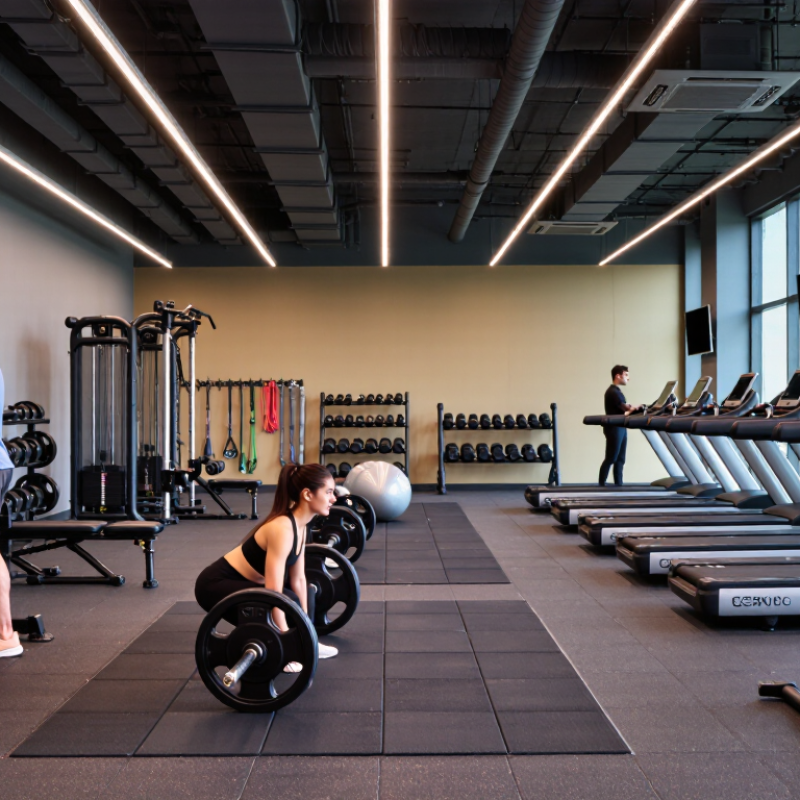
How to Choose the Best Gym Equipment for Your Business?

Define Your Business’s Fitness Goals and Target Customer

How to Choose the Best Gym Equipment for Your Business?

Define Your Business’s Fitness Goals and Target Customer

Your equipment choices should begin with your business model, not a supplier’s catalogue. A small studio serving office workers may need compact cardio machines, adjustable weights, and quiet flooring. A strength-focused facility requires power racks, lifting platforms, and durable benches. The right question is simple: What results will members pay to achieve?

Study your target customers carefully. Observe their age, training experience, schedules, and common frustrations. Beginners may value clear controls, low step-up heights, and guided resistance equipment. Experienced members often expect heavier loads, flexible settings, and efficient workout stations. Ask potential customers directly. Short interviews can reveal more than assumptions.

Measure the room before ordering anything. Leave clear walking paths around every station. Check ceiling height, electrical capacity, ventilation, and flooring strength. Equipment should support safe movement during busy periods, not only look impressive when the gym is empty. Choose machines with accessible adjustment points and readable instructions. Staff should understand basic operation, cleaning, inspection, and emergency procedures.

Test equipment with real users when possible. Record setup time, noise, comfort, and maintenance needs. My own planning mistake was giving too much space to one popular machine. It created a bottleneck near the entrance. Member feedback exposed the problem within weeks. That experience changed how I assess equipment: capacity, usability, and customer behavior must be considered together. A cheaper purchase can become expensive when repairs, training, and unused floor space are included.

Assess Available Space, Layout, and Facility Requirements

Before selecting gym equipment, measure the usable floor area, not the total room size. Mark columns, doors, windows, and emergency routes on a scaled plan. Leave clear walking lanes between stations. A crowded layout can make even quality equipment feel unsafe. I once underestimated a storage corner and lost valuable training space. That mistake changed how I plan facilities. Include ceiling height, especially for cable systems, racks, and overhead movements. Check whether the floor can support concentrated loads. Concrete may still need protective flooring beneath heavy equipment.

Consider how members will move through the facility. Place high-use machines near accessible paths, while quieter training areas can sit farther from reception. Keep stretching zones away from weightlifting traffic. Allow enough space for users to enter, adjust, and exit each station without crossing another person’s movement. Small details matter. Measure equipment with doors and handles fully extended. Product dimensions alone can be misleading.

Review electrical capacity, ventilation, lighting, drainage, and acoustic needs before ordering. Multiple powered machines may require additional circuits or professional installation. Poor airflow can make a small studio uncomfortable within minutes. Flooring should control impact, reduce slipping, and tolerate regular cleaning. Consult qualified contractors about structural loads, fire access, accessibility, and local facility requirements. Do not rely on estimates. A slightly imperfect plan is better than a rushed one, but revisit it after observing real member behavior. People rarely move exactly as expected.

How to Choose the Best Gym Equipment for Your Business?

Assess available space, layout, and facility requirements before purchasing equipment. The chart shows typical floor area requirements, including equipment footprint and practical user clearance, to support safer and more efficient planning.

Planning values are typical estimates for commercial fitness layouts. Confirm final dimensions, access routes, ventilation, electrical capacity, and local safety requirements before installation.

Compare Equipment Types, Features, Quality, and Safety

How to Choose the Best Gym Equipment for Your Business?

Equipment selection should begin with member needs, not showroom appearance. ACSM’s 2024 Worldwide Survey ranked traditional strength training among the leading fitness trends. This supports investing in racks, adjustable benches, cable stations, and durable free weights. However, one trend does not fit every facility. A small studio may need compact multi-use equipment, while a busy club needs fast adjustment and strong traffic tolerance.

The European Health & Fitness Market Report 2024 recorded 71.6 million fitness members across Europe in 2023, showing how varied user demands can become.

Compare features carefully. Check load ratings, frame stability, grip comfort, adjustment points, and replacement-part access. Look for clear emergency stops on powered machines. Leave enough space for users to move without contacting nearby equipment. The European Health & Fitness Market Report 2024 recorded 71.6 million fitness members across Europe in 2023, showing how varied user demands can become. More members also mean more maintenance pressure.

Safety is not a decorative feature.

Choose equipment with documented testing, readable instructions, protective guards, and stable flooring requirements. Inspect cables, bolts, upholstery, and moving joints on a fixed schedule. In practice, the cheapest option can become expensive after repeated repairs and downtime.

I have seen purchasing decisions focus too heavily on price, and that is a useful warning. A quieter machine may improve the training floor more than a larger screen. Review real usage data after installation, because even a well-researched choice may perform differently under daily commercial use.

Calculate Purchase Costs, Maintenance, and Long-Term Value

Choosing gym equipment by sticker price is risky. Calculate its full cost over five years before signing a purchase order. Include delivery, installation, floor protection, software, energy, inspections, repairs, and eventual replacement. For example, a $3,000 treadmill may require $600 for installation and $180 yearly maintenance. Its five-year ownership cost becomes $4,500 before electricity. That number is less attractive.

Industry data helps test your assumptions. The Health & Fitness Association’s 2024 Global Report recorded approximately $96.7 billion in fitness-industry revenue during 2023 across tracked markets. The 2024 EuropeActive and Deloitte report measured about 67.6 million European fitness members in 2023. These figures suggest strong demand, but demand does not guarantee equipment utilization. A busy treadmill area deserves durable units; an unused specialized machine may become expensive floor decoration.

Track each machine’s usage weekly. Divide its total ownership cost by projected visits, then compare that figure with expected revenue per session. Reserve 3% to 8% of equipment cost annually for maintenance, depending on intensity and warranty coverage. This is a planning range, not a universal rule. Ask technicians for local service times and spare-part prices. I have seen operators underestimate downtime because they counted invoices, but ignored lost sessions. That mistake deserves attention. A cheaper machine can still lose money when repairs interrupt peak-hour training. Review the calculation every six months, because member behavior rarely follows the original spreadsheet.

Select Suppliers, Plan Installation, and Schedule Equipment Upgrades

How to Choose the Best Gym Equipment for Your Business?

Selecting equipment starts with the supplier, not the catalogue. Ask for load ratings, warranty terms, spare-part availability, and technician response times. A low purchase price can become expensive when one cable machine stays unusable for three weeks. The Health & Fitness Association reported 72.9 million American fitness-facility members in 2023. That volume increases pressure on equipment reliability and maintenance planning.

Installation deserves a written schedule. Measure doorways, ceiling height, flooring strength, and electrical capacity before delivery. Keep heavy strength equipment away from emergency routes and crowded walkways. Ask the supplier to provide assembly drawings, anchoring requirements, staff training, and inspection records. In my experience, teams often plan delivery carefully but underestimate noise, dust, and customer disruption. That mistake is avoidable. A one-day closure may still damage member trust.

Tips: Create a replacement calendar before buying. Record daily usage, repair frequency, and user complaints. Upgrade the busiest stations first, rather than replacing attractive equipment. The ACSM Worldwide Survey has repeatedly identified wearable technology and strength-related training as major industry trends. Therefore, consider equipment that supports measurable progress and varied programming. However, trend reports cannot replace local evidence. Test one unit with members, collect feedback, and review the results after four weeks. Leave room for revision.

How to Choose the Best Gym Equipment for Your Business? - Select Suppliers, Plan Installation, and Schedule Equipment Upgrades

Equipment Category Typical Business Use Recommended Planning Area Electrical or Floor Requirement Supplier Selection Criteria Typical Lead Time Installation Planning Routine Service Interval Upgrade or Replacement Window Business Priority
Treadmills Cardiovascular training and high-frequency member use Approximately 6–8 m² per unit, including user clearance and circulation Dedicated power outlet; level floor; shock-absorbing surface recommended Check motor rating, maximum user weight, emergency stop design, noise level, parts availability, and service coverage 4–10 weeks Confirm door, lift, and corridor dimensions; position units with ventilation and rear clearance Monthly visual inspection; quarterly belt and deck inspection 5–8 years, depending on operating hours and maintenance history High
Elliptical Trainers Low-impact cardiovascular training Approximately 5–7 m² per unit, including side and rear clearance Most models use standard power; stable, level flooring required Compare stride length, user weight capacity, step-up height, console usability, and warranty terms 4–10 weeks Leave adequate space between moving pedals and neighboring equipment Quarterly inspection of pivot points, pedals, and drive components 6–9 years in a well-maintained commercial setting Medium
Indoor Cycles Group cycling and individual cardio sessions Approximately 2.5–3.5 m² per unit in a studio layout Usually no fixed power connection; durable, non-slip flooring required Evaluate frame stability, adjustment range, resistance system, corrosion protection, and replacement parts 3–8 weeks Plan instructor sightlines, audio connections, airflow, and safe spacing between handlebars Monthly adjustment and hardware check; quarterly drivetrain inspection 4–7 years under frequent group-class use High
Rowing Machines Full-body conditioning and interval training Approximately 4–6 m² per unit, including operating and storage space Stable floor required; rechargeable or standard-powered monitor depending on configuration Review rail length, resistance consistency, folding or storage design, monitor functions, and user weight limit 3–8 weeks Provide unobstructed travel for the seat and handle; avoid placing units near walkways Monthly chain, rail, seat, and foot-strap inspection 5–8 years, subject to usage intensity Medium
Selectorized Strength Machines Accessible resistance training for general members Approximately 4–7 m² per unit, depending on movement pattern Reinforced, level floor; generally no electrical connection Check biomechanics, adjustment accessibility, frame construction, cable routing, upholstery quality, and service parts 6–12 weeks Map equipment footprints before delivery; verify ceiling height and assembly access Monthly cable and upholstery check; quarterly bolt and pulley inspection 8–12 years with regular maintenance High
Power Racks and Cages Squats, presses, pull-ups, and coached strength training Approximately 6–10 m² per station, including barbell clearance Heavy-duty, level flooring; anchoring may be required for some configurations Assess steel thickness, load rating, anchor points, hole spacing, safety arms, and accessory compatibility 6–12 weeks Confirm ceiling height, slab condition, lifting platform dimensions, and safe traffic flow Monthly hardware inspection; immediate inspection after impact or overload events 10–15 years when structurally sound and properly maintained High
Free Weights Strength development, functional training, and personal training Approximately 5–8 m² per rack or storage zone, plus lifting clearance Impact-resistant rubber flooring and sufficient structural load capacity Check weight accuracy, handle finish, rack stability, storage capacity, and floor-protection requirements 2–8 weeks Place heavier items at lower levels; separate lifting zones from general circulation Weekly visual inspection; monthly rack, handle, and flooring review 8–15 years; replace damaged items immediately High
Functional Training Units Group classes, personal training, and multi-directional exercise Approximately 10–20 m² per unit, including cable and movement clearance Reinforced floor; anchoring and adequate ceiling height may be necessary Review cable travel, attachment points, load ratings, modularity, and availability of accessories 6–12 weeks Coordinate anchor locations, ceiling clearance, storage, and emergency access routes Monthly cable, carabiner, anchor, and frame inspection 8–12 years, with accessory replacement as needed Medium
Rubber Flooring and Platforms Impact reduction, noise control, and floor protection Cover the planned training zone; allow additional space for transitions and access Subfloor must be dry, level, clean, and structurally suitable Compare thickness, density, slip resistance, odor, seam design, fire classification, and cleaning requirements 2–6 weeks Install before heavy equipment; allow adhesive curing time and verify door clearances Daily cleaning; quarterly inspection for lifted edges, gaps, and compression 5–10 years, depending on traffic and loading High
Digital Consoles and Member Technology Workout tracking, equipment engagement, and operational reporting Integrated into equipment; allocate staff time for network and user-support areas Stable network coverage, power availability, and secure data configuration Check software compatibility, data privacy controls, offline operation, update policy, and technical support 4–12 weeks Test network coverage, power outlets, account access, and equipment-to-system integration before opening Monthly software review; quarterly connectivity and security check 3–5 years for major technology refreshes Medium

Planning note: Space allowances, lead times, service intervals, and upgrade windows are practical commercial-gym planning ranges. Confirm final requirements with the selected supplier, a qualified installer, and the building or electrical consultant before purchase.

Article Source: