How to Choose the Right Door With Sidelights?
Choosing the right Door With Sidelights is not only a design decision. It affects daylight, privacy, security, insulation, and the entrance’s visual balance. A narrow hallway may feel brighter with clear sidelights. A street-facing entry may need frosted or textured glass instead. Small details matter, including the door’s swing, frame depth, threshold height, and the morning sun’s direction.
The U.S. Department of Energy reports that windows can account for 25–30% of residential heating and cooling energy use. Sidelights are glazing, so their performance deserves equal attention. Check the NFRC label for U-factor, solar heat gain coefficient, and visible transmittance. ENERGY STAR guidance also supports selecting efficient, climate-appropriate fenestration. The best glass specification in Arizona may be uncomfortable in Minnesota.
Building scientist John Straube has often emphasized, “A building is a system.” That principle applies here. The door, sidelights, wall, weatherstripping, and installation must work together. A beautiful unit can still leak air when the frame is poorly fitted. That is an easy detail to overlook.
This guide will compare glass types, privacy levels, frame materials, energy ratings, security features, and installation requirements. It will also consider practical use. Can children see through the glass? Does the handle remain comfortable beside the sidelight? Will furniture block the daylight? Houzz renovation research continues to show strong homeowner interest in brighter, more welcoming entries, but preference is not performance. Some choices look right in a showroom and feel wrong at home. Careful measurement and honest trade-offs create a better result.
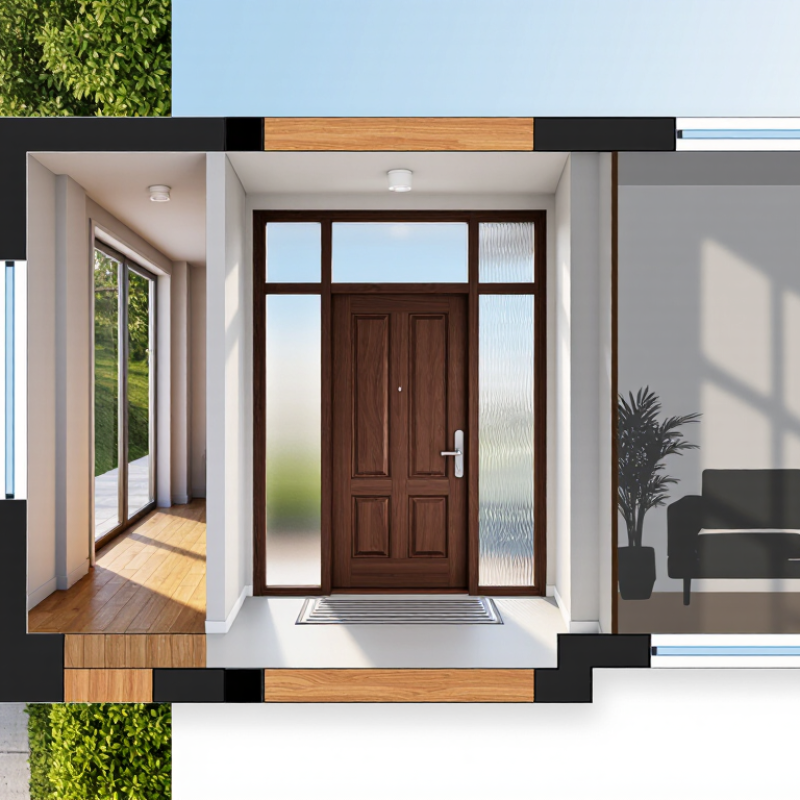
Understanding Door Sidelights and Their Main Functions
How to Choose the Right Door With Sidelights?
Understanding Door Sidelights and Their Main Functions
A sidelight is a narrow glazed panel beside a door. It changes how an entrance feels and functions. Daylight reaches the hallway, while occupants gain a limited view of visitors. That small panel can make a dark foyer feel noticeably wider. Light changes the entry.
Privacy requires more than clear glass. Frosted, textured, or tinted glazing softens views without blocking daylight completely. Laminated or tempered glass can improve impact resistance, but the complete door assembly still needs proper installation. Security depends on the frame, locks, hinges, and surrounding wall.
Energy performance deserves careful attention. The U.S. Department of Energy states that windows can represent 25–30% of residential heating and cooling energy use. A sidelight adds another glazed area, so low-emissivity glass and a suitable U-factor matter. National Fenestration Rating Council guidance explains that U-factor measures heat transfer, while solar heat gain coefficient indicates how much solar heat enters. Lower U-factor usually improves insulation, but the best value depends on climate and orientation.
Measure the rough opening before choosing a style. Check the sidelight width, door swing, threshold height, and available wall space. In site inspections, I have seen beautiful sidelights create awkward furniture clearance. That mistake is easy to miss. I would also question oversized glass near a busy walkway; more daylight is not always better. A balanced design combines visibility, privacy, thermal performance, and everyday comfort.
A balanced design combines visibility, privacy, thermal performance, and everyday comfort.
Assessing Your Entryway Size, Layout, and Available Space
How to Choose the Right Door With Sidelights?
Assessing Your Entryway Size, Layout, and Available Space
A sidelighted door can brighten a dark entrance, but the opening must be measured carefully. Measure the total width, height, and depth of your entryway. Include the existing frame, trim, threshold, and nearby walls. A simple sketch can reveal problems that measurements alone may miss.
Check how the door swings before choosing a layout. An inward swing may block a narrow hallway or strike furniture. An outward swing might conflict with steps, railings, or a busy walkway. Consider the sidelight’s position, too. One narrow panel can suit a compact entrance, while matching panels need a wider opening. Proportion matters more than symmetry. Sometimes, a smaller design looks more balanced.
Tips: Use masking tape to mark the proposed door and sidelights on the wall. Walk through the taped opening with groceries or a coat. Notice where elbows, handles, and furniture might interfere. Measure twice. I once found that a planned sidelight reduced useful wall space for a light switch. That small detail changed the layout. Check floor level and ceiling height as well. Uneven surfaces can make a properly sized unit appear crooked. When the opening is unusual, ask an experienced installer to verify structural conditions before ordering. It may cost a little more, but correcting an incorrect opening costs far more.
Choosing the Right Sidelight Style, Material, and Glass Type
How to Choose the Right Door With Sidelights?
Choosing the Right Sidelight Style, Material, and Glass Type
A sidelight should support the door, not compete with it. Narrow vertical panels suit compact entries and modern façades. Wider panels create a brighter, more open impression. Before choosing a style, measure the wall, trim, threshold, and available swing clearance. Measure twice. A beautiful design can still feel cramped when furniture blocks the opening.
Material affects maintenance, insulation, and appearance. Fiberglass resists moisture and usually needs less upkeep than wood. Wood offers warmth and can be repaired, but it needs regular sealing in exposed locations. Steel provides strength and stable performance, although damaged coatings may eventually rust. The U.S. Department of Energy reports that windows can account for 25–30% of residential heating and cooling energy use. Sidelights add more glass, so their thermal ratings deserve careful attention.
Glass type changes comfort and privacy. Low-emissivity coated glass can reduce unwanted heat transfer, while double glazing improves insulation over single glazing. For entries facing busy streets, frosted, textured, or laminated glass can soften views without creating a closed feeling. Check the NFRC label for U-factor and solar heat gain coefficient; lower U-factor generally means better insulation. Climate still matters. A low solar-gain option may help hot regions, but colder homes can benefit from useful winter sunlight. Perfect choices are rare. Review the orientation, shade, and nighttime privacy before ordering.
Comparing Privacy, Security, Energy Efficiency, and Maintenance Needs
Choosing a door with sidelights starts with the room’s exposure, not its appearance. A clear sidelight can brighten a dim hallway, but it also reveals movement at night. For street-facing entrances, choose frosted, reeded, or textured glass. Privacy is not absolute. With indoor lights on, silhouettes may still appear. Layered blinds or a narrow curtain can correct that weakness without blocking daytime light. Place the glass above eye level when possible, especially near busy walkways.
Security depends on the whole entry system, not glass alone. Select laminated sidelights, a reinforced frame, and a properly fitted deadbolt. The lock should engage deeply into the structural framing. Avoid relying on decorative hardware. During installation work, I check gaps around the frame and test the latch several times. A poorly aligned door can scrape, leak air, and weaken daily security. Still, thicker glass does not solve every risk. A strong frame and correct installation matter just as much.
For energy efficiency, compare the door and sidelight’s U-factor, not just their appearance. Low-emissivity glazing can reduce winter heat loss and summer heat gain. Weatherstripping, a tight threshold, and a sealed frame are equally important. On cold mornings, inspect the lower corners for drafts or condensation. Maintenance needs vary with exposure. Rain and afternoon sun can fade finishes and age seals faster. Wipe textured glass gently, and replace cracked seals before moisture reaches the frame. I once underestimated cleaning time around divided glass. The detail looked elegant, but dust collected in every narrow joint. That small regret should influence the final design.
How to Choose the Right Door With Sidelights?
Comparing Privacy, Security, Energy Efficiency, and Maintenance Needs
Relative planning scores from 1 to 5, where 5 is the most favorable result. Clear single-pane glass provides the least privacy and insulation, while laminated low-E glazing improves security and energy performance. Obscure or textured glass improves privacy, but all glass options still require regular cleaning. Actual results depend on glass thickness, frame quality, weather exposure, installation, and local climate.
Selecting the Best Door and Sidelight Configuration for Your Home
How to Choose the Right Door With Sidelights?
Choosing the best door and sidelight configuration starts with how your entry is used. A narrow hallway may need one sidelight, not two. Measure the rough opening, wall thickness, swing direction, and nearby furniture before choosing a style. Leave space for trim and weather seals. Small errors become expensive after installation.
Glass placement changes both daylight and privacy. Clear glass brightens a shaded foyer, while textured or frosted glass softens views from the street. For a south-facing entrance, consider heat gain and fading near the threshold. I usually stand outside at several times of day. The same glass can look calm at noon and exposed at night. That detail is easy to miss.
Match the sidelight height and frame lines to the door, but do not chase symmetry blindly. A wider sidelight can make a small entrance feel generous, yet it may reduce wall space for switches or mail. Select insulated glass and durable seals for comfort. Confirm the door’s hardware clearance before ordering. I once overlooked a light-switch position; the finished entry felt awkward. Rechecking the plan would have prevented it. Local installation requirements should also be verified with a qualified professional.