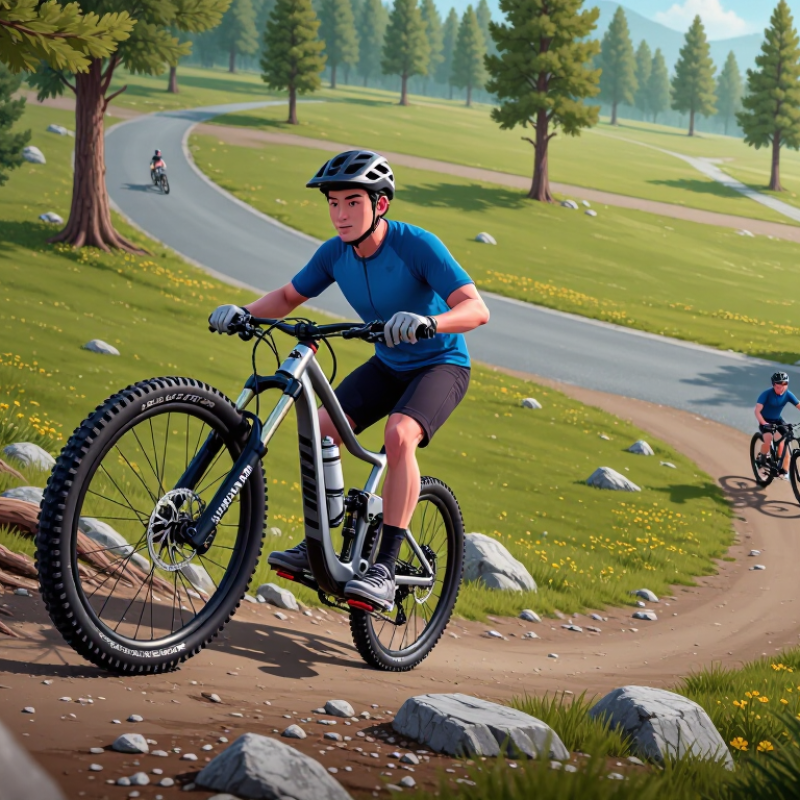
| Cross-Country Hardtail | Fitness rides, smooth trails, beginner off-road riding, and efficient climbing. | Front suspension fork; rigid rear triangle. | Front: approximately 80–120 mm | 27.5 in 29 in | Efficient and responsive, with direct power transfer and relatively quick steering. | Lightweight, simple to maintain, efficient on climbs, and usually more affordable than a full-suspension bike. | Less comfort and traction on roots, rocks, drops, and rough descents. |
| Cross-Country Full Suspension | Fast trail loops, endurance events, technical cross-country courses, and long-distance off-road rides. | Front suspension fork and rear shock. | Front: approximately 100–120 mm
Rear: approximately 90–110 mm | 27.5 in 29 in | Low and efficient riding position, with balanced climbing ability and improved control over uneven surfaces. | Better traction, comfort, and control than a hardtail while remaining relatively efficient. | More expensive, heavier, and more complex to service than a hardtail. |
| Trail Bike | General-purpose trail riding, varied singletrack, moderate technical terrain, and all-day adventure rides. | Front suspension fork and rear shock. | Front: approximately 120–150 mm
Rear: approximately 110–140 mm | 27.5 in 29 in Mixed | Neutral and versatile, combining stable descending with practical climbing performance. | One of the most versatile categories; suitable for a broad range of trails and riding conditions. | Not as light and fast as a dedicated cross-country bike or as capable on extreme terrain as an enduro bike. |
| All-Mountain Bike | Long mountain rides involving substantial climbing, technical descents, rock gardens, and varied alpine terrain. | Front suspension fork and rear shock with a focus on descending control. | Front: approximately 140–160 mm
Rear: approximately 130–160 mm | 29 in Mixed | Stable at speed but still designed to pedal efficiently between descents. | Strong balance between climbing range, descending confidence, and technical versatility. | Heavier and less efficient on smooth trails than a cross-country or lightweight trail bike. |
| Enduro Bike | Aggressive technical descents, steep terrain, rough natural trails, and timed enduro-style stages. | Long-travel front fork and rear shock, commonly with robust components. | Front: approximately 160–180 mm
Rear: approximately 150–180 mm | 29 in Mixed | Slack and stable, with strong high-speed control and increased confidence on steep descents. | Excellent control through large impacts, steep sections, and rough, fast terrain. | Requires more effort on climbs and can feel less agile on smooth, low-speed trails. |
| Downhill Bike | Lift-accessed bike parks, downhill racing, jumps, drops, and the roughest sustained descents. | Long-travel dual suspension with a highly reinforced frame and components. | Front: approximately 190–200 mm
Rear: approximately 190–220 mm | 27.5 in 29 in Mixed | Very stable at speed, with geometry optimized for descending rather than pedaling uphill. | Maximum descending control, impact absorption, and durability for demanding gravity riding. | Poor climbing efficiency, high weight, limited versatility, and usually requires shuttle or lift access. |
| Dirt Jump Bike | Dirt jumps, pump tracks, slopestyle-style riding, manuals, and compact urban features. | Usually a rigid rear end with a short-travel front fork; some models are fully rigid. | Front: approximately 80–100 mm, or rigid | 26 in 27.5 in | Compact, agile, and easy to maneuver in the air and through tight transitions. | Strong, playful, and well suited to jumps, tricks, and repeated hard landings. | Uncomfortable and inefficient for long rides, steep natural trails, and extended technical descents. |
| Fat Bike | Snow, sand, loose gravel, soft ground, and low-traction riding conditions. | Usually rigid; some models use a front suspension fork. | Rigid or front: approximately 60–100 mm | 26 in 27.5 in | Stable and traction-focused, with very wide tires run at low pressure. | Excellent flotation and grip on surfaces where standard mountain bike tires may sink or lose traction. | Heavy, slower on firm trails, and less precise than narrower-tire bikes on technical hardpack. |
| Electric Mountain Bike | Longer trail rides, steep climbs, repeated laps, and helping riders manage demanding terrain or distance. | Available as hardtail or full suspension, depending on the intended terrain. | Approximately 80–180 mm, depending on design | 27.5 in 29 in Mixed | Motor assistance improves climbing ability; handling depends on the bike’s suspension category and additional weight. | Extends ride range, reduces the physical effort of climbs, and makes repeated ascents more accessible. | Heavier, more expensive, dependent on battery charge, and subject to local access regulations. |