What Is an Electric City Bike?
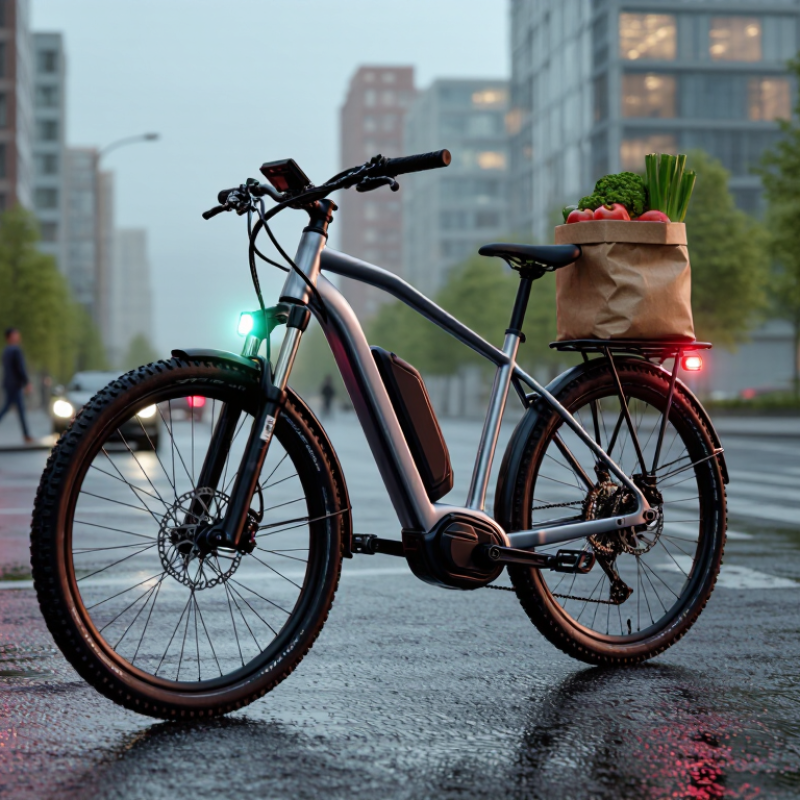
An electric city bike is a practical bicycle with a rechargeable motor, pedal assistance, and equipment designed for urban travel. It usually includes a battery, display, integrated lights, mudguards, and a rear rack. Think of a morning commute: smooth assistance at traffic lights, a bright headlamp under gray skies, and space for groceries.
The category is not perfectly defined. Some models resemble traditional bicycles, while others use wide tires, step-through frames, or stronger motors for hills. The European Bicycle Industry Confederation reported approximately 5.5 million e-bikes sold in Europe in 2022, showing how quickly electric mobility is entering everyday transport. Germany’s ZIV market data also recorded more than two million e-bike sales in the same year. These figures suggest strong demand, but sales alone do not prove that every electric city bike fits every rider.
Practical details matter. Battery range changes with rider weight, temperature, terrain, tire pressure, and assistance level. A claimed range may feel optimistic on a windy route. That deserves attention. Mobility analyst Horace Dediu has said, “The bicycle is the most efficient machine ever invented.” An electric city bike builds on that efficiency while reducing the effort required for hills and longer journeys. Still, it is not a magic replacement for public transport or every car trip. Its real value depends on safe streets, secure parking, reliable charging, and daily habits. This guide explains the main components, riding experience, benefits, limitations, and buying considerations behind the modern electric city bike.
Definition and Core Components of an Electric City Bike
What Is an Electric City Bike?
An electric city bike is a pedal bicycle with a motor that assists while you ride. Its purpose is practical urban travel: commuting, errands, and short trips on paved streets. The main components are a frame, pedals and drivetrain, electric motor, rechargeable battery, controller, and control display. Many models also include lights, fenders, and a rear rack for everyday use.
The motor may sit in the front or rear wheel, or near the pedals. A pedal sensor detects motion; a torque sensor responds to how firmly you pedal. The battery stores energy, while the controller manages assistance and the display shows details such as speed and charge. PeopleForBikes’ U.S. e-bike market report found sales rose 269% from 2019 to 2022, reflecting growing interest in this form of transport. But a popular category does not guarantee a comfortable fit. Weight, range, and ease of battery removal vary, so check the actual bike rather than relying on a single headline figure.
Tips: Test the bike on a familiar hill, not only a flat showroom floor. Check whether the battery is easy to remove, and ask how local service handles electrical components. Small details matter. A heavy bike can feel awkward on stairs, even when its motor makes riding easier.
How Pedal Assistance Works: Motors, Batteries, and Controllers
An electric city bike uses a motor to add power while you pedal. A cadence sensor detects that the cranks are turning; a torque sensor can also measure how firmly you push. The controller reads these signals and adjusts motor output, so assistance feels stronger on a hill and gentler on flat streets. Not magic. It is a small feedback system responding to your effort. The battery stores energy, usually described in watt-hours: voltage multiplied by amp-hours. More capacity can support longer rides, but hills, cold weather, tire pressure, rider weight, and assistance level all affect range.
Industry figures show how common these systems have become. Germany’s ZIV reported about 2.1 million e-bikes sold in 2023, representing 53% of new bicycle sales there. CONEBI’s 2024 European market profile recorded roughly 5.1 million e-bikes sold across Europe that year. These totals describe the market, not what one battery can do. For a weekday commute, check the battery’s watt-hours and test different assistance levels on your actual route. A display may show a confident range estimate, but it cannot know tomorrow’s wind or how often you will climb. I would leave a margin. Small details matter. A poorly inflated tire quietly uses more energy, and that can make a supposedly generous range feel less generous.
What Is an Electric City Bike? How Pedal Assistance Works
Pedal sensors send rider input to the controller, which regulates how much power the motor draws from the battery. Higher assistance generally uses more energy per kilometre, reducing estimated range.
Illustrative estimates for a 500 Wh battery: range is calculated as battery capacity divided by energy use. Actual range varies with terrain, rider and cargo weight, speed, weather, and riding style.
Urban Performance Standards: 250 W, 25 km/h, and Class 1–3 Systems
An electric city bike combines human pedaling with a small motor for daily urban travel. In many European markets, the common benchmark is 250 watts of continuous rated power and assistance up to 25 km/h. EN 15194 uses these figures for electrically assisted cycles. The motor should support the rider, not replace the bicycle’s basic handling.
Class 1 systems provide assistance only while the rider pedals, usually up to 20 mph, or about 32 km/h. Class 2 systems include a throttle and can assist without pedaling, under similar speed limits. Class 3 systems remain pedal-assisted but may reach 28 mph, or about 45 km/h, where local rules allow. These labels are widely used in North American policy frameworks, yet definitions still vary between jurisdictions. Check the road signs, not just the product display.
Real-world performance depends on weight, hills, tire pressure, temperature, and battery condition. A 250 W motor may feel calm on flat streets but strained beside a steep bridge. NACTO reported 157 million shared micromobility trips in the United States and Canada during 2023, showing strong demand for compact urban transport. That figure does not prove every e-bike replaces a car. It only signals changing travel habits. One practical test matters: ride five kilometers through traffic, stop twice, and observe how naturally the assistance responds. The neat specification sheet can be misleading.
What Is an Electric City Bike? - Urban Performance Standards: 250 W, 25 km/h, and Class 1–3 Systems
| System or feature | Typical rule or specification | What it means for urban riding | Important qualification |
| European Union pedelec baseline | Up to 250 W maximum continuous rated power; motor assistance is reduced and cut off before the bicycle reaches 25 km/h, and normally operates while the rider pedals. | Designed to assist pedaling in everyday traffic while retaining the basic characteristics of a conventional bicycle. | This is a specific EU legal framework, not a worldwide e-bike limit. National rules and vehicle classifications may also apply. |
| US Class 1 | Pedal-assist only; assistance stops when the bicycle reaches 20 mph (about 32 km/h). | Motor support is linked to pedaling and ends at the class speed limit. | Part of a commonly used US classification framework. Access rules can vary by state, local jurisdiction, and path. |
| US Class 2 | May provide motor assistance without pedaling, typically through a throttle; assistance stops at 20 mph (about 32 km/h). | Throttle operation can help with starts or short sections where the rider does not want to pedal. | The precise permitted equipment and where the bike may be ridden depend on applicable local law. |
| US Class 3 | Pedal-assist only; assistance stops at 28 mph (about 45 km/h). The commonly used class definition includes a speedometer. | Offers a higher assisted-speed ceiling that may suit longer commutes on roads where permitted. | Helmet, minimum-age, roadway, and path rules vary by jurisdiction. |
| Motor power and class | A 250 W rating is the EU pedelec baseline described above; the US Class 1–3 definitions primarily specify assistance type and speed limits. | Check power, assistance behavior, and speed limit together when comparing bikes for a particular city. | Do not assume that 250 W is a universal limit or that a US class designation establishes legality everywhere. |
| Assistance cutoff versus bicycle speed | The stated speed is the point at which motor assistance must stop under the relevant definition; it is not necessarily the bicycle’s maximum possible speed. | The rider may travel faster by pedaling or downhill, but the motor should no longer provide assistance above its applicable cutoff. | Actual legal treatment depends on the vehicle’s design and the rules in the place where it is used. |
| Practical city-bike checklist | Confirm the locally recognized category, assistance type, rated motor power, assistance cutoff, and any required equipment. | A correctly classified bike is easier to match to local roads, cycleways, and commuting needs. | Consult current local transport rules; classifications and access restrictions can change. |
Frame Design, Comfort Features, and Everyday City Practicality
An electric city bike combines pedal power with a quiet motor for ordinary urban trips. Its frame design usually favors a low step-over height, upright posture, and stable handling. That matters at crossings. I find a relaxed riding position easier on my neck during slow traffic. A sturdy frame also keeps the bike predictable when a front basket carries groceries. Still, “sturdy” should not mean excessively heavy.
Comfort comes from several small decisions rather than one impressive feature. A padded saddle, swept-back handlebar, and adjustable stem can reduce pressure on wrists and shoulders. Wide tires soften broken pavement, although they may feel slower on smooth lanes. Full-length mudguards help when rain leaves dark stripes on your trousers. A bright front light and dependable rear reflector improve visibility near parked cars. Do not ignore the pedals. Grippy surfaces matter with wet shoes.
For daily practicality, check the battery range against your real route, not an optimistic estimate. A ten-kilometer commute may include hills, cold weather, frequent stops, and a heavy bag. These details can reduce assisted distance. Look for simple controls, accessible charging, and enough space for a lock. The motor should support steady starts, not encourage reckless speed. I once valued maximum power too highly; easy parking and reliable brakes proved more useful. That trade-off deserves honest thought.
Safety, Charging, Maintenance, and Legal Requirements by Market
What Is an Electric City Bike?
An electric city bike combines human pedaling with a small motor for urban travel. In daily use, safety begins with visibility and control. Test the brakes, lights, bell, and tire pressure before leaving. A loose handlebar can become dangerous on uneven streets. Wear a properly fitted helmet, even where local law does not require one. Keep both hands ready for sudden doors, pedestrians, and turning vehicles.
Charging needs equal care. Use the supplied, approved charger on a dry, ventilated surface. Keep the battery away from heat, water, and damaged cables. Stop charging if you notice swelling, unusual smells, or excessive warmth. I once ignored a warm connector during a short charge. That was poor judgment, not a minor detail. Store the battery according to its instructions, especially during very cold or hot weather.
Maintenance should include brake-pad checks, chain lubrication, spoke inspection, and software or display checks when applicable. A qualified technician should inspect electrical faults and battery damage. Legal requirements depend on the market. Many European jurisdictions limit pedal-assist bicycles to 250 watts and 25 km/h, but exceptions exist. In the United States, classifications, speed limits, helmet rules, lighting, and access restrictions vary by state or city. Other markets may require registration, insurance, approved equipment, or age limits. Check the current transport authority rules before riding. Local advice can change, and online summaries are sometimes incomplete.