10 Essential Tips for Choosing the Perfect Wooden Playground Set?
Selecting the right wooden playground set can be a daunting task. With so many options available, making a choice often feels overwhelming. According to a recent industry report, playground safety and durability significantly affect children’s play experiences. It indicates that quality wooden sets can last over a decade with proper maintenance. This durability is essential, as many families desire products that withstand time and wear.
Additionally, a wooden playground set is not just about the materials used. Features like swings, slides, and climbing walls enhance physical activity. Studies show that children engaging in outdoor play improve their motor skills and social interactions. Yet, not all playground sets are created equal. Some may lack safety features or are made of inferior wood. This can lead to injuries, which is a serious concern for parents.
Choosing the right set requires careful consideration. Parents must evaluate construction quality, safety standards, and space available in their yard. A thoughtful approach will yield a choice that reflects both safety and enjoyment for their children.
Understanding Safety Standards for Wooden Playground Sets
When selecting a wooden playground set, understanding
safety standards is crucial. These standards ensure that
your children's playtime is both enjoyable and safe. Look for playground sets that comply with recognized
safety regulations. These guidelines can help minimize risks, such as falls and injuries.
Check the material quality. The wood should be untreated or
treated with safe substances. Pay attention to sharp edges,
splinters, and rough spots. Children can be clumsy, and proper finishing matters. Also, consider the design.
Wide bases and sturdy structures provide added stability, reducing
tipping risks.
Installation is just as important as the set itself. Improper assembly can lead to accidents. Follow the
manufacturer’s instructions carefully. You might find some unclear steps that require reevaluation. Lastly,
regularly inspect the set. Look for signs of wear or damage.
Prompt repairs will ensure safety remains a priority.
Evaluating Material Quality: Types of Wood and Their Durability
When selecting a wooden playground set, material quality is crucial. Not all woods are created equal. Hardwoods like oak or maple offer durability but can be expensive. Softwoods like pine are more affordable but may not last as long. Think about your budget and how much wear you expect.
Consider the wood's treatment. Treatments can enhance rot resistance. Still, they might introduce chemicals. It’s a balance between safety and durability. A beautiful finish might attract you, but check how it will hold up in rain or sun. Look for splinters too. This is not just about aesthetics; it’s a safety issue.
Think about stability over time. Wood can warp, crack, or fade. If you prefer a certain look, it might influence your choice. Will it still appeal to your kids as they grow? Regular maintenance matters as well. You might need to sand surfaces or reseal finishes. Each decision counts in creating a safe, lasting play space.
Durability of Different Types of Wood for Playground Sets
Assessing Space Requirements for Your Playground Installation
When assessing space requirements for your wooden playground installation, consider your yard's size. Determine how much room you have for the set. A crowded area can be unsafe. Aim for at least six feet of clearance around the structure. This ensures children can play safely without bumping into obstacles.
Think about the layout of your yard. Is the ground level and free from debris? A stable, flat area is essential. Choose soft ground cover like mulch or grass to cushion falls. Remember, if there are trees nearby, consider their height and branches. They can be a hazard during play.
Tip: Visualizing the playground in your space can help. Use stakes and string to outline the area. This step allows you to judge the size better. You might realize the set is bigger than you thought. Make adjustments if necessary. Be honest about the space you have. Too much ambition in design can lead to disappointment. Always prioritize safety and comfort over aesthetics.
10 Essential Tips for Choosing the Perfect Wooden Playground Set - Assessing Space Requirements for Your Playground Installation
| Tip Number |
Tip Description |
Recommended Space (sq ft) |
Safety Considerations |
| 1 |
Measure the area where the set will be installed. |
200 - 300 |
Ensure a clear zone around the playground. |
| 2 |
Consider the age group of the children. |
200 - 400 |
Age-appropriate height and features. |
| 3 |
Choose equipment that encourages physical activity. |
300 - 500 |
Ensure safety certifications are met. |
| 4 |
Check for available sunlight and shade. |
250 - 350 |
Consider potential heat exposure. |
| 5 |
Plan for long-term growth and changes. |
300 - 450 |
Ensure adaptability as children grow. |
| 6 |
Determine if the ground requires softening. |
100 - 200 |
Incorporate safety mats or wood chips. |
| 7 |
Choose quality materials for longevity. |
250 - 400 |
Avoid cheap, low-quality wood. |
| 8 |
Select features that promote social interaction. |
300 - 500 |
Encourage collaborative play options. |
| 9 |
Ensure the design is inviting and fun. |
200 - 300 |
Bright colors and creative designs. |
| 10 |
Consult with children for preferences. |
Variable |
Focus on what excites them most. |
Exploring Age-Appropriate Features and Design Elements
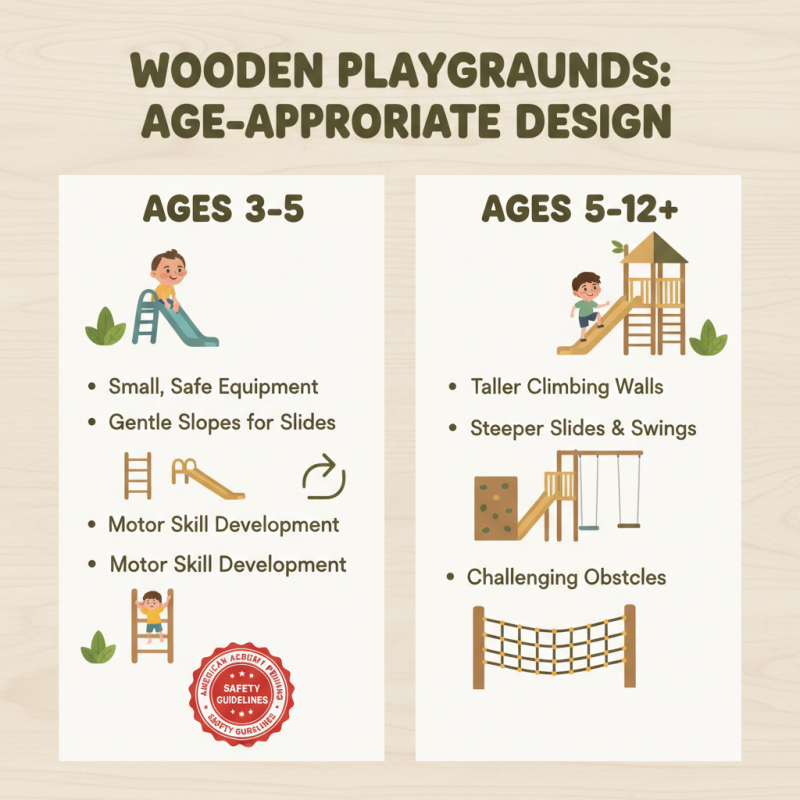
When selecting a wooden playground set, age-appropriate features are crucial. Children aged three to five require smaller, safer equipment. They enjoy climbing and sliding but need gentle slopes. According to the American Academy of Pediatrics, play structures should include components to develop motor skills without risk of injury.
Older children, ages six to twelve, seek more challenging designs. Features like monkey bars and higher slides are popular. However, a 2019 report from the National Association for Sport and Physical Education highlights the need for safety. High structures must comply with safety standards to prevent falls.
Design elements matter, too. A set should be colorful and visually appealing. Adding benches encourages social interaction. Reliable safety features are vital; ensure proper spacing and smooth edges. Parents often overlook these elements, leading to unsafe play environments. Regular maintenance is also necessary to keep the set in good condition. This is often forgotten until it’s too late.
Budgeting for Purchase and Maintenance of Playground Equipment
When planning to buy a wooden playground set, budgeting is crucial.
First, consider the upfront cost. Quality wooden sets can be pricey. Ensure the wood is durable and treated against rot.
Check local prices beforehand. It might save you from spending excessively.
Maintenance is another important factor. Wooden equipment requires regular upkeep.
Look out for splinters and wear. Sanding might be needed over time. Applying sealant periodically will protect the wood.
This involves additional costs, so factor it into your budget. Neglecting maintenance can lead to unsafe conditions.
It's also wise to consider space. A larger set may appeal to more children but could overwhelm your yard.
Think about how much room you really have. Reflecting on these aspects can significantly influence your purchasing decision.
You might think you need the biggest set, but sometimes less is more.