• Monday

    9:00-5:00

  • Tuesday

    9:00-5:00

  • Wednesday

    9:00-5:00

  • Thursday

    9:00-5:00

  • Friday

    9:00-5:00

  • Saturday

    9:00-4:00

  • Sunday

    CLOSED

China Top Lipstick Tube Manufacturers How to Choose?

Choosing among China’s top lipstick tube manufacturers requires more than comparing factory prices. A reliable partner must understand packaging performance, brand positioning, filling conditions, and customer expectations. The right Lipstick Tube should feel stable in the hand, close securely, and protect the lipstick from dust, heat, and daily friction.

Factory experience matters. Review production photos, material specifications, quality records, and verified export history. Ask whether the manufacturer controls injection molding, surface finishing, assembly, and inspection internally. A sample can reveal loose components, uneven plating, sharp edges, or a cap that does not align. Small defects become expensive when thousands of units reach the market.

Look closely.

Manufacturers should explain their use of ABS, PP, aluminum, or other selected materials. They should also provide clear information about color matching, coating durability, mold ownership, minimum order quantities, and lead times. Responsible suppliers can discuss relevant packaging standards and offer documentation for material safety and product traceability. However, no supplier is perfect. Even an experienced factory may face color variation, delayed components, or communication gaps during a new project.

A thoughtful selection process includes factory audits, pre-production samples, written specifications, and independent quality checks when practical. Request references from brands with similar volume and design complexity. Compare responses, not only quotations. A low price may hide weaker tolerances or limited after-sales support. The best manufacturer is usually the one that communicates risks early, accepts reasonable testing, and improves after feedback. This guide explores the questions, evidence, and practical warning signs that help buyers choose with greater confidence.
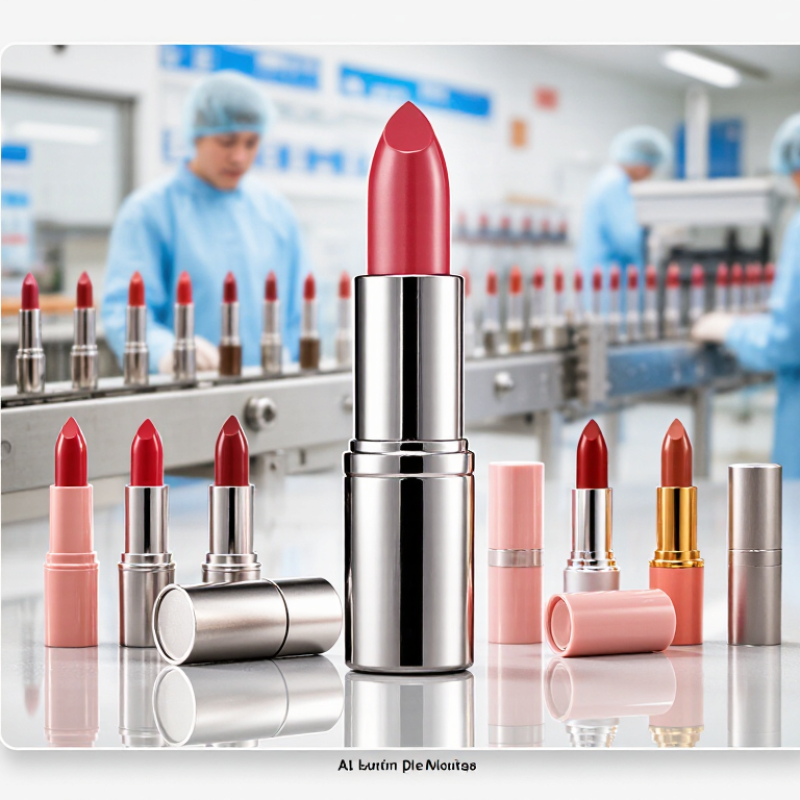
China Top Lipstick Tube Manufacturers How to Choose?

Define Requirements: Size, Material, Finish, MOQ, and Target Cost

Choosing among China’s top lipstick tube manufacturers starts with a precise product brief. Define the tube size, fill volume, outer diameter, and closure height. A 3.5-gram tube may need different wall thickness than a 4.2-gram tube. Confirm bullet dimensions with your filling team. Small mismatches can cause scraping, looseness, or uneven twisting. I have found that a simple technical drawing prevents more confusion than several emails.

Material affects weight, durability, appearance, and production cost. Ask whether the tube uses aluminum, standard plastic, or recycled-content plastic. Request composition details and available test documents. Define the finish with physical references, such as matte coating, metallic effect, soft-touch paint, or hot stamping. Some attractive finishes mark easily during transport. Request samples under normal handling, not only studio lighting. State your MOQ and target cost clearly. Include tooling, decoration, packaging, and freight in the calculation. A low unit price may hide important expenses.

Tips: Prepare a one-page RFQ with drawings, color references, tolerance limits, and inspection expectations. Compare quotations on identical specifications. Ask about lead time, defect handling, and sample approval. My early mistake was focusing too much on appearance. The closure performance mattered more. Leave a small budget buffer because revisions are common. Purely perfect plans rarely survive the first sample round.

Verify Compliance: ISO 22716, REACH, RoHS, and Packaging Safety Records

China Top Lipstick Tube Manufacturers: How to Choose?

Compliance should be verified before comparing prices.

ISO 22716 supports controlled cosmetic manufacturing, but it is not automatically proof of safe packaging. Ask for the certificate or audit evidence, issuing body, factory scope, validity period, and corrective-action records. The documentation should match the actual production site.

REACH evidence should include a current SVHC declaration and material composition review.

ECHA’s 2023 Forum project screened 2,407 online products and found 18% non-compliant with at least one requirement. That figure is not lipstick-specific, but it shows why supplier statements need testing support. Request reports for heavy metals, restricted substances, coatings, inks, and surface contact materials.

RoHS needs careful interpretation.

A standard lipstick tube may not fall within electrical-equipment legislation, unless it includes electronic parts. Still, many buyers use RoHS screening as an additional material-control check. The European Commission’s 2023 Safety Gate report recorded 3,412 product alerts, reinforcing the value of traceable safety records. Look for batch numbers, raw-material COAs, migration testing, packaging specifications, and recall procedures.

Small gaps matter. A polished certificate can hide weak change control, outdated laboratory reports, or documents covering another factory. Suppliers should explain those weaknesses clearly. Truthful records are more useful than perfect-looking files.

Compare Capacity: MOQ, Monthly Output, and 7–15-Day Sample Lead Times

Choosing a lipstick tube manufacturer requires more than comparing unit prices. Capacity must match your launch plan, refill schedule, and cash flow. According to McKinsey’s 2023 beauty market report, the global beauty sector could reach about $580 billion by 2027. That growth increases pressure on packaging suppliers, especially during seasonal launches.

Ask for three figures: MOQ, monthly output, and sample lead time. A practical MOQ may range from 3,000 to 10,000 tubes, depending on decoration, material, and mold requirements. Treat this as a starting benchmark, not a rule. A factory claiming 500,000 units monthly may produce only 180,000 during peak periods. Request recent production records, machine counts, shift patterns, and defect rates. Check whether capacity is reserved for your order.

Sample speed also reveals operating discipline. A 7–15-day sample lead time is reasonable for standard components and existing molds. Custom colors, magnetic closures, or new tooling may require longer. Ask for a dated schedule covering drawing approval, mold adjustment, assembly, and courier dispatch. In my supplier checks, fast samples sometimes hide rushed surface finishing. Examine cap alignment, twist smoothness, coating adhesion, and drop-test results. ISO 22715 packaging guidance supports controlled handling and quality documentation, but certification alone does not prove dependable delivery. I would still request a small pilot order. Mistakes are cheaper there.

Test Performance: ASTM D5276 Drop Tests, Torque, Fit, and Decoration

China Top Lipstick Tube Manufacturers: How to Choose?

A reliable supplier should prove performance, not only show attractive samples. ASTM D5276 defines a free-fall drop method for loaded containers. It does not set one universal pass level for lipstick tubes. Buyers should define height, orientation, temperature, and impact count before testing. A practical protocol may include drops from 1.0 meter onto six faces, edges, and corners. Record cap separation, bullet breakage, base cracks, and mechanism jamming. Small details matter.

Torque testing checks whether the cap opens smoothly and stays secure during transport. Set opening and closing limits with calibrated equipment. A suitable tube should resist accidental opening without feeling difficult in daily use. Fit tests should measure cap wobble, bullet alignment, elevator travel, and closure gaps. ISO 22715 packaging guidance supports controlled inspection, while ASTM D4169 can help simulate distribution hazards. Cosmetic packaging research from Smithers also identifies durability and decoration quality as important value drivers in premium packaging markets.

Decoration needs its own test plan. Rub testing, alcohol resistance, heat exposure, and humidity checks can reveal fading or ink transfer. Test decorated parts after assembly, not only flat components. That mistake is common. I would also request batch-level inspection records, material certificates, and retained samples. A supplier that shares failures earns more trust than one showing only perfect prototypes. Still, visual inspection cannot replace measured torque, fit, and drop data.

China Top Lipstick Tube Manufacturers How to Choose? - Test Performance: ASTM D5276 Drop Tests, Torque, Fit, and Decoration

Anonymous technical comparison using common cosmetic-packaging evaluation criteria

Test Dimension Test Method / Condition Recommended Acceptance Benchmark Test Lot 1 Test Lot 2 Test Lot 3 Test Lot 4 How to Interpret the Result
Drop Resistance ASTM D5276 free-fall drop test; assembled and filled tube; 10 drops from 1.0 m onto a rigid steel surface at approximately 23°C. No cap separation, product breakage, mechanism jamming, major deformation, or exposure of the lipstick after all drops. Pass
10/10
Pass
10/10
9/10 Pass
10/10
A complete pass indicates stronger protection during transport and normal consumer handling. Any cap release or mechanism failure requires corrective action.
Cap Retention Manual pull-off check after drop testing, followed by repeated cap installation and removal for 50 cycles. Cap remains secure during handling; no visible cracking; retention force remains consistent through cycling. Stable Stable Slight looseness Stable A loose cap can increase contamination risk and may indicate insufficient interference fit or dimensional variation.
Closing Torque Digital torque gauge; cap fully closed on the tube; five readings averaged after three conditioning cycles. Typically 8–20 N·cm for a consumer lipstick cap, subject to design and user-comfort requirements. 13.6 N·cm 17.8 N·cm 8.9 N·cm 14.7 N·cm Within range
Higher torque may improve perceived security but can make the package difficult to open.
Opening Torque Digital torque gauge; first-opening torque measured after 24-hour conditioning at 23°C and 50% relative humidity. Approximately 5–15 N·cm, with no sudden sticking or inconsistent release. 8.2 N·cm 12.6 N·cm 5.8 N·cm 9.1 N·cm Within range
Balanced opening torque supports one-hand usability and reduces the risk of accidental opening.
Twist-Up Mechanism Manual cycling test; extend and retract the lipstick mechanism 300 times at room temperature. Smooth movement, no binding, no reverse rotation, and less than 1 mm unintended product drop-back after cycling. Smooth
0.4 mm
Smooth
0.6 mm
Minor stiffness
1.2 mm
Smooth
0.5 mm
Low backlash and consistent travel usually indicate better component alignment and mold-control capability.
Product-to-Case Fit Check lipstick bullet centering inside the inner cup at full extension and retraction using a calibrated visual gauge. Centered appearance with no rubbing; radial clearance typically controlled within approximately 0.20–0.50 mm for the tested format. 0.28 mm 0.42 mm 0.61 mm 0.31 mm Excessive clearance can cause wobble and breakage; insufficient clearance can create rubbing, scratching, or difficult operation.
Cap-to-Base Fit Measure cap engagement and check for rocking, visible gaps, and uneven seating after 50 opening and closing cycles. Uniform engagement around the circumference; no visible gap greater than 0.30 mm and no perceptible rocking. Gap 0.18 mm
No rocking
Gap 0.24 mm
No rocking
Gap 0.36 mm
Slight rocking
Gap 0.20 mm
No rocking
Consistent cap fit improves premium appearance and helps prevent dust, moisture, and contamination from entering the package.
Component Dimensional Consistency Sampling inspection of cap height, base diameter, inner cup diameter, and twist mechanism alignment using calibrated gauges. Critical dimensions maintained within agreed drawing tolerances; a common production target is ±0.10 mm for precision-fit features. ±0.07 mm ±0.09 mm ±0.15 mm ±0.08 mm Tighter variation generally improves assembly yield, cap fit, torque consistency, and visual uniformity.
Decoration Adhesion Cross-hatch adhesion test based on ISO 2409 principles, followed by tape removal and visual grading. Class 0–1 appearance: coating edges remain intact with minimal or no flaking after tape removal. Class 0 Class 1 Class 2 Class 0 Lower classification numbers indicate better adhesion. Class 2 or worse should trigger review of surface preparation and curing.
Decoration Abrasion Reciprocating rub test with dry cotton fabric for 500 cycles, followed by visual inspection under standard lighting. No substrate exposure, illegible text, significant color transfer, or visible loss of metallic effect. No visible loss Minor gloss change Visible edge wear No visible loss The result reflects resistance to friction from handbags, pockets, cartons, and repeated consumer handling.
Color and Print Uniformity Visual inspection under D65 lighting; compare production samples with the approved master standard. For color-critical projects, use instrumental ΔE measurement. No obvious shade, position, registration, pinhole, or print-density defects; agreed ΔE tolerance should be defined before production. Uniform Uniform Minor shade variation Uniform Written color standards and approved golden samples reduce disputes between artwork approval and mass production.
Environmental Conditioning Condition assembled units at 40°C and 75% relative humidity for 72 hours, then repeat torque, fit, and decoration checks. No cracking, swelling, corrosion, severe color shift, decoration blistering, or torque change greater than 30% from baseline. Pass
+8% torque
Pass
+14% torque
Conditional
+34% torque
Pass
+10% torque
Conditioning helps identify risks that may occur during hot, humid shipping or storage before the product reaches consumers.
Evaluation note: The figures above are anonymous, representative benchmark data for supplier screening and should not be treated as certification results. Final acceptance limits should be confirmed in the approved technical drawing, packaging specification, test plan, and finished-product compatibility study.

Recommended selection priority: Evaluate drop resistance, cap retention, mechanism consistency, dimensional fit, torque stability, and decoration durability together rather than selecting a supplier on appearance or unit price alone.

Select with a Scorecard: Quality 40%, Cost 30%, Delivery 20%, Service 10%

Choosing among China’s top lipstick tube manufacturers needs a weighted scorecard, not attractive samples alone. McKinsey’s 2023 beauty report projects roughly 6% annual global beauty growth through 2027. That pressure makes reliable packaging supply increasingly important.

Give quality 40 points.

Check wall thickness, closure fit, surface finish, color consistency, and abrasion resistance. Request production samples, not only showroom pieces. A 1.5-millimeter cap gap can create visible looseness. Confirm material specifications, inspection records, and batch traceability. ISO 9001 certification supports process control, but it does not replace factory audits.

Cost receives 30 points.

Compare complete landed cost, including tooling, decoration, packaging, freight, and rejected units. Grand View Research estimated the global cosmetic packaging market at approximately 32.7 billion US dollars in 2022, with continued growth expected through 2030.

Delivery earns 20 points.

Review mold schedules, monthly capacity, lead-time history, and backup production plans.

Service receives 10 points.

Test response speed with a small technical change. My earlier scorecards gave service too little attention. That was a mistake.

A supplier scoring 88 overall may still fail if a delayed mold stops a launch. Keep evidence beside every score, and reduce points when promises lack records.