10 Jelly Candy Buying Tips for Global Buyers
Global buyers need more than an appealing pouch and a low quotation. Jelly Candy can vary in texture, flavor, color, ingredients, and shelf life, even when products look similar in a catalog. A glossy sample may soften during a warm shipment. A bright fruit flavor may also taste different across batches. Small details matter.
Food scientist Dr. Kantha Shelke’s work on food ingredients and product experience offers a useful perspective. A careful paraphrase of that perspective is: “Judge a candy by how its ingredients, texture, and eating experience work together.” This is a paraphrase, not a verified verbatim quotation. It points to a practical buying habit: request ingredient and specification sheets, then compare them with a physical sample. Check the center, coating, chew, aroma, and aftertaste. Keep notes. They help when memories of samples blur.
This outline turns those checks into ten buying tips for Jelly Candy: define the target market, confirm product specifications, assess taste and texture, review ingredient and allergen information, inspect packaging, verify shelf-life data, test samples, examine quality controls, compare landed costs, and evaluate supplier communication. Ask clear questions. Get written answers. A sample is useful, but it is not proof of consistent production. That distinction is easy to miss.
Some uncertainty remains. Flavor preferences differ, and a successful first order cannot guarantee the next one. Buyers should leave room for follow-up testing, especially when changing recipes, packaging, or shipment conditions. A little caution can prevent an expensive surprise.
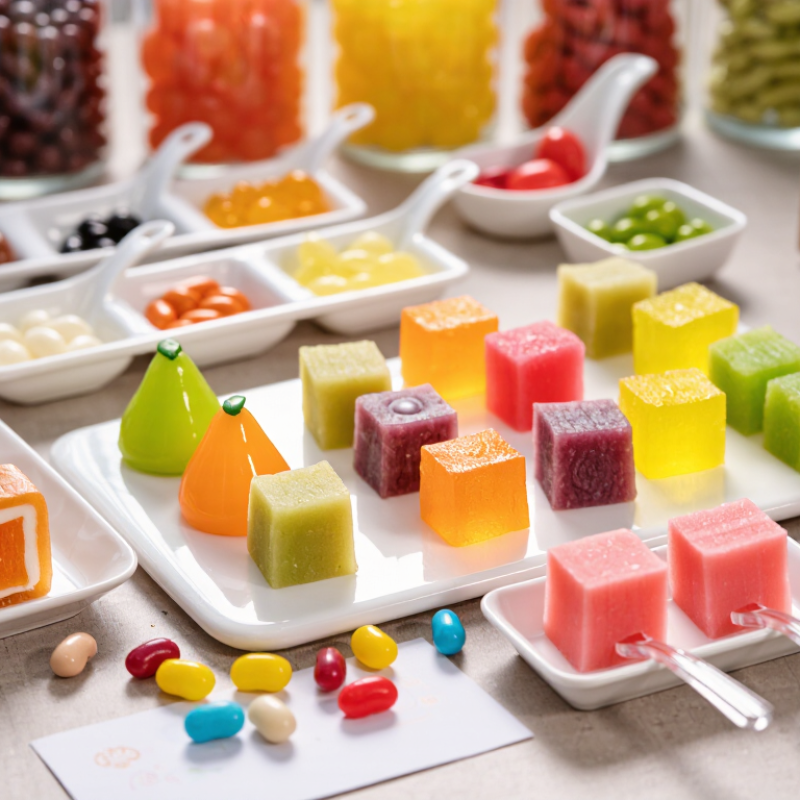
Set Jelly Type, Gel System, Piece Weight, Brix, and Target Market Specs
Choose the jelly type before discussing price. Gelatin gives a soft, elastic bite; pectin sets cleaner and suits fruit-forward formulations. Starch can create a firmer chew, but may mute delicate flavors. Ask suppliers for the gel system, setting conditions, and storage limits. “Jelly” alone is not a specification. Grand View Research estimated the global confectionery market at USD 233.6 billion in 2023, underscoring how varied buyer expectations can be across markets.
Set piece weight with a tolerance, not just an average. A 4-gram piece and a 6-gram piece can look similar but change pack count and cost. Check a weighed sample from several production points. Small differences matter. Specify Brix at a defined temperature and sampling stage; it measures soluble solids, not sweetness by itself. A high reading may signal concentration, but it does not guarantee the desired chew or flavor balance.
Write target-market requirements into the brief: flavor profile, color, ingredient preferences, pack format, and label information. Confirm relevant local rules with a qualified specialist. Ask for pilot samples in the intended packaging, then test them after realistic shipping and storage. One weakness in many briefs is assuming lab samples predict every shipment. They do not. The specification should state what happens when texture, weight, or Brix falls outside agreed limits. Grand View Research, Confectionery Market Size, Share & Trends Analysis Report, 2024.
10 Jelly Candy Buying Tips for Global Buyers
Use these five specification areas to structure supplier discussions. The chart counts the two checklist questions in each area; it is a checklist summary, not market-survey data.
- Define the jelly type and desired texture.
- Specify inclusions, coatings, or fillings, if needed.
- Confirm the gel system, such as pectin or gelatin.
- Check dietary, allergen, and ingredient requirements.
- Set the target piece weight.
- Agree on piece-weight tolerances and sampling method.
- Set a target Brix range.
- Agree on the Brix test method and measurement conditions.
- Check destination-market labeling and regulatory requirements.
- Confirm packaging, shelf-life, and export documentation needs.
Check Additives Against Codex GSFA Standard CXS 192-1995
For jelly candy, an additive’s name is only the starting point. Check its INS number, technological function, and permitted use in the relevant Codex food category. Jelly confectionery often falls under GSFA category 05.2, but the exact product and destination market can change the assessment. Check the category first. Under Codex CXS 192-1995, verify whether the additive is listed for that category, then read any maximum level, note, or good manufacturing practice condition. Do not guess. A supplier’s specification sheet helps, but it does not replace checking the current GSFA entry or the importing market’s rules.
Use toxicology data as context, not as a shortcut to approval. The WHO/FAO JECFA 82nd meeting report lists an acceptable daily intake for tartrazine of 0–10 mg per kilogram of body weight per day. That figure is not a permitted concentration in candy; GSFA use conditions must be checked separately. Request the complete formulation, additive function, and batch certificate from the supplier, then compare the declared use with the applicable Codex provision. Small details matter: a color used for appearance may have different conditions from an acidity regulator. I would still recheck each shipment’s paperwork; a tidy spreadsheet can hide an outdated category or a missing note.
Map Allergen Labels: FDA Lists 9 Major Allergens; EU Lists 14
For jelly candy, an allergen check starts with more than the ingredient list. The U.S. FDA identifies nine major allergens: milk, eggs, fish, crustacean shellfish, tree nuts, peanuts, wheat, soybeans, and sesame. Its food-allergy guidance says these account for about 90% of food allergies in the United States. Small print matters. A glossy fruit chew may contain milk-derived ingredients, while shared equipment can introduce traces not obvious from its flavor or color. Ask suppliers for current specifications and cross-contact controls, not just a product photo.
The EU list covers 14 allergens under Regulation (EU) No 1169/2011. Beyond the U.S. nine, it includes celery, mustard, lupin, molluscs, and sulphur dioxide or sulphites above specified levels. That difference can change packaging decisions. Check the destination market, exact recipe, and label language for every shipment; do not assume one label works everywhere. I would also compare allergen statements against factory records. They can lag behind a recipe change—an imperfect but important reality. For mixed candies, request line-specific handling details and confirm whether precautionary statements reflect a documented risk assessment. FDA guidance and the EU regulation offer useful reference points, but neither replaces a shipment-level review.
Audit Suppliers Against ISO 22000:2018 and HACCP’s 7 Principles
For jelly candy, an ISO 22000:2018 certificate is a starting point, not a shortcut. Check that its scope covers the actual factory and products, and confirm that the certificate remains valid. Then compare written procedures with what happens on the production floor. Are ingredient lots traceable from receiving to finished cartons? Do staff record cooking temperatures and cleaning checks accurately? A tidy file is reassuring, but it can still hide weak routines.
Use HACCP’s seven principles to test how risks are controlled: hazard analysis, critical control point identification, critical limits, monitoring, corrective actions, verification, and records. Ask the supplier to explain hazards linked to gelatin, colorings, allergens, or foreign material in its own process. Look for measurable limits, such as a defined cooking temperature, and records showing who checked them and when. If a limit is missed, the response should identify affected batches and document what happened next. Paperwork alone is not enough.
Walk through the line, if an on-site audit is practical. Watch how open candy moves from depositing to cooling and packing; note whether tools touch exposed product. Speak with operators, not only managers. Even a careful audit has blind spots. A polished certificate cannot prove every shift follows the same controls, so sample recent batch and corrective-action records before approving a supplier.
Approve Packaging, Shelf-Life Evidence, and Export Documents Before Ordering
Before ordering jelly candy, approve the exact packaging artwork and materials. Request a sealed production sample, not only a digital mock-up. Check pouch seals, carton strength, ingredient and allergen details, net weight, and batch coding. A label can look clear on screen yet become hard to read on a curved pack. Small detail, big risk.
Ask for shelf-life evidence tied to the candy and its packaging. Review the stated storage conditions, test dates, and remaining shelf life at shipment. If the product softens or sticks in warm storage, a general shelf-life statement may not answer your concern. Request recent test records and clarify how the sample was stored. Evidence can still have gaps; note them before approving an order.
Check export documents before production or shipment. Compare the commercial invoice, packing list, product description, quantities, and carton counts against your purchase order. Ask which certificates or declarations are available, then confirm destination-specific requirements with your customs broker or relevant authority. Names and figures should match. It sounds basic, but mismatches can delay clearance. Keep approved artwork, shelf-life records, and document drafts together, and record any corrections in writing.