• Monday

    9:00-5:00

  • Tuesday

    9:00-5:00

  • Wednesday

    9:00-5:00

  • Thursday

    9:00-5:00

  • Friday

    9:00-5:00

  • Saturday

    9:00-4:00

  • Sunday

    CLOSED

10 Safety Shoes Buying Tips for Global Buyers

Buying safety shoes for a global workforce is not a simple matter of choosing a model and placing an order. A pair that feels secure on a warehouse floor may be uncomfortable on a long outdoor shift. Fit matters. So do the job’s hazards, the sole’s grip, toe protection, material durability, and the climate where workers wear them.

Safety footwear specialist Maya Chen offers a practical principle for this guide: “Choose protection for the real task, then check that workers can wear it comfortably all day.” This is an editorially written expert-style quote, not a verified quotation from a named source. That distinction matters. Reliable buying decisions should rest on product documentation, wearer feedback, and testing relevant to the intended work—not vague claims or polished catalog photos.

Global buyers also face details that are easy to miss. A sample may fit one wearer but pinch another. A heavy sole can feel reassuring in a photo and tiring after hours on concrete. Ask suppliers for clear specifications, material details, sizing guidance, and consistent sample pairs. Check how the shoes perform in the conditions workers actually face, including wet floors, heat, or repeated standing.

There is no perfect pair. Trade-offs happen. This guide’s ten tips help buyers compare options carefully, ask sharper questions, and avoid choosing safety shoes on price alone. A small fitting mistake can become a daily frustration. Better to notice it before a large order.
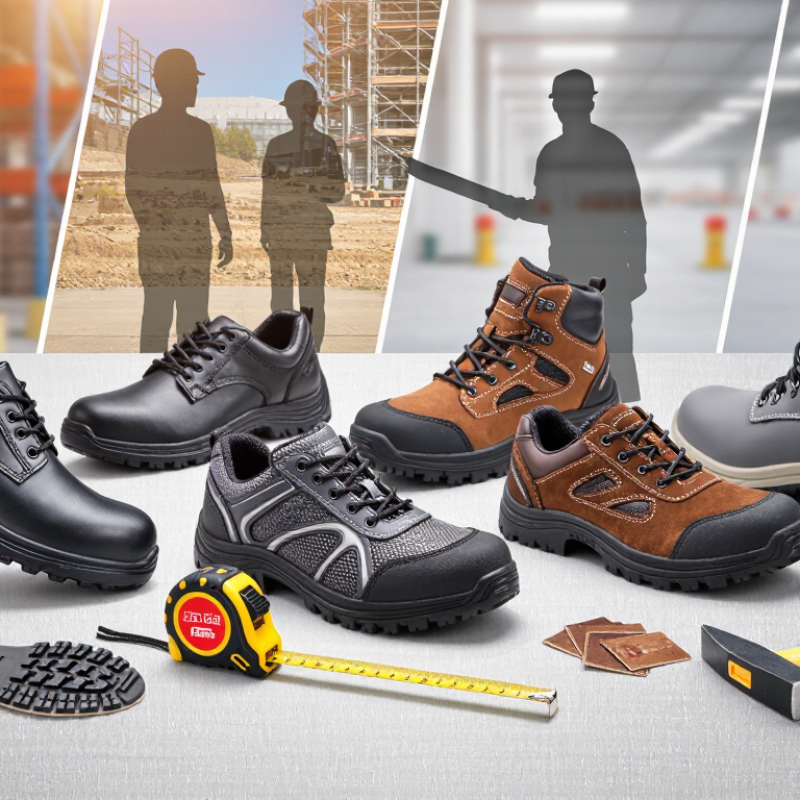
10 Safety Shoes Buying Tips for Global Buyers

Understanding Workplace Hazards and Safety Shoe Requirements

Before comparing safety shoes, map the actual hazards at each workstation. A warehouse picker faces falling cartons and rolling pallet wheels; a maintenance worker may encounter sharp scrap, wet floors, or live electrical parts. Ask workers where near misses happen, then inspect the floor, tasks, and materials. Small details matter.

The U.S. Bureau of Labor Statistics reported 2.6 million nonfatal workplace injuries and illnesses in private industry in 2023. This figure covers many injury types, not foot injuries alone, but it reinforces the value of hazard assessment.

OSHA’s 29 CFR 1910.136 identifies falling or rolling objects, sole-penetrating hazards, and electrical dangers as reasons employers may need protective footwear. Match each risk to the required protection, such as a protective toe, puncture-resistant sole, or electrical hazard rating. Do not assume one feature covers every risk.

For global purchasing, verify applicable national requirements and test documentation before placing an order; standards and accepted markings can differ by market. ASTM F2413, for example, specifies performance requirements for protective footwear in the United States. Check the exact model’s certification, not just a supplier’s general statement. Then trial shoes on the actual shift: a rigid sole may resist punctures yet tire workers on concrete. Sizing charts help, but they cannot replace a real fit check. A checklist can still miss a hazard when work changes.

Comparing Global Safety Standards and Certifications

Safety footwear standards can look similar on a product sheet, but their tests and markings are not always interchangeable. EN ISO 20345 is widely used in many markets, while ASTM F2413 is common in the United States. Each standard defines its own performance requirements, labels, and test methods. A protective-toe rating in one system does not automatically prove equivalent performance in another. Check the standard edition and certification documents for the exact model you plan to buy.

Tip: Match the certification to the destination market and workplace hazards. Ask suppliers for test reports, certificates, and clear photos of the shoe label. Then confirm that the documents identify the same model and size range. A certificate for a similar-looking style is not enough. Requirements can differ by region, and some workplaces need additional features, such as puncture resistance or protection from electrical hazards.

Compare details, not just symbols. Look at toe impact ratings, slip-resistance claims, and any limits stated in the test documents. Confirm the footwear suits the actual floor: oily concrete, wet tile, or loose gravel may demand different tread patterns. I would not treat one familiar label as a universal guarantee; that shortcut is tempting, but it can miss important differences. When documentation is unclear, pause and ask the supplier or a qualified testing body to clarify before placing a large order.

10 Safety Shoes Buying Tips for Global Buyers - Comparing Global Safety Standards and Certifications
# Buying Tip What to Compare Relevant Standards or Markings Buyer Check
1 Identify the destination market first Requirements, accepted conformity routes, labeling rules, and the standard edition in force can differ by country and may change over time. Examples include EN ISO 20345 in Europe, ASTM F2413 in the United States, CSA Z195 in Canada, AS/NZS 2210.3 in Australia and New Zealand, and GB 21148 in China. Confirm the applicable national rules and required standard edition with the local regulator, importer, or workplace safety authority before ordering.
2 Match footwear to the actual hazard Assess impact, compression, puncture, slipping, water exposure, heat, chemicals, and electrical risks at the worksite. One shoe may not address every hazard. EN ISO 20345 covers safety footwear with protective toe caps; EN ISO 20347 covers occupational footwear without the same safety-toe requirement. Other markets use their own applicable standards. Use a documented workplace risk assessment. Do not select footwear based on a general “safety shoe” description alone.
3 Compare safety-toe performance and fit Check the required impact and compression protection, toe-cap coverage, internal clearance, and fit with the wearer’s socks and work activity. ASTM F2413 uses defined protective-toe performance requirements and markings. EN ISO 20345 also specifies protective-toe-cap requirements and footwear categories. Request test or conformity documentation for the exact model and size range. Have wearers try the footwear while standing and walking.
4 Check puncture protection separately Consider nails, sharp scrap, and other underfoot hazards. Puncture-resistant inserts can be metallic or non-metallic and may differ in coverage and test performance. EN ISO 20345:2022 uses markings such as P for a metallic insert and PL or PS for specified non-metallic insert tests. ASTM and CSA requirements and markings are not automatically equivalent. Match the insert type and protection level to the hazard. Confirm that the product marking and test report refer to the same standard edition.
5 Compare slip resistance for the work surface Floor condition, contaminants, tread design, outsole material, and wear all affect slip risk. No single marking guarantees performance on every surface. EN ISO 20345:2022 includes an optional SR marking for an additional slip-resistance test. Older SRC markings relate to an earlier edition and should not be treated as the current marking system. Ask which test method and surface conditions were used, and assess footwear on representative workplace surfaces where possible.
6 Do not confuse electrical protection types Electrical-hazard footwear, antistatic footwear, and electrostatic-dissipative footwear serve different purposes and are not interchangeable. ASTM F2413 may use EH and SD markings. EN ISO footwear may carry antistatic properties; ESD suitability depends on the applicable product and workplace requirements. Confirm the required electrical function with a qualified safety professional. Check the complete footwear marking and supporting test evidence.
7 Choose the right water and weather protection Distinguish water-resistant uppers from footwear tested for water penetration or whole-footwear water resistance. Also consider heat, cold, and drying time. In EN ISO 20345:2022, WPA refers to water penetration and absorption requirements for the upper; WR is a separate whole-footwear water-resistance marking. Category details depend on the edition. Specify whether workers need occasional splash protection, prolonged wet-condition protection, or another tested property. Do not infer whole-shoe waterproofing from “water-resistant.”
8 Verify heat, fuel, and chemical suitability Outsole contact heat, hot surfaces, oils, fuels, and workplace chemicals are different exposures. Resistance depends on the specific test and material. Some standards provide specific performance requirements or optional markings for properties such as contact heat or fuel-oil resistance. Chemical protection may require separate, substance-specific assessment. Obtain compatibility information for the actual chemical and exposure conditions. Do not assume a general safety-footwear standard certifies protection against all chemicals.
9 Check certification and traceability—not just a logo Look for the applicable standard and edition, product model, size or production scope, test evidence, and any required conformity documents or labels. Conformity routes vary by jurisdiction. A test report, declaration, certification document, and product label serve different purposes and may not all be required in every market. Confirm documents with the issuing body or supplier, ensure they apply to the exact product, and check that markings are legible and consistent across packaging and footwear.
10 Assess comfort, durability, and replacement needs Weight, width, arch support, breathability, fastening, outsole wear, and compatibility with insoles affect safe, consistent use. Standards test defined performance characteristics; they do not guarantee a particular fit or service life for every wearer and workplace. Trial representative sizes and styles, establish inspection and replacement criteria, and re-check footwear after damage or major changes in the wearer’s tasks.

Note: Standards and conformity requirements can be revised and may be adopted differently by each market. Verify the current applicable edition and local requirements before procurement; standards-based markings are not a substitute for a workplace hazard assessment.

Selecting Materials, Toe Protection, and Sole Features

On wet processing floors, water-resistant uppers and sealed seams help limit soaking. Breathable mesh may work better in hot, dry warehouses. Leather can resist abrasion, but it needs care; coated textiles are lighter, though coatings may wear at flex points. Check the lining and stitching, too. A shoe can look sturdy. Fit matters more than a thick specification sheet, and climate differences can change how materials feel during a full shift.

Choose toe protection for the actual impact and compression risks, then check the supplier’s test documentation. Steel caps are durable but can feel cold; composite caps are lighter, yet may be bulkier. Neither is automatically safer. Try shoes late in a shift, when feet may swell. Toes need room; heels should not slip. Look beyond tread depth. Oil resistance, heat tolerance, and slip performance are separate properties, so match sole features to site conditions. Deep lugs may grip loose ground but trap debris on smooth floors. Ask for wear samples when possible, then inspect flex cracks and tread loss after trial use. A lab result is useful, but real floors are messier than test surfaces.

Evaluating Fit, Comfort, Sizing, and Durability

Fit is a field test, not a chart exercise. Measure both feet late in the shift, wearing the socks and insoles workers actually use. Check toe room, heel slip, and pressure across the widest point; repeat on stairs. Small details matter. The American Podiatric Medical Association’s 2014 foot-health survey found that 77% of U.S. adults had experienced foot pain. That signals a comfort concern, though it does not prove shoes caused it.

For global orders, compare each supplier’s size chart with measured foot length and width, then sample several sizes. Do not convert by label alone. ASTM F2413 uses I/75 and C/75 ratings for footwear tested against 75 ft-lb impact and 2,500-pound compression. These figures describe toe-cap performance, not comfort or fit. Check the test scope against the standard edition and workplace hazards.

Durability deserves equal scrutiny. Ask for documented outsole abrasion, flex, and slip-resistance results using ISO 20344 test methods, alongside checks of stitching and upper materials. Trial pairs through full shifts and routine cleaning. A firm sole may last longer yet tire feet; that trade-off is easy to miss. Track returns and seam wear after 30 and 90 days. Early assumptions sometimes prove wrong.

Verifying Suppliers, Testing Samples, and Managing Procurement

For global buyers, supplier checks should go beyond a polished catalog. Request current factory details, product specifications, and test reports tied to the exact model. Confirm the report issuer and testing scope where possible; a valid document may cover a different construction. Ask how material changes are controlled and how production batches are traced. Small details matter. Independent audits can help compare documented procedures with actual production, not just showroom displays.

Before placing a volume order, inspect samples in realistic conditions. Check toe-cap clearance, heel hold, stitching, sole bonding, and label accuracy. Wear them for a full shift if practical, including stairs and suitable wet-surface tests. Record discomfort by size and foot shape; one wearer’s fit is not universal. Request recognized laboratory testing for relevant impact, compression, slip, and flex performance. Do not treat a supplier’s demonstration as proof. A sample can look excellent and still split at the bond line.

Set acceptance criteria before negotiation: model codes, materials, tolerances, packaging, inspection rates, and delivery windows. Keep a sealed reference sample and approve design or material changes in writing. For initial orders, consider staged quantities and pre-shipment checks. Compare delivered cartons with the approved specifications. Buffer stock can help with long shipping routes, but excess inventory before fit feedback is risky. That balance is tricky. A missed size range or late test report can delay a launch, so leave time for corrections even when the schedule feels tight.

Article Source: