Menu
Monday
9:00-5:00
Tuesday
9:00-5:00
Wednesday
9:00-5:00
Thursday
9:00-5:00
Friday
9:00-5:00
Saturday
9:00-4:00
Sunday
CLOSED
China has become a major sourcing destination for decorative metal lighting, including the Iron Pendant Light. Buyers often find broad designs, competitive pricing, and flexible production capabilities. Yet product photos rarely reveal the full purchasing reality.
This guide examines reliable Chinese suppliers for global buyers. It focuses on manufacturing experience, iron quality, welding consistency, surface finishing, and electrical safety documentation. A strong supplier should explain material thickness, socket specifications, coating methods, and packaging protection clearly. Factory audits, sample inspections, and production reports can reduce avoidable risks. Small details matter. A poorly protected canopy may arrive scratched, while weak carton inserts can damage the shade during transit.
Experienced suppliers usually support custom dimensions, colors, cable lengths, and branding requirements. They may also understand regional voltage standards and certification expectations. However, buyers should verify every claim independently. Certificates can vary by market, product model, and testing scope. One supplier’s successful project does not guarantee identical results for every order.
No supplier is flawless. That is worth remembering. Communication delays, sample differences, and changing material costs can still affect a project. This overview therefore considers both strengths and limitations. It aims to help importers, retailers, designers, and hospitality buyers compare manufacturers with practical judgment. By reviewing workmanship, compliance records, lead times, export experience, and after-sales support, global buyers can make more dependable decisions when selecting an Iron Pendant Light partner from China.
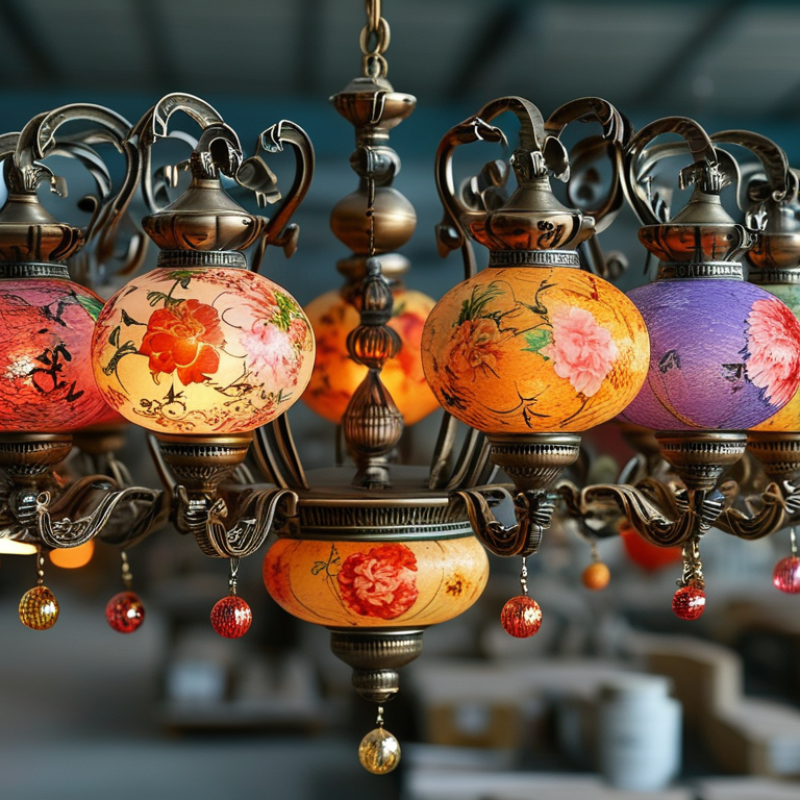
Global buyers are raising the performance bar for iron pendant lights.
The International Energy Agency’s Energy Efficiency 2023 report identifies lighting as a major electricity-use category worldwide. This supports demand for efficient LED fixtures. The U.S. Department of Energy’s Solid-State Lighting R&D Opportunities report indicates that modern LED systems can move beyond 100 lm/W. For commercial pendant lights, that figure should include the complete fixture, not only the LED chip.
Iron pendant lights from China now combine steel shades, LED modules, and tested drivers. A practical specification should show delivered efficacy, color rendering, power factor, and lumen maintenance. A 24-watt pendant producing 2,400 lumens reaches 100 lm/W before installation losses. Better thermal design can protect output inside a dark metal shade. It also reduces unpleasant surface heat.
Buyers should request LM-79 photometric reports, electrical test records, and clear driver information. The IES LM-80 method can support evaluation of LED lumen maintenance over time. Not every catalog number is comparable. Some suppliers still advertise chip efficacy instead of fixture efficacy, which can mislead project calculations. I have found that diffuser shape, suspension height, and ceiling color often change perceived brightness more than expected. Efficiency alone is not enough. A warm 2700K setting may feel comfortable, yet it can appear less bright than a 4000K setting at identical lumens. Global procurement teams should check samples under real room conditions before approving large production.

For global buyers sourcing iron pendant lights from China, supplier screening should begin with verifiable quality systems, not attractive catalog photos. ISO 9001 shows that a factory controls purchasing, production, inspection, and corrective actions through documented procedures. Ask for the current certificate, issuing body, scope, and factory address. A certificate alone is not proof of consistent workmanship.
IEC 60598-1 is a key reference for luminaire safety. It covers areas such as insulation, wiring, temperature rise, mechanical strength, and protection against electric shock. Request recent test reports for the actual pendant light design, not only a similar model. Check cable markings, terminal security, grounding continuity, and the finish around welded joints. Small details matter.
Use a 3% AQL plan for shipment inspection, with agreed sampling levels and defect classifications. Critical safety defects should normally require zero acceptance, while major and minor defects need clearly defined limits. A 3% AQL does not mean every item is defect-free. It is a sampling decision.
Inspectors should record carton damage, shade alignment, surface scratches, loose hardware, and electrical test results. Batch numbers and photographs improve traceability. In practice, suppliers may provide incomplete records or polished samples that hide production variation. That deserves scrutiny. A pre-production sample, mid-production check, and final random inspection create stronger evidence. Leave room for doubt. Overconfidence is expensive.
For global buyers, iron pendant light quality begins with measurable construction details. A 1.2 mm iron shade offers useful rigidity for shipping, installation, and daily handling. Thinner metal may dent easily, especially around drilled openings and suspension points. However, thickness alone does not guarantee quality. Suppliers should provide material records, dimensional tolerances, weld inspections, and coating reports. Ask for a sample before approving a large order. Run your own checks.
Lighting performance needs equal attention. A CRI of 80 or higher helps furniture, fabrics, and food appear closer to their natural colors. Request test data from an accredited laboratory, not only a sales specification. Confirm the measured CRI, color temperature, power input, and operating environment. For LED components, a rated life of 50,000 hours is a useful benchmark, but it is not a promise of failure-free service. Heat, voltage variation, and poor drivers can shorten performance. Check thermal testing and driver certifications.
Real project experience shows small details matter. Inspect the canopy, cable strain relief, screw threads, and grounding point. A beautiful shade can still create installation problems. Finish consistency also deserves attention; minor color variation may appear between production batches. Some suppliers offer excellent samples but weaker mass production control. That risk should be discussed openly, documented, and checked through pre-shipment inspection.
China Best Iron Pendant Light Suppliers for Global Buyers
For global buyers, supplier evaluation should begin with clear export data, not attractive product photos. Experienced sourcing teams often compare minimum order quantities across standard and customized iron pendant lights. A practical MOQ may range from 50 to 200 units, depending on finish, wiring, and packaging. Confirm whether the quantity applies per design, color, or shipment. Small orders can carry higher unit costs. That is easy to overlook.
FOB pricing should specify the loading port, product materials, surface treatment, packaging, and included electrical components. Ask for a detailed quotation with carton dimensions and gross weight. These details help estimate freight and warehouse costs more accurately. A reasonable supplier should explain price changes instead of offering vague discounts. In many projects, the first quotation is not the final one. Rechecking assumptions is necessary.
Tips: Request a pre-production sample and written approval before mass manufacturing. Confirm the 30–45-day lead time from deposit receipt, artwork approval, or sample confirmation. These starting points are not always the same. Ask about inspection records, replacement procedures, and export packaging. A factory may meet the deadline under normal conditions, but delays can occur during peak seasons. Build a small buffer into your launch schedule. Verify every promise in writing.
Typical supplier benchmarks for global buyers: MOQ, FOB pricing, and lead times
The benchmark shows common export ranges by order profile. FOB prices are indicative per unit in USD, MOQs are measured in pieces, and lead times cover production after sample approval and deposit confirmation. Actual terms vary by material, finish, wiring standard, packaging, and order volume.
China Best Iron Pendant Light Suppliers for Global Buyers
Market Compliance: CE, RoHS, UL, and 100–240 V Compatibility
Compliance is a purchasing decision, not a decorative detail. The International Energy Agency reports that lighting uses about 15% of global electricity. Efficient, properly tested fixtures can therefore reduce operating waste in hotels, homes, and retail spaces.
For European shipments, suppliers should provide a valid CE Declaration of Conformity and technical documentation. CE confirms applicable EU requirements, but it is not an independent quality award. RoHS compliance matters too. The European Commission restricts ten substances, including lead, mercury, and certain phthalates. Ask for recent material declarations and test reports linked to the exact iron pendant model.
UL-related evaluation is important for North American projects. Depending on construction, luminaires may require assessment against standards such as UL 1598, while LED drivers may involve UL 8750. A certificate alone is not enough. Check the product family, input rating, wiring, grounding, and factory address. Small differences matter.
A reliable 100–240 V pendant should state its operating range, frequency, driver type, and surge performance. Confirm this through laboratory test data, not a sales sentence. IEC 60598 testing can support wider market acceptance, but local installation rules still apply. One weakness in many sourcing checks is trusting a PDF too quickly. Request samples, inspect terminal markings, and compare the production unit with its submitted documents. Suppliers should also explain voltage tolerance at startup and under heat. That detail is often missing.
| Anonymous Supplier Profile | Typical Iron Pendant Construction | Input Voltage Configuration | CE Market Requirement | RoHS Market Requirement | UL Market Requirement | Relevant Technical Evidence | Buyer Verification Point |
|---|---|---|---|---|---|---|---|
| Profile A: EU-focused export supplier Suitable for European distribution programs | Powder-coated iron shade, steel suspension parts, replaceable lamp holder, adjustable cable or rod system | 220–240 V AC 50 Hz commonly used in Europe | Required for applicable EU sales CE marking and EU Declaration of Conformity should be supplied | Required Materials and components should comply with Directive 2011/65/EU and applicable amendments | Usually not required for EU-only sales May be requested by retailers or institutional buyers | EU Declaration of Conformity, electrical safety test report, EMC assessment, technical file support, material declaration | Confirm the declaration covers the exact model, rated voltage, lamp holder, driver and production version |
| Profile B: North America export supplier Suitable for United States and Canadian projects | Iron or steel body, grounded metal parts where applicable, listed or recognized electrical components, reinforced mounting bracket | 120 V AC 60 Hz commonly used in the United States and Canada | Not the primary North American requirement May still be relevant if the same model is sold in Europe | Market-dependent Often requested by major retailers and importers | Buyer or authority may require listing UL or an accepted certification route should match the installation market | Applicable luminaire safety evaluation, grounding test, dielectric-strength test, wiring and component documentation | Check whether certification covers the complete luminaire rather than only an individual socket, cord or driver |
| Profile C: Dual-market supplier Designed for EU and North American orders | Modular iron shade, interchangeable cord set, market-specific plug or canopy components, replaceable lamp holder | 100–240 V AC, 50/60 Hz Requires correct market-specific wiring and installation components | Required for applicable EU sales CE documentation must correspond to the supplied configuration | Required for applicable EU products Restricted-substance compliance should include electrical and electronic parts | Confirm destination-specific acceptance A 100–240 V rating does not by itself demonstrate UL compliance | Model-specific declaration, test reports, wiring diagram, component list, input-voltage label and installation instructions | Verify that the same SKU is not shipped with a different cord, plug, driver or grounding arrangement without updated documents |
| Profile D: Hospitality and project supplier For hotels, restaurants and commercial interiors | Heavy-gauge iron shade, reinforced canopy, ceiling-compatible mounting hardware, finish samples and batch controls | 100–240 V AC option available by configuration Final rating depends on the socket, driver and wiring assembly | Required where EU legislation applies Commercial project documentation may require additional performance information | Required where applicable Request supplier material declarations for coatings, cables and electronic parts | Project-dependent Confirm local authority, inspector and specification requirements before purchase | Installation manual, load and mounting information, earthing continuity test, flammability information where relevant, quality inspection records | Confirm ceiling load, mounting method, cable length, lamp temperature limits and maintenance access for the project site |
| Profile E: Custom-design supplier For OEM dimensions, finishes and private-label packaging without brand disclosure | Custom-cut or formed iron shade, selected paint or powder-coat finish, customized canopy and suspension length | 100–240 V AC available only when specified Voltage must be printed on the rating label and technical documents | Configuration-specific Changing dimensions, components or electrical parts can require a documentation review | Configuration-specific New coatings, cables or electronic components should be assessed before shipment | Configuration-specific Custom changes may invalidate a previous certification scope | Approved drawing, bill of materials, sample approval record, label artwork, inspection plan and model-specific compliance file | Require a pre-production sample and written confirmation that the mass-production unit matches the approved compliance configuration |
Compliance notes: CE marking is a manufacturer’s declaration that the product meets applicable European Union requirements; it is not a universal quality mark. RoHS requirements restrict specified hazardous substances in electrical and electronic equipment under applicable legislation. UL certification or listing is distinct from CE marking and must be checked against the destination market and product scope. A 100–240 V input rating indicates a stated voltage range only; it does not automatically confirm CE, RoHS, UL or local installation compliance.
