Menu
Monday
9:00-5:00
Tuesday
9:00-5:00
Wednesday
9:00-5:00
Thursday
9:00-5:00
Friday
9:00-5:00
Saturday
9:00-4:00
Sunday
CLOSED
A useful promotional item does more than carry a logo. It fits a buyer’s market, serves a real purpose, and stays within a practical budget. A sturdy tote bag at a trade show may earn weeks of use, while a flimsy pen can disappear before the visitor reaches the next booth. Small details matter.
Global buyers also face different expectations. Climate, shipping distance, local habits, and brand positioning can all affect whether an item feels valuable. A reusable bottle may suit an outdoor event, but it can be costly to ship in bulk. A compact notebook may travel more easily, though some audiences now prefer digital tools. There is no universal winner.
This guide explores ten promotional items that appeal to buyers across industries, including apparel, drinkware, bags, desk accessories, and practical tech products. Each option should be judged by usefulness, durability, customization, and total landed cost—not just its quoted unit price. Ask for samples. Check print quality, material feel, and packaging before approving a large order. A product photo cannot show how a zipper catches or how a mug feels in the hand.
The list is a starting point, not a guarantee of success. Buyer preferences change, and even a well-made item may miss the mark if it does not suit the audience. Thoughtful selection turns promotional items into useful brand touchpoints, rather than extras people quickly discard.
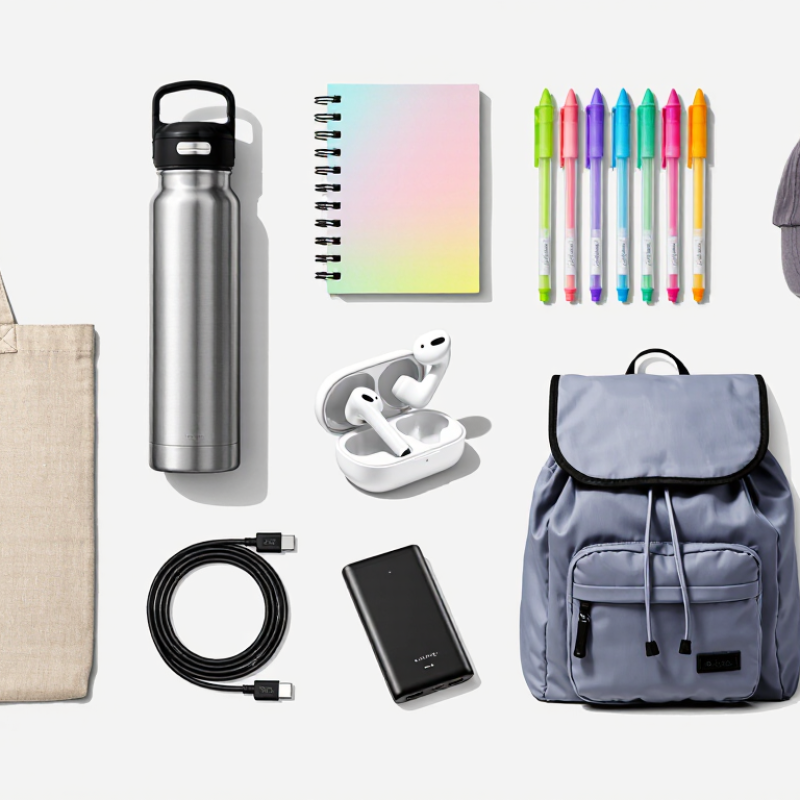
Promotional items are practical goods that carry a company’s message through a logo, color, or short phrase. Global buyers use them to support trade fairs, employee welcome kits, customer meetings, and local campaigns. Common choices include tote bags, notebooks, pens, drinkware, caps, and phone stands. Each item has a different job: a notebook may stay on a desk, while a tote travels through a city.
Small details matter. Buyers should consider who will use the item, where it will be distributed, and whether it suits local habits. A lightweight tote can work well at a conference, but its handle stitching and fabric weight affect how long it lasts. Drinkware needs clear capacity and care instructions. For larger orders, teams often request samples and check print placement, color consistency, packaging, and delivery schedules before approving production.
There is no universal best choice. A clever design can still feel wasteful if the item is flimsy or hard to use. That is not enough. Buyers also compare unit cost with expected use, since the lowest quote may hide thin materials or inconsistent finishing. Small print details can be missed. Reviewing samples with the intended audience in mind helps teams make more grounded decisions, though preferences still vary across markets.

For global buyers, the best promotional items are not simply the most eye-catching. Evaluate each option for everyday usefulness, durability, packability, and suitability across climates. A compact notebook may work well at a conference, while a bulky item can add shipping costs and sit unused. Check whether an item is easy to carry, comfortable to use, and adaptable to different languages or work settings. Small details matter.
Usefulness has measurable value, though results vary by market. The Advertising Specialty Institute’s 2023 Ad Impressions Study reported that 81% of U.S. consumers keep promotional products because they are useful; 83% said they like receiving them. These findings support prioritizing practical options, such as drinkware, bags, stationery, and tech accessories. But the figures reflect U.S. respondents, not every buyer worldwide. Treat them as a guide, not a guarantee.
Then assess quality, customization, and environmental claims. Look for sturdy seams, clear printing, and materials that withstand repeated use. Confirm that logos and messages remain legible at small sizes. Ask suppliers for substantiation before describing an item as recycled or responsibly sourced. Check samples in person when possible; photos can hide rough edges or weak closures. This takes time. It can still miss local preferences, so gather feedback from recipients in each target market before placing a large order.
Promotional products work best when people can use them beyond an event. Global buyers should consider climate, daily routines, shipping volume, and product durability. A reusable tote bag suits grocery trips and conferences. A refillable water bottle is practical for commutes, though material and insulation affect cost. A pocket notebook and a smooth-writing pen remain useful in meetings. Compact umbrellas help in rainy cities, while caps offer shade in warmer regions.
Other strong choices include phone stands for desks, charging cables with widely compatible connectors, reusable lunch boxes, and lightweight jackets. Each item serves a clear purpose. Check sizing, packaging, and material details before ordering; a jacket that fits poorly may stay in its box. Small samples can reveal issues that product images miss.
The best selection is not identical for every market. A lunch box may be valued by office workers but less useful for frequent travelers. That list is not perfect. Buyers should test samples, ask recipients for feedback, and compare durability with shipping weight. A modest, well-made item often earns more repeat use than a flashy giveaway.
For global buyers, the “top ten” promotional items are not universal winners. Reusable bags, drinkware, notebooks, pens, shirts, umbrellas, cable organizers, lunch containers, caps, and phone stands can all be useful. Their value depends on local habits. A compact umbrella suits rainy commutes; a lunch container may matter more where people bring meals to work. Practicality travels better than a clever slogan.
Cultural checks belong early in sourcing. Colors, symbols, wording, and clothing sizes can carry different meanings across markets. Ask local colleagues to review artwork and sample products before placing a large order. Small details matter. A design that feels neutral to one team may seem awkward elsewhere. That review can be imperfect, but skipping it is often riskier.
Regulatory and sustainability checks need the same care. Requirements for product safety, labeling, materials, and packaging vary by destination and item. Confirm them with qualified local import or compliance specialists, rather than relying on a supplier’s broad assurance. For reusable goods, request clear material specifications and evidence for environmental claims. A recycled-content claim should be traceable; “green” alone tells buyers very little. Also check durability: a bottle that leaks after a few uses is not a responsible giveaway. There is no perfect item, and that is worth admitting. Choose based on local usefulness, verified requirements, and credible sourcing evidence.
Global buyers often choose promotional items that are useful, portable, and easy to customize. The strongest ten options include tote bags, pens, notebooks, water bottles, mugs, umbrellas, caps, desk organizers, calendars, and key tags. Selection should begin with the audience, not the supplier’s catalog. A conference visitor may value a slim notebook, while an outdoor team may prefer a durable bottle or cap.
Customization must reflect local habits, climates, and professional settings. Use clear logos, practical colors, and readable lettering. A small logo can look more refined than crowded artwork. For international audiences, avoid jokes, symbols, or phrases that may confuse other cultures. Check material quality, packaging, and printing consistency before large production. I have seen attractive samples fail because the lid leaked or the ink faded after washing. That mistake is easy to underestimate.
Tips: Ask who will use the item, where it will be used, and how often. Order samples in natural conditions, not only under showroom lights. Confirm dimensions, materials, recycling information, and import requirements with reliable suppliers. Keep a backup design and timeline. Personalization can improve response rates, but excessive options often create delays and errors. A useful item earns repeated exposure. A clever item may not.
