Top 10 Retail Touch Screen Kiosk Manufacturers Worldwide
Retail Touch Screen Kiosk systems now serve many roles: self-checkout, product discovery, queue management, and digital ordering. For retailers, choosing a manufacturer is not just a screen-size decision. The enclosure must withstand daily use, while the interface should remain readable under bright store lighting. Staff need practical access for cleaning, restocking, and basic troubleshooting. Small details matter.
Not every screen helps. A kiosk can look sleek and still slow customers down. Retail futurist Doug Stephens has said, “Retail is not dead. Boring retail is dead.” His remark concerns retail broadly, but it offers a useful lens for evaluating interactive technology: a kiosk should make an in-store task clearer or more engaging, not add friction.
This guide introduces ten Retail Touch Screen Kiosk manufacturers serving markets worldwide. It considers factors retailers commonly weigh, including display performance, mounting options, payment and software integration, durability, customization, and service support. These capabilities can vary by model and region, so buyers should confirm specifications directly with each manufacturer. A global presence alone does not guarantee a smooth installation or responsive local support. That part deserves scrutiny.
The comparison is a starting point, not a universal verdict. Store format, customer flow, accessibility needs, and existing systems all shape the right choice. A compact kiosk near a pickup counter faces different demands from a large self-service unit in a busy supermarket. The best option is the one that works reliably in the actual store, day after day. Even then, real-world testing may expose gaps that a product sheet misses.
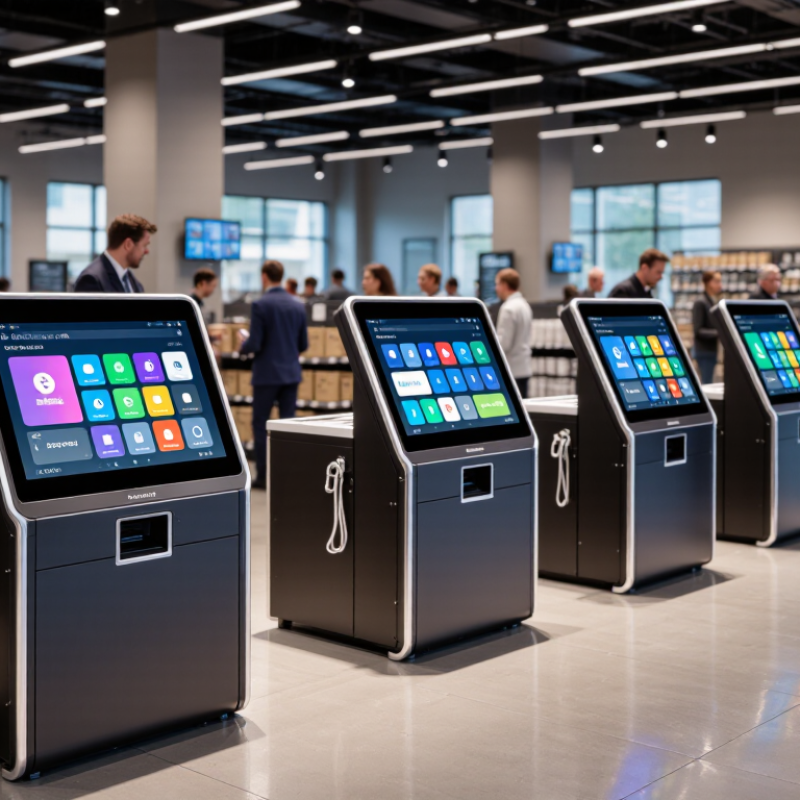
What Retail Touch Screen Kiosks Are and Where They Are Used
Retail touch screen kiosks are self-service terminals that let shoppers complete tasks without waiting for a sales associate. A typical unit includes a commercial display, protective glass, speakers, a payment reader, and inventory software. The interface may help customers search products, compare sizes, check prices, or place orders for home delivery.
They appear in clothing stores, supermarkets, electronics shops, furniture showrooms, and shopping malls. In a fashion store, a shopper can scan a shirt and request another size from the stockroom. In a grocery store, the kiosk may support product lookup, loyalty access, and pickup instructions. Showrooms often use larger screens to display colors, specifications, and room layouts. Some stores also place kiosks near entrances for wayfinding or queue management.
Good design depends on more than screen size. The display should remain readable under strong ceiling lights and resist fingerprints during busy hours. Touch targets need enough spacing for older users and people with limited dexterity. Clear language matters, especially when customers switch between languages. Payment and personal data require approved security controls.
Field testing often reveals small problems. A low screen can cause awkward posture. A slow product search can cancel the convenience. Some interfaces still use too many steps. Regular software updates, cleaning schedules, accessibility checks, and staff support make the kiosk more dependable. It is useful, but not effortless.
How Global Kiosk Manufacturers Are Compared and Ranked
Ranking retail touch screen kiosk manufacturers requires more than comparing product photos or headline prices. A credible assessment weighs display responsiveness, brightness, enclosure durability, payment and software integration, customization, service coverage, and spare-parts availability. Evidence matters: published specifications, deployment case studies, warranty terms, and support response commitments are stronger signals than broad claims. No ranking is perfect. Regional service quality is difficult to compare consistently.
Market growth provides context, not proof of product quality. Grand View Research’s Self-service Kiosk Market Size, Share & Trends Analysis Report estimated the global market at USD 34.0 billion in 2023 and projected an 11.2% compound annual growth rate from 2024 to 2030. That forecast suggests rising demand, but it does not identify the most reliable manufacturer. A fair comparison should separate retail-specific experience from activity in other kiosk sectors, and examine total ownership costs over several years. Look closely at touch performance under bright store lighting, screen cleaning requirements, and whether replacement parts are readily available. Small details matter. Rankings should also disclose their scoring criteria and evidence gaps; otherwise, precise-looking scores can conceal subjective judgments. A useful comparison is transparent, repeatable, and willing to flag uncertainty.
Profiles of Ten Leading Retail Touch Screen Kiosk Manufacturers
The ten manufacturer profiles offer a practical way to compare retail kiosk capabilities without treating “leading” as a universal ranking. They cover suppliers with different strengths: compact countertop units, freestanding displays, and custom enclosures for busy stores. Key differences include screen size, touch response, mounting options, and access for maintenance. A bright, responsive display matters near a sunlit entrance. So does a sturdy base on a crowded sales floor.
The profiles also highlight how manufacturing choices affect daily use. Metal housing can withstand frequent contact, while carefully placed vents help manage heat inside enclosed cabinets. Ask whether a supplier can provide drawings, sample units, and clear service documentation. Check how easily staff can replace a payment terminal or clean the screen. These details may seem small. They often shape the long-term experience more than a polished product photo. The profiles are a starting point, not a substitute for testing; specifications can miss awkward cables or glare.
Tips: Compare like with like. Request touch tests, brightness figures, warranty terms, and spare-part timelines. If possible, evaluate a unit in your store’s actual lighting. One detail is easy to overlook: who handles repairs after installation?
How Their Products, Technologies, and Services Differ
Retail touch-screen kiosk manufacturers differ in more than screen size. Some focus on compact counter units for self-service checkouts, while others build floor-standing kiosks with barcode scanners, receipt printers, and payment modules. Compare screen brightness, touch response, and enclosure materials against the store environment. A bright entrance needs a display that remains readable in changing light. A busy aisle needs a stable base and surfaces that are easy to clean.
Technology choices shape daily use. Capacitive touch supports familiar gestures, while glove-compatible options may suit some retail settings. Check whether the operating system, device management tools, and software interfaces fit your existing systems. Ask how updates, replacement parts, and remote troubleshooting are handled. A polished demonstration is useful, but it cannot reveal every issue. Pilot testing matters. Product specifications can also leave gaps, so request clear service terms and realistic repair timelines before comparing suppliers.
Tips: Test a sample with your actual checkout flow, lighting, and network. Measure how long common tasks take, and note where customers hesitate. Ask for references from retailers with similar traffic. Do not assume the highest specification guarantees the best fit.
Top 10 Retail Touch Screen Kiosk Manufacturers Worldwide: Capability Benchmark
Comparative view of publicly documented product technologies and service capabilities. Values represent the number of manufacturers, out of 10, that publicly list each capability.
The benchmark highlights where the market most commonly differentiates: remote device management, Android and Windows compatibility, 24/7 operation, custom enclosure design, payment integration, and accessibility features.
Factors Retailers Consider When Choosing a Manufacturer
Choosing a retail touch screen kiosk manufacturer starts with the store environment. A kiosk near bright windows needs a screen that stays readable under glare. A busy checkout area needs a stable base, spill-resistant surfaces, and a display responsive to quick taps. Ask how the manufacturer tests touch accuracy, heat, and repeated daily use. Request specifications for screen size, mounting options, and accessible reach. A polished demo is useful, but it cannot show years of wear.
Check how the kiosk connects to your payment, inventory, and content systems. Confirm which operating systems and peripherals are supported, and ask how updates and security patches are handled. Service matters, too. Find out where replacement parts are stocked, how repairs are arranged, and what response times are typical. Compare warranty terms carefully; a low purchase price may not include installation or ongoing support. Custom design can help a kiosk fit a compact aisle, though excessive customization may make future repairs harder.
Tips: Ask for a sample unit or live demonstration. Test it with the actual interface, lighting, and payment devices used in your store. Get support commitments in writing, and check whether spare screens and cables are readily available.