What Type of Wheel Luggage Is Best?
Choosing the best Wheel Luggage depends less on a clever label and more on where, how, and how often you travel. A smooth airport floor favors different wheels from cracked sidewalks, train platforms, or gravel paths. The right choice should roll steadily, turn without fighting your wrist, and remain manageable when packed. Small details matter.
Four-wheel spinner luggage can pivot in tight queues and glide beside you on level floors. Its wheels may sit more exposed, though, so rough ground can make it harder to control. Two-wheel luggage usually tilts and follows behind, which can feel steadier over uneven pavement. But pulling a heavy case for several blocks may tire your arm. Neither design wins every trip. Test it loaded. A suitcase that feels light in an empty showroom can behave differently with shoes, toiletries, and a laptop inside.
Wheel size, housing strength, handle comfort, and replacement options also deserve attention. Check how firmly the wheels are attached, listen for scraping, and roll the case across more than one surface. These simple checks cannot predict every trip, but they can reveal wobble or awkward steering before purchase. Still, no inspection is perfect. Travelers carry different loads, and small wheels can perform differently depending on construction. This guide compares common wheel types and explains which features suit frequent flyers, family trips, and city travel, helping you choose based on practical needs rather than appearance alone.
Main Types of Wheeled Luggage
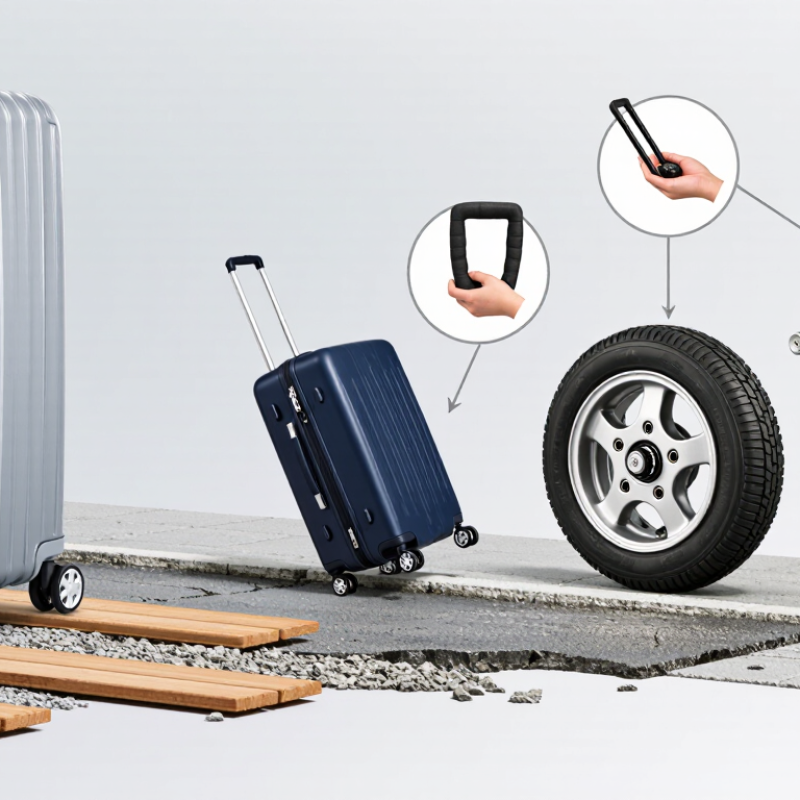
Two-wheel upright luggage is a practical choice for rough sidewalks and crowded stations. Its wheels sit partly inside the case, which can protect them from knocks. You tilt the bag and pull it behind you, so it takes a little arm effort. That effort can feel worthwhile on cracked pavement. These cases also tend to stay put on slopes, though you should still hold the handle.
Four-wheel spinner luggage moves upright and turns easily in tight airport aisles. It can reduce pulling strain on smooth floors. Small wheels, however, may catch on curb edges or wobble over uneven paving. Not always ideal. Check that the wheels roll smoothly and feel securely attached; a quick spin in the shop can reveal stiffness.
Wheeled duffels combine a flexible fabric body with a rolling base. They suit bulky, soft items, but packed contents may shift and make the bag awkward to steer. Carry-on and checked-size cases are available in both two-wheel and spinner designs. Pick based on your usual routes, not just capacity: stairs, rough pavement, and crowded trains change what feels convenient. No design wins every trip. I would leave room for personal preference, too; handle height and balance can matter more than expected.
How Two-Wheel and Spinner Designs Differ
Two-wheel and spinner luggage differ most when the pavement stops being smooth. Two-wheel cases roll at an angle, with their wheels partly protected by the shell. Pulling one over a curb or cracked sidewalk can feel steadier, though your arm carries more of the load. That matters. A narrow station stairway or crowded platform may also be easier to navigate with a tilted case.
Spinner luggage stands upright on four swiveling wheels, so it can glide beside you through a wide airport aisle. But small wheels can catch on rough paving, and exposed wheels may take knocks during handling. SITA’s 2024 Baggage IT Insights report recorded 6.9 mishandled bags per 1,000 passengers in 2023. That figure covers baggage systems, not wheel types, so it cannot prove one design lasts longer. It does underline the value of sturdy wheel housings. Check for wobble, listen for grinding, and test a loaded case over a rough patch. A spinner is easier to steer in tight indoor spaces; a two-wheel case may suit uneven routes better. Neither is effortless.
How Wheel Size and Construction Affect Performance
Wheel size changes how luggage handles real surfaces. Larger wheels usually cross pavement seams, curb cuts, and station thresholds with less jolting. Small wheels can catch on those edges. But larger wheels often protrude farther, leaving them exposed to knocks during loading. Recessed wheels gain protection, though they may roll poorly over rough paving. Four-wheel spinners are easy to steer on smooth floors; two-wheel designs can be steadier when tilted across uneven ground.
Construction matters as much as diameter. A resilient tread, secure axle, and reinforced wheel housing help limit wobble and impact damage. Check that each wheel turns smoothly and sits firmly, without visible gaps around its mount.
SITA’s 2024 Baggage IT Insights report recorded 6.9 mishandled bags per 1,000 passengers in 2023. That figure measures airline baggage handling, not wheel failures, but it shows why exposed parts should withstand knocks.
A larger wheel is not automatically better. On crowded trains, protruding wheels can snag, and I would not choose size without considering where the bag will travel.
Which Wheel Type Suits Different Travel Conditions
What Type of Wheel Luggage Is Best?
Which Wheel Type Suits Different Travel Conditions
Wheel choice matters most when the surface changes. For smooth airport floors and city sidewalks, four small spinner wheels turn easily and let you steer beside you. They are handy in crowded queues, though exposed wheels can catch on cracks or rough paving. Two larger inline wheels usually roll better over cobblestones, carpet edges, and uneven station platforms. You pull the case behind you, so it may feel steadier on broken ground. But it needs more room to swing. Not always.
For frequent stairs, gravel paths, or narrow bus aisles, wheel size and housing matter as much as wheel count. Larger wheels with sturdy mounts can absorb bumps better, while recessed wheels are less exposed to knocks. Check that the handle stays comfortable when tilted; a case that pulls at your wrist gets tiring fast. I learned that the hard way. Still, no wheel setup makes heavy luggage pleasant on stairs.
Tips: Before a trip, roll a loaded case over a curb cut and rough pavement. Listen for rattling, check for wobble, and test turns with one hand. Small flaws show up quickly.
How to Choose the Best Wheeled Luggage for Your Needs
Choosing the best wheeled luggage starts with how you travel, not how a suitcase looks. Spinner luggage has four wheels that turn in every direction, making it easy to guide through airport queues and narrow aisles. But those wheels can catch on uneven pavement. Two-wheel luggage usually rolls behind you and may handle sidewalks better, though it needs more room to turn.
Think about your usual route. If you often lift a bag onto trains or climb stairs, a lighter case with sturdy handles may be more useful than extra compartments. For frequent flights, check the carry-on dimensions against your airline’s current limits; allowances can vary. A soft-sided case may squeeze into tight spaces, while a hard shell can help protect items from bumps. Neither is automatically better. That depends on what you pack.
Pay attention to practical details: wheel noise, handle wobble, zipper movement, and whether the case tips when packed. Test it loaded. A suitcase that rolls smoothly when empty may pull awkwardly with a laptop and shoes inside. Check that the telescoping handle locks at a comfortable height, and that the wheels sit securely in their housings. I’d give wheel quality more attention than glossy extras, though it is easy to be distracted by pockets. A short test across a rough floor can reveal more than a long feature list.