Menu
Monday
9:00-5:00
Tuesday
9:00-5:00
Wednesday
9:00-5:00
Thursday
9:00-5:00
Friday
9:00-5:00
Saturday
9:00-4:00
Sunday
CLOSED
Why Choose an Electric Folding Scooter?
Urban travel is changing, and the Electric Folding Scooter has become a practical answer for short journeys. NACTO reported 157 million shared micromobility trips in the United States and Canada during 2023. That figure shows strong demand for compact, low-emission transport. It also reveals a limitation: shared vehicles are not always available when needed.
A folding scooter can fit beside a desk, under a train seat, or inside a car trunk. Its electric motor reduces physical effort on daily commutes. Many models also support the last mile between a station and a workplace. Horace Dediu, a respected micromobility analyst, has said, “Micromobility is the future of transportation.” His view supports the wider trend, but it does not make every scooter a wise purchase.
The International Transport Forum links micromobility with more flexible urban transport networks. Industry reports from Grand View Research also project continued growth in the electric scooter market. Still, practical ownership requires honest comparison. Battery range can fall in cold weather. Small wheels may feel unstable on broken pavement. Folding mechanisms add convenience, but they can increase weight and maintenance needs. Some products promise impressive distances, yet real riding conditions tell a different story.
The best choice depends on route length, storage space, road quality, and charging access. It should include reliable brakes, visible lights, durable tires, and clear safety guidance. An Electric Folding Scooter is not perfect. However, when chosen carefully, it can replace short car trips and make everyday movement simpler.
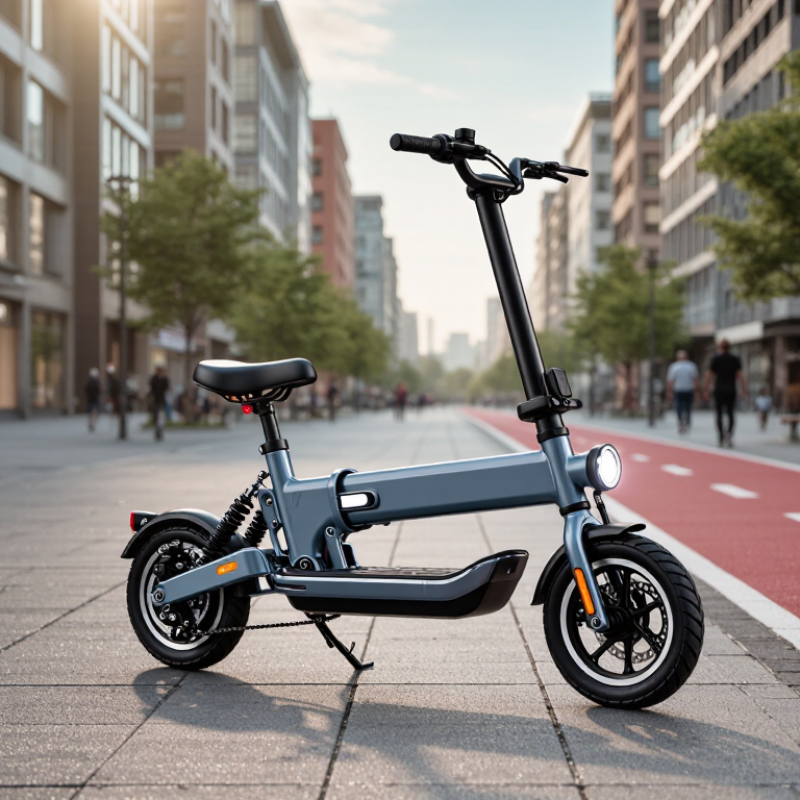
An electric folding scooter is a compact personal vehicle powered by a rechargeable battery and an electric motor. Its handlebar stem or deck folds for easier storage and transport. Unlike a traditional kick scooter, it moves through a throttle or control switch. Most models include hand brakes, lights, a display, and a battery management system. The exact design varies, so specifications deserve careful attention.
When folded, a scooter may fit beneath a desk, beside a train seat, or inside a vehicle trunk. This makes it useful for short commutes and last-mile travel. In daily use, riders should check the battery level before leaving. Cold weather, hills, rider weight, and frequent stops can reduce the stated range.
It sounds simple.
It is not always effortless.
A stable frame, responsive brakes, and a secure folding latch matter more than appearance. Pneumatic tires can absorb rough pavement, while solid tires resist punctures but may feel harsher. I would inspect the latch after several rides because small looseness can become a serious concern. A test ride also reveals awkward throttle response or uncomfortable handlebar height. Protective equipment remains sensible, even at moderate speeds. Riders should check local riding rules, approved paths, lighting requirements, and storage limits before regular use. A folding scooter offers practical portability, but its convenience depends on maintenance, road conditions, and honest expectations.

An electric folding scooter combines a rechargeable battery, motor, controller, and folding frame. The battery stores energy in lithium-ion cells. When you press the throttle, the controller regulates power sent to the hub motor. This process controls acceleration rather than releasing full power instantly. A wheel sensor measures rotation and helps match motor assistance to your speed. The result feels quiet, but the system is working continuously.
The folding mechanism uses a hinge, locking pin, or reinforced latch near the steering column. When secured, it keeps the frame stable during riding. When released, the handlebar folds toward the deck for easier storage. I have found that the latch deserves more attention than many riders expect. A small amount of dirt can prevent full engagement. That is not a minor issue.
Battery range depends on rider weight, tire pressure, temperature, hills, and riding speed. Cold weather can reduce available distance. Underinflated tires also make the motor work harder. A display may show remaining charge, but its estimate is not always precise. Check the latch before every ride. Test the brakes at low speed. Charging should use the supplied equipment in a dry, ventilated area. Regenerative braking may recover a little energy, though it cannot replace normal charging. Some designs feel smooth on flat pavement but struggle on steep slopes. That limitation is easy to underestimate.
A folding scooter fits into daily routines that defeat larger vehicles. It can slide beneath a desk, stand beside a train seat, or wait in a small apartment corner. The International Transport Forum reports that many urban trips remain short, often under five kilometres. For these distances, a portable electric scooter can reduce walking time without requiring parking space. The benefit feels practical, not theoretical.
Portability also supports mixed-mode travel. Fold it before boarding public transport, then unfold it near the final destination. NACTO recorded about 157 million shared micromobility trips in the United States during 2023. That figure does not measure personal scooters, but it shows growing acceptance of compact urban transport. Battery range, charging time, wheel size, and carrying weight still deserve careful attention. Convenience can disappear when the scooter feels heavy on stairs.
Electric travel may also reduce reliance on short car journeys. The U.S. Environmental Protection Agency identifies transportation as a major source of greenhouse gas emissions, with transport producing 28% of U.S. emissions in 2022. Yet a scooter is not automatically sustainable. Electricity sources, battery lifespan, maintenance, and replacement parts matter. The honest choice requires checking real riding conditions, not trusting advertised range alone. Small wheels can feel unstable on rough pavement. That is easy to underestimate.
Why Choose an Electric Folding Scooter?
Important Features to Compare Before Buying
An electric folding scooter can simplify short urban trips, especially when storage space is limited. I have found that folded size matters more than advertised portability. Measure your car trunk, hallway, and workplace storage area before choosing. A lighter frame is easier to carry, but it may feel less stable on uneven pavement. That trade-off deserves attention.
Compare motor performance, battery capacity, and realistic range together. A stated range may decrease with hills, cold weather, heavier loads, or frequent braking. Check the scooter’s maximum load and charging time. Brakes should respond smoothly, with a dependable mechanical or electronic system. Wider pneumatic tires can improve comfort, although they may need regular pressure checks. Solid tires resist punctures but often transmit more road vibration.
Tips: Test the folding mechanism several times. It should lock firmly and release without force. Inspect the deck, handlebar, lights, and cable routing for secure construction. Ask about replacement parts, warranty coverage, and service access. Water resistance is useful, but it does not mean unlimited protection from heavy rain. I once focused too much on speed and overlooked handlebar height. That mistake made longer rides uncomfortable. Check local riding requirements before use, too. Safety equipment and visibility still matter, even on quiet streets.
Why Choose an Electric Folding Scooter?
Safety begins before the ride. The National Association of City Transportation Officials reported 157 million shared micromobility trips in 2023. That growth reflects usefulness, but more riders also create more unpredictable traffic situations. I check the brakes, tire pressure, folding latch, and battery level before leaving. It takes less than a minute. I still occasionally forget the tire pressure, which makes steering feel strangely heavy.
Wear a certified helmet, keep both hands on the handlebar, and slow down near driveways. The U.S. Consumer Product Safety Commission reported thousands of emergency-department injuries involving electric scooters in recent years. Its data highlights a practical concern: speed feels manageable until a wet drain cover appears. Night riding needs working front and rear lights, reflective clothing, and extra space around pedestrians. Never assume drivers see you.
Maintenance is mostly simple, but neglect is expensive. Wipe away road grit after wet trips, inspect cables weekly, and avoid charging on soft surfaces or while sleeping. A folding design helps with trains, offices, and small apartments, yet repeated folding can loosen the latch over time. Store the scooter in a dry place, not beside a radiator. Battery range also changes with cold weather, rider weight, hills, and tire pressure. Plan conservatively. Daily use should feel controlled, not rushed.
| Dimension | What the Data Shows | Everyday Benefit | Recommended Practice |
|---|---|---|---|
| Portability | Many folding electric scooters weigh approximately 10–20 kg, depending on the battery, frame, motor, and equipment. | They can be easier to store in a hallway, office, apartment, or vehicle than a full-size bicycle or non-folding scooter. | Check the actual folded dimensions and lifting weight before purchase, especially if the scooter must be carried on stairs. |
| Typical Range | Advertised range commonly falls between 15 and 40 km per charge, while real-world range is affected by rider weight, hills, wind, temperature, speed, and tire pressure. | A suitable range can cover short commutes, local errands, and first- or last-mile travel. | Plan regular trips using a practical range below the advertised maximum and leave a reserve for weather or route changes. |
| Charging Time | Typical charging time is approximately 4–8 hours, although the exact duration depends on battery capacity and charger output. | Overnight charging can make the scooter ready for the next day. | Use the supplied or approved charger, place it on a hard ventilated surface, and unplug it after charging if the instructions require this. |
| Battery Care | Rechargeable lithium-ion batteries perform best when protected from extreme heat, freezing temperatures, moisture, and physical damage. | Proper storage helps preserve usable capacity and reduces avoidable battery wear. | Store the scooter in a dry indoor location. Avoid leaving it in a hot vehicle, and follow the manufacturer’s charging and storage guidance. |
| Braking Safety | Electric folding scooters may use electronic braking, mechanical disc or drum braking, or a combination of systems. | Responsive brakes improve control in traffic and on slopes. | Test both braking systems before each ride. Begin braking earlier on wet, downhill, loose, or crowded surfaces. |
| Tire Condition | Pneumatic tires generally provide cushioning but require air-pressure checks. Solid or puncture-resistant tires reduce puncture risk but may transmit more vibration. | Correct tire condition supports handling, braking, comfort, and energy efficiency. | Inspect tires before riding and maintain the pressure stated on the tire sidewall or in the product instructions. |
| Visibility | Front and rear lights, reflectors, and high-visibility clothing improve the chance of being seen, especially in low light. | Better visibility helps other road users identify the scooter’s position and direction. | Use lights during darkness or poor visibility, keep lenses clean, and confirm local lighting requirements before riding. |
| Rider Protection | A properly fitted bicycle-style helmet can help reduce the risk of serious head injury in a fall or collision. | Protective equipment provides an additional layer of risk reduction beyond careful riding. | Wear a certified, correctly adjusted helmet. Consider gloves and reflective clothing for regular commuting. |
| Folding Mechanism | The hinge, latch, and locking components experience repeated loading during folding, unfolding, and riding. | A secure locking system helps prevent unwanted movement of the steering column while in use. | Before every ride, confirm that the folding latch is fully engaged and check for looseness, cracks, or unusual movement. |
| Weather Resistance | Water-resistance ratings vary by model and do not usually mean the scooter is waterproof or suitable for immersion. | A weather-resistant design can tolerate light splashes, but heavy rain may still affect electrical components and braking performance. | Avoid deep puddles and flooding. Dry the scooter after wet rides and never charge it while wet. |
| Load Capacity | Many consumer models support approximately 100–120 kg, including the rider and carried items, but limits vary significantly. | Staying within the rated load supports stability, braking, range, and component durability. | Use the stated maximum load as a strict limit and account for backpacks, groceries, and other cargo. |
| Routine Maintenance | Basic checks include tire condition, brake response, fasteners, lights, folding hardware, and battery or charging-cable condition. | Short inspections can identify problems before they become expensive or unsafe. | Perform a quick pre-ride inspection and arrange professional service if brakes, steering, wiring, or the frame show signs of damage. |
| Operating Cost | Electric scooters have no fuel engine or engine oil, and their routine energy use is generally low; replacement tires, brake parts, and batteries remain eventual costs. | Lower routine mechanical complexity can make short-distance travel convenient and economical. | Compare total ownership costs, including charging, consumables, storage, repairs, and eventual battery replacement. |
| Legal Considerations | Rules for speed limits, helmets, lights, road access, registration, insurance, and minimum rider age differ by location. | Understanding local requirements helps prevent fines and unsafe use. | Check current local regulations before riding on public roads, cycle lanes, sidewalks, or shared paths. |
| Best Everyday Use | Folding scooters are most practical for short urban trips, multimodal commuting, campus travel, and errands on suitable paved routes. | Folding and electric assistance can reduce travel effort while taking less storage space than many larger vehicles. | Choose routes with safe surfaces, moderate traffic, and legal access. Ride at a speed appropriate for visibility and conditions. |
