• Monday

    9:00-5:00

  • Tuesday

    9:00-5:00

  • Wednesday

    9:00-5:00

  • Thursday

    9:00-5:00

  • Friday

    9:00-5:00

  • Saturday

    9:00-4:00

  • Sunday

    CLOSED

2026 Top Wooden Swing Sets for Global Buyers

Choosing a backyard play structure can look simple until you compare timber, hardware, space, and long-term care. This 2026 guide to wooden swing sets helps global buyers assess those details before requesting quotes. A sturdy frame should feel proportionate to its intended use, not merely look impressive in a product photo. Check the listed dimensions against your yard, including room for swing movement and clear access around the structure. Small measurements matter.

The guide examines wood type, finish, connectors, accessories, assembly needs, and supplier information. Ask whether the timber is treated or naturally durable, and request clear details about coatings and maintenance. Product claims deserve evidence, such as specifications, inspection records, or practical assembly instructions. Requirements and climate conditions differ by destination, so confirm relevant local expectations with qualified sources before ordering. Do not assume one supplier’s documents answer every question. That is easy to overlook.

Price is only one part of value. Freight, replacement parts, installation, and seasonal upkeep may change the real cost over time. A lower quote can still be suitable, but compare what it includes. We also consider how a set may handle rain, strong sun, and frequent use, while avoiding promises that no product can guarantee. Some details remain uncertain until a buyer sees the actual materials. Use this overview to compare options carefully, ask specific questions, and choose wooden swing sets that fit your space, budget, and family’s needs.
2026 Top Wooden Swing Sets for Global Buyers

Classify 2026 Wooden Swing Sets and Check ASTM F1148 Safety Scope

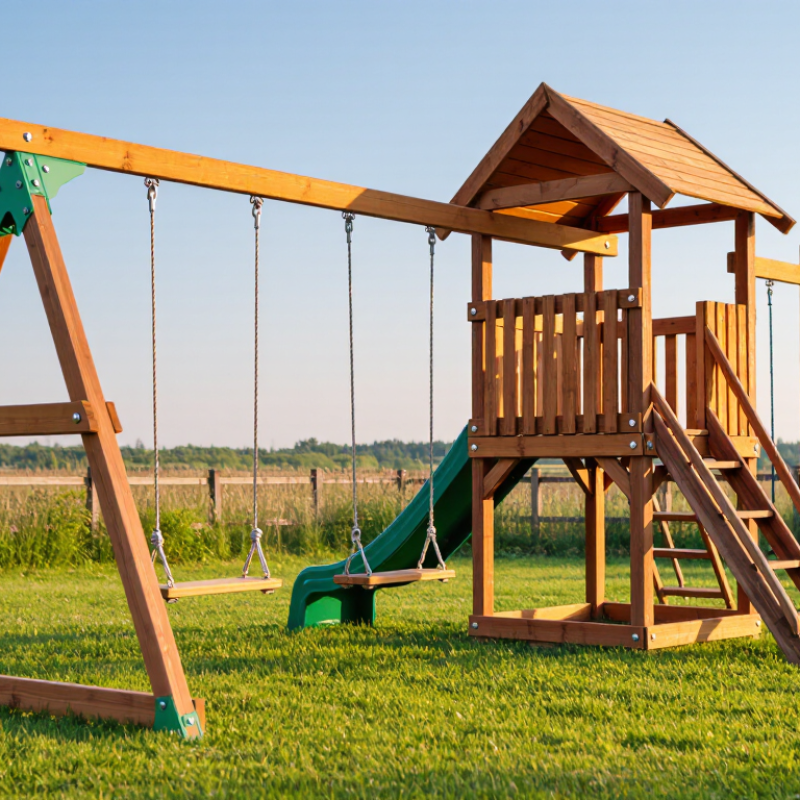
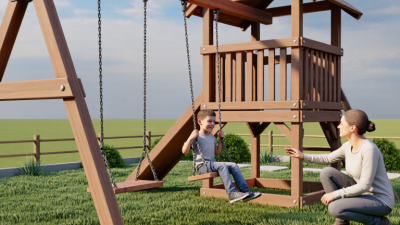
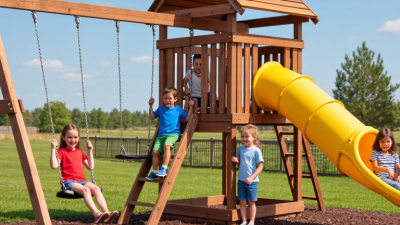
Wooden swing sets for 2026 buyers generally fall into three practical groups: compact swing frames, swing-and-slide combinations, and larger multi-activity structures. Compact models suit smaller yards and may include two seats and a climbing ladder. Combination sets add features, but need more clear space around moving swings. Larger structures can offer several play stations. They also require closer checks of the site, anchoring, and assembly instructions. Measure the usable area, including the swing’s movement zone. A frame that fits neatly on paper may feel crowded in a real yard.

ASTM F1148 addresses consumer safety performance for home playground equipment. Its scope includes design and performance considerations, with test methods for hazards such as openings that could trap a child, protrusions, and structural stability. Check whether the product documentation identifies the applicable standard and edition; a general safety claim is not the same as clear evidence of conformity. Also confirm the equipment’s intended age range, installation requirements, and inspection guidance. Not a label alone. ASTM F1148 is for home playground equipment, so buyers should not assume it covers every setting or replaces local requirements. A careful review takes time. Some instructions can still leave questions, so unresolved details deserve clarification before assembly.
Compare Timber with EN 350’s Five Fungal-Durability Classes

For global buyers comparing timber swing sets, EN 350:2016 offers a useful starting point. It classifies natural resistance to wood-destroying fungi in five classes: DC1, very durable, through DC5, not durable. These ratings describe fungal durability, not strength, safety, or a guaranteed outdoor lifespan. A high class is helpful, but it is not the whole specification.

Check which part of the timber is rated. EN 350 durability ratings generally concern heartwood; sapwood is usually less resistant. Species and growing conditions also affect performance. Read the supplier’s technical documents, rather than relying on a timber name alone. Small details matter. The USDA Forest Products Laboratory’s 2021 Wood Handbook notes that decay fungi generally need wood moisture above about 20 percent. Water trapped around joints, feet, or poorly drained bases can therefore undermine a durable species.

For a swing set exposed to rain, ask for the stated EN 350 class and confirm whether the quoted material is heartwood. Also inspect end grain, where water can enter, and look for design details that help timber dry. A class rating cannot replace sound installation or regular checks for cracks and standing water. I would not treat it as a warranty; local weather and upkeep still shape performance. Some comparisons leave that part out.

Plan CPSC Fall Zones: 6-Foot Clearance and Twice the Swing-Pivot Height

2026 Top Wooden Swing Sets for Global Buyers

Planning a wooden swing set starts with empty space, not the frame. CPSC guidance uses a six-foot clearance around play equipment, while swings need extra room in front and behind. Measure from the swing’s pivot point to the protective surface. Then allow a clear distance of at least twice that height in both directions. A pivot ten feet high, for example, calls for twenty feet of space forward and backward. That can surprise buyers with compact yards.

Keep this fall zone free of fences, tree trunks, paving stones, and other equipment. Check the ground slope, too; a level-looking lawn may still change how the space drains or feels underfoot. Use an appropriate protective surface, and follow the set’s installation instructions for anchoring and layout. Requirements can vary by location, so confirm applicable local guidance before installation. A tape measure helps. A second measurement is even better. It is easy to underestimate the swing’s path when looking at a drawing.

Tips: Mark the full clearance with string before buying or assembling. Walk the proposed area and look for branches overhead. Recheck measurements after installation; I’d rather catch a tight spot early than explain it away later.

Match Surfacing to CPSC’s 9-Inch Wood-Chip Benchmark for 7-Foot Falls

For a wooden swing set with a 7-foot fall height, plan the landing area around a 9-inch wood-chip depth, matching the benchmark in the subtitle. Measure from the ground to the highest point a child can reach, not just the seat. Fill the full use zone, including the space beneath the swing’s forward and backward path. A thin layer may look tidy. It may not cushion a fall.

Depth alone does not guarantee protection. Chips can shift, compact, or scatter near the entry points, so check them often and restore the intended depth. Keep the surface loose and even, with no exposed roots, stones, or hard edging where children land. Drainage matters, too; wet, compressed chips can behave differently underfoot. Confirm the recommended material and fall-height guidance for the specific installation, since chip size and composition vary. A rake helps. So does a level check after heavy use. Even with careful planning, the surface needs ongoing attention.

Rank Global-Buyer Options by Capacity, Warranty, and EN 71-8 Compliance

For global buyers, rank wooden swing sets by verified capacity before price. A model with a published per-seat limit and total user limit is easier to compare than one listing only “heavy-duty” construction. Check whether capacity applies to moving users, and inspect the beam, hangers, and ground anchors as one load path. The U.S. Consumer Product Safety Commission’s 2022 report, Toy-Related Deaths and Injuries, estimated 209,500 toy-related emergency-department injuries that year. The figure covers toys broadly, not swing sets alone, so it cannot predict a set’s risk. It does support careful checks of use limits and instructions. Small detail, big difference.

Next, compare warranty terms and EN 71-8 evidence side by side. EN 71-8 covers activity toys for domestic use, including requirements and test methods relevant to swings. Ask for a current test report identifying the tested model, configuration, and standard edition; a vague “compliant” claim is not enough. A longer warranty may help, but check exclusions for weathering, corrosion, hardware, and commercial use. Prefer clear replacement-part terms and a stated inspection schedule. One weakness in many comparisons is treating warranty length as a safety score. It is not. A well-documented set with modest capacity may suit a small yard better than a higher-capacity set with unclear anchoring details.

2026 Top Wooden Swing Sets for Global Buyers - Rank Global-Buyer Options by Capacity, Warranty, and EN 71-8 Compliance

Buyer-screening guide: compare product documentation rather than relying on generic capacity or warranty assumptions. No brand or company data is shown.

Rank Buyer option Capacity evidence to request Warranty evidence to review EN 71-8 compliance check Global-buyer fit
1 Multi-user family set
For buyers prioritizing multiple play positions.
Obtain the manufacturer’s stated maximum number of users and maximum user weight for each swing and play component. Confirm whether the limits apply simultaneously. Request written coverage periods and terms separately for timber, hardware, and accessories; check exclusions, claim process, and whether replacement parts can be shipped to the destination market. Request the applicable test report or other supporting technical documentation identifying the exact model and configuration. Verify the applicable EN 71-8 edition with the supplier and destination-market requirements. A strong shortlist candidate when the supplier provides model-specific capacity limits, traceable compliance documents, and export-market warranty terms.
2 Expandable modular set
For buyers who may add components later.
Request capacity limits for the base unit and every approved add-on. Confirm the permitted combination and whether adding components changes the user or weight limits. Check whether warranty coverage remains valid after approved expansion, and whether add-ons and replacement parts are covered under separate terms. Confirm that documentation covers the purchased configuration, including any add-ons. Do not assume that a report for the base model covers a modified setup. Suitable where local distribution can support future parts and the supplier documents each approved configuration.
3 Compact single-play-zone set
For buyers prioritizing a smaller layout.
Request the rated user count and maximum user weight for each play position, plus the required installation footprint and safety-zone dimensions. Compare the written coverage for structural timber, finish, fasteners, and moving parts. Check maintenance conditions and the process for claims from outside the seller’s country. Ask for model-specific evidence and assembly instructions. Confirm that the tested product matches the supplied materials, fittings, and configuration. A practical candidate when space is limited, provided the installation clearances and local documentation requirements are met.
4 Climbing-and-swing combination
For buyers seeking several activity types.
Request separate user and weight limits for the swing, climbing, and other activity components, along with any rules for simultaneous use. Review coverage by component and clarify whether wear items, outdoor exposure, maintenance, and replacement hardware are excluded or subject to conditions. Check that the compliance evidence covers all included activity features and the exact product model. Request assembly, inspection, and maintenance instructions. Best evaluated against the buyer’s installation space, user needs, and ability to maintain multiple activity components.

Important verification note

The options above are buyer categories, not tested or rated products. Capacity limits and warranty periods vary by model and supplier, so they are intentionally not presented as universal figures. EN 71-8 concerns domestic activity toys; request documentation for the exact product and verify the applicable standard edition and legal requirements for the destination market. A supplier’s claim alone is not a substitute for reviewing supporting documents.