Menu
Monday
9:00-5:00
Tuesday
9:00-5:00
Wednesday
9:00-5:00
Thursday
9:00-5:00
Friday
9:00-5:00
Saturday
9:00-4:00
Sunday
CLOSED
Buying wooden swing sets can look simple until you compare timber, hardware, spacing, and installation requirements. A bright catalog photo rarely reveals how the set feels in a real backyard. After examining outdoor play equipment, I have learned that small details often decide long-term value. The grain may look beautiful, yet untreated wood can weather quickly under rain and strong sunlight.
This guide shares ten practical tips for choosing wooden swing sets with greater confidence. It considers wood quality, weight limits, ground preparation, swing clearance, platform height, and replacement parts. Reliable manufacturers should provide clear assembly instructions, maintenance guidance, and safety information based on recognized standards. Check those documents carefully. Do not rely only on online reviews or attractive discounts.
Measure your space with a tape measure before browsing models. Leave generous clearance around each swing, especially near fences, walls, trees, and paving. Feel the timber edges by hand, and inspect bolts, connectors, anchors, and protective finishes. A sturdy set should not wobble when gently tested, but even a well-built frame needs regular checks.
Some advice depends on your climate and children’s ages. That part is easy to underestimate. Wood can split, fade, or absorb moisture, while busy families may postpone maintenance. I have made that mistake myself. A realistic buying decision balances play value, available space, installation skill, and the time needed for inspections. These tips will help you notice weaknesses before they become expensive surprises.
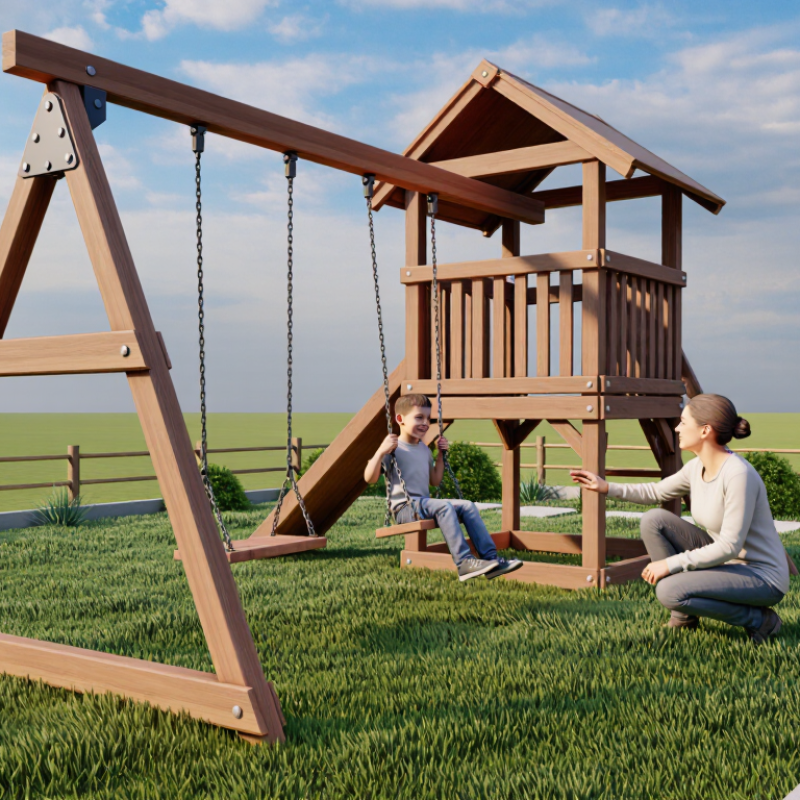
Buying a wooden swing set starts with defining the space, users, and daily requirements. Measure the area, then add a generous safety zone around every moving swing. CPSC guidance identifies falls as the leading cause of playground injuries, so clearance is not decoration. It is protection. Tip 1: Measure twice. Tip 2: Mark swing paths with string. Tip 3: Keep fences, trees, walls, and outdoor furniture outside the movement zone.
Think about the children who will use the set. Tip 4: Record their ages, heights, and confidence levels. Tip 5: Choose seats for younger users and stronger swings for older children. Tip 6: Check the equipment’s stated age range and weight capacity. ASTM F1148, the consumer safety standard for home playground equipment, emphasizes appropriate design, installation, and use. That matters more than a large-looking structure. Bigger is not always better.
Your surface and routine also shape the decision. Tip 7: Select impact-absorbing surfacing, not bare soil or concrete. Tip 8: Leave access for mowing, inspections, and repairs. Tip 9: Confirm that the ground is level and drains well. Tip 10: Plan for adult supervision from the nearest window or seating area. I have seen careful buyers measure the frame but forget the gate swing. A neat plan can still miss small obstacles. CPSC safety guidance also recommends regular checks for loose fasteners, splintered wood, rust, and worn ropes. Do those checks after storms, too. Wooden equipment needs attention. That is the honest part.
Plan the swing set around its highest swing height and the number of users. This chart uses a 6-foot side clearance and a front-and-back clearance equal to twice the swing height, reflecting commonly cited playground safety planning guidance. Confirm the final layout with local regulations and the manufacturer’s instructions before installation.
Buying a wooden swing set requires more than choosing an attractive shape. The wood affects durability, maintenance, and comfort. Cedar resists moisture naturally and feels smooth, but it can be softer and more expensive. Redwood is stable and attractive, though availability varies. Pressure-treated pine is usually stronger and more affordable, but it needs careful inspection for rough areas, chemical handling guidance, and moisture damage.
Tip 1: Examine construction quality closely. Posts should sit firmly on appropriate anchors, not directly in wet soil. Look for rounded edges, recessed bolts, tight joints, and thick support beams. Hardware should resist rust. Gaps must be narrow enough to reduce trapping risks, while platforms need secure railings and stable ladders. A practical mistake is judging strength by appearance alone. Rock the frame gently before buying. Movement deserves attention.
Tip 2: Match design features to the children’s ages and the available yard. Lower platforms can simplify supervision, while taller towers require stronger barriers and deeper safety surfacing. Check swing spacing, seat flexibility, shade, climbing grips, and access routes. Measure the entire fall zone, including nearby fences and branches. Some attractive designs leave too little room around the swings. That is easy to miss.
Tip 3: Ask about maintenance before deciding. Wood may need sealing, sanding, and seasonal checks for cracks, splinters, loose fasteners, and standing water. Follow the assembly instructions and relevant local safety guidance. If the inspection feels uncertain, consult a qualified installer or safety professional. Inspect it again after severe weather.
Buying a wooden swing set starts with safety, not color or curb appeal. Check whether the equipment follows recognized playground standards in your region. Ask for clear documentation, not vague promises. Look for rounded edges, covered bolts, strong handrails, and gaps that cannot trap fingers, heads, or clothing. Pressure-treated wood should be suitable for residential play equipment and free from splinters.
Stability deserves a hands-on check. Push the frame from several directions before buying it. The legs should not rock, twist, or lift from the ground. Confirm that the design allows secure anchoring, especially on soft soil or sloped ground. A level surface matters. I once underestimated how quickly loose soil could weaken a play structure after heavy rain. That mistake changed how I inspect foundations.
Age-appropriate equipment reduces preventable injuries. Toddlers need low platforms, short slides, full barriers, and gentle swings with secure seats. Older children may use climbing walls, ladders, and higher platforms, but these require stronger supervision and greater fall clearance. Check the manufacturer’s stated age and weight limits, then compare them with your child’s actual skills. Children develop unevenly. A confident climber may still lack judgment. Inspect ropes, swing chains, fasteners, and wood surfaces regularly. Replace damaged parts promptly, even when the set still looks attractive.
Buying a wooden swing set starts with installation, not appearance. Check whether the ground is level, well-drained, and free from buried cables. CPSC data links playground equipment to more than 200,000 emergency-department injuries each year. A careful foundation matters. Use manufacturer-specified anchors, tighten every connection, and confirm the frame cannot rock. Leave clear space around swings. CPSC guidance recommends protective surfacing extending beyond the equipment, with about 9 inches of loose-fill material for falls from up to 7 feet. Measure it after settling, not only on installation day.
Maintenance is a routine, not a one-time promise. The USDA Forest Products Laboratory Wood Handbook explains that fungal decay commonly develops when wood moisture stays above 20 percent. Inspect shaded joints, end grain, and bolt holes after heavy rain. Look for soft spots, splitting, rust stains, or exposed fasteners. Sand rough edges promptly. Recheck anchors each season. I would photograph the structure monthly; memory is less reliable than evidence. A rushed inspection can miss a small crack beneath a swing beam.
Weather protection should match the wood and local climate. Keep the set away from standing water, and seal exposed end grain with an appropriate exterior coating. Do not trap dampness under a tight cover. Allow airflow. The International Building Code’s structural loading approach also shows why regional wind and snow conditions deserve attention, even for residential play equipment. In coastal or snowy areas, ask a qualified installer to review anchoring and seasonal loads. Some advice online sounds simple, but local conditions are rarely simple.
| No. | Buying Tip | What to Evaluate | Practical Guidance | Key Check |
|---|---|---|---|---|
| 1 | Measure the installation area | Available space, access paths, overhead branches, fences, and nearby structures. | Choose a level location with enough room for the complete structure and safe movement around swings and slides. | Confirm the product dimensions and reserve at least a 6-foot safety zone around play equipment where site conditions allow. |
| 2 | Check ground conditions | Soil stability, drainage, slope, roots, rocks, and the risk of standing water. | Firm, well-drained ground helps reduce shifting, rot, and uneven loading. Avoid flood-prone or persistently wet areas. | Use a level, compact surface and correct noticeable slopes before assembly. |
| 3 | Estimate assembly requirements | Number of parts, estimated labor time, required tools, and access for delivering long components. | Wooden playsets commonly require careful sorting, drilling or fastening, leveling, and final safety checks. | Review the manual before purchase and plan for at least two adults for handling large or heavy sections. |
| 4 | Verify anchoring provisions | Anchor locations, anchor type, soil compatibility, and resistance to tipping or lateral movement. | Anchors should be installed exactly as specified and secured to suitable ground or an approved foundation system. | Do not use a swing set without properly installing every required anchor. |
| 5 | Select suitable wood | Wood species, structural grade, moisture resistance, smoothness, and treatment information. | Look for straight, sound members with no major splits, decay, sharp edges, or protruding fasteners. | Ask whether the wood treatment is suitable for outdoor residential use and follow its handling instructions. |
| 6 | Plan routine inspections | Loose bolts, worn swing hardware, cracked boards, splinters, rust, and shifting anchors. | Inspect before regular use and after severe weather. Tighten, repair, or replace damaged parts promptly. | Give extra attention to high-load connections, swing hangers, ladders, platforms, and handrails. |
| 7 | Budget for surface maintenance | Cleaning, sanding, resealing, repainting, and replacement of weathered components. | Clean dirt and organic growth regularly. Lightly sand rough areas and reseal according to the coating instructions. | Plan a seasonal review, with more frequent attention in wet, sunny, coastal, or high-humidity climates. |
| 8 | Evaluate rain and moisture protection | End-grain exposure, water-shedding design, drainage, ground contact, and protective coating. | Moisture can cause swelling, cracking, fungal decay, and corrosion of hardware when drainage is poor. | Keep wood off wet ground, clear leaves from joints, and use only compatible exterior finishes. |
| 9 | Consider sunlight and temperature | Ultraviolet exposure, surface temperature, seasonal expansion, and finish durability. | Sunlight can fade and dry wood, while temperature and humidity changes can contribute to checking and fastener movement. | Use a UV-resistant exterior finish where appropriate and check equipment for hot metal or plastic surfaces. |
| 10 | Match safety features to users | Age range, platform height, guardrails, swing spacing, fall surface, and supervision needs. | Select equipment appropriate for the children who will use it and provide a resilient protective surface beneath elevated areas. | Follow the product age and weight limits, remove unsuitable accessories, and supervise play as needed. |
Note: Always follow the specific assembly, anchoring, inspection, maintenance, and user-safety instructions supplied with the wooden swing set.
Buying a wooden swing set is a cost decision, not only a backyard decision. Compare the purchase price with delivery, installation, anchoring, annual sealing, and replacement hardware. The U.S. Bureau of Labor Statistics tracks changing prices for household goods, so today’s estimate may not cover future maintenance. Ask for a written warranty. Check whether it covers timber, fasteners, fabric, and labor separately. A long warranty means little if exclusions are broad.
Tip 1: Request a complete five-year cost estimate. Include stain, inspections, repairs, and removal. A cheaper set can become expensive after two wet winters. Pressure-treated wood may resist decay, but it still needs checking around joints and ground contact. ASTM F1148 provides safety guidance for residential playground equipment, while the CPSC Handbook for Public Playground Safety offers practical inspection principles. These references cannot guarantee safe installation, though.
Tip 2: Inspect before signing. Look for rounded edges, capped bolts, stable anchors, and safe swing spacing. The CPSC reported an estimated 155,400 emergency-department-treated injuries involving playground equipment among children aged 14 and younger in 2021. That figure covers playground equipment broadly, not wooden swing sets alone, but it deserves attention.
Tip 3: Read warranty claims carefully. Who pays shipping? Are cracks considered normal? What happens after relocation? I would not assume resale value is strong; weather marks and missing records can reduce buyer confidence. Keep receipts, inspection dates, and maintenance photos in one folder.