Top 10 Small Swing Sets for Small Backyards?
A small backyard can still hold a place for swinging, but every inch matters. A compact frame beside a fence may look convenient, yet it can leave too little room for safe movement. Before comparing models, measure the available area, note nearby trees and paths, and check the manufacturer’s clearance requirements. A tape measure is more useful than a hopeful guess.
Playground safety researcher Donna Thompson, founder of the National Program for Playground Safety, has emphasized age-appropriate equipment and thoughtful supervision in her safety work. A practical takeaway is simple: fit the swing to the child, not just the yard. That distinction can be easy to overlook when a product photo makes a set look smaller than it feels in person.
This guide to the Top 10 Small Swing Sets for Small Backyards looks at footprint, swing style, materials, installation needs, and room to grow. Some sets suit toddlers; others offer a more lasting option for older children. We’ll also consider details that matter on an ordinary afternoon: whether the frame crowds a patio, how much space the swings need, and whether the ground beneath them is suitable. Small does not mean effortless. Check dimensions, weight limits, and setup instructions before choosing, then compare those details with your actual yard.
What Defines a Small Swing Set for a Backyard?
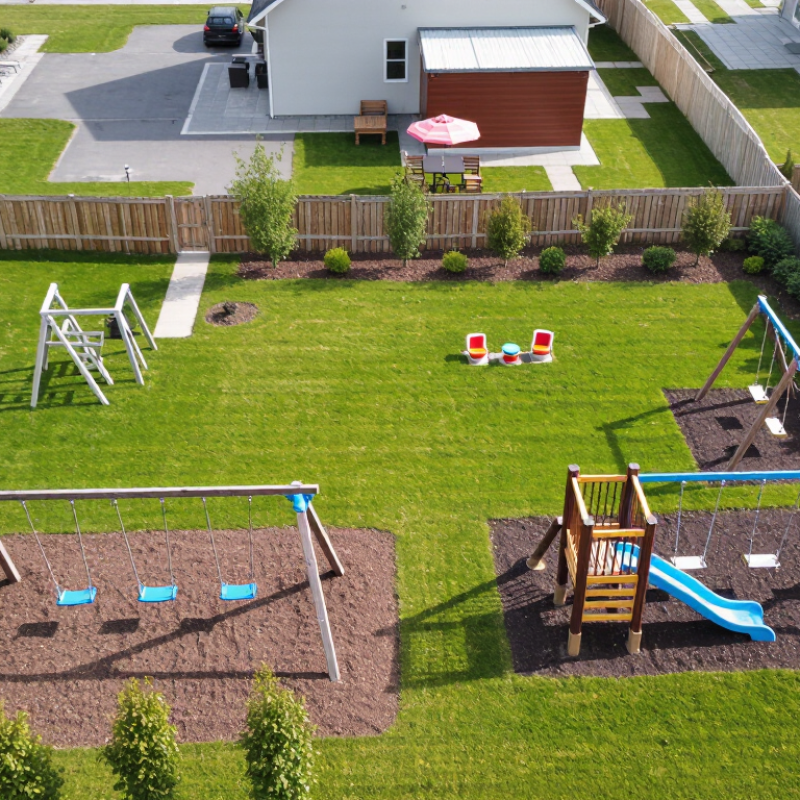
A small swing set is defined by its usable footprint, not just the width of its frame. Measure the frame, then mark the space needed for swinging, climbing, and safe movement around it. The U.S. Consumer Product Safety Commission’s Home Playground Safety Handbook recommends a swing use zone extending twice the height of the swing’s pivot point in front and behind it. A compact frame can still need a surprisingly long clear area. Measure twice.
Height and layout matter, too. A low frame may suit a modest yard, but it still needs stable, level ground and enough room for children to enter and exit without crossing another swing’s path. CPSC guidance also recommends at least six feet of protective surfacing around home play equipment, with extra clearance for swings. ASTM International’s F1148 standard covers residential play equipment; checking that a set is designed to meet it can help when comparing options. Yet standards cannot account for every sloped lawn or narrow gate. A tape measure and a rough chalk outline are useful. The awkward part? A “small” set may leave little space for anything else.
What Defines a Small Swing Set for a Backyard?
Swing height affects how much clear space a backyard needs.
The chart applies the general safety guideline of extending the swing use zone at least twice the pivot height to both the front and rear (four times the pivot height in total). Heights are illustrative, not product specifications; check the swing maker’s instructions and local safety guidance. The use-zone span does not include the swing-set frame’s footprint.
Top 10 Small Swing Sets for Small Backyards
Top 10 Small Swing Sets for Small Backyards
Choosing a compact swing set starts with the space around it, not just the frame. The U.S. Consumer Product Safety Commission’s Public Playground Safety Handbook recommends a swing use zone extending twice the pivot height in front and behind. For example, a pivot 6 feet high calls for about 12 feet of clearance in each direction. The handbook also advises at least 6 feet of clearance beside the swing. These are playground guidelines, not a substitute for a residential set’s installation manual, but they reveal why a small-looking set can need a surprisingly large yard. Measure twice. A fence, tree trunk, or patio edge can make an otherwise suitable model unsafe to use.
For a short list of small-yard options, compare the full footprint, swing arc, anchoring method, and age range—not just the advertised width. A narrow frame with two seats may still need more open ground than a wider play tower with a shorter swing bay. Check the fall surface, too: CPSC guidance emphasizes impact-absorbing surfacing in play areas, and hard paving is not an equivalent replacement. I would sketch the proposed safety zone with string before buying; it is less exciting than choosing colors, but it catches awkward layouts early. And be realistic about growth. A set that fits a toddler today may feel cramped once children want more room to swing.
Top 10 Small Swing Sets for Small Backyards
A practical comparison of compact swing-set configurations. Footprints are approximate planning ranges, not specifications for individual products; verify the assembled dimensions before buying.
| Rank |
Compact configuration |
Typical frame footprint
(W × D) |
Swing positions |
Best suited to |
Space-saving advantage |
| 1 |
Single-seat A-frame |
About 4–6 ft × 5–7 ft |
1 |
One child or a very narrow yard |
Small frame with no extra play features |
| 2 |
Two-seat compact A-frame |
About 6–8 ft × 5–7 ft |
2 |
Siblings or two children taking turns |
Two seats on one simple frame |
| 3 |
Single swing with climbing ladder |
About 5–7 ft × 6–8 ft |
1 |
Children who want a climbing activity too |
Adds play variety without a full play tower |
| 4 |
Two-seat frame with a glider seat |
About 7–9 ft × 5–7 ft |
2 |
Families wanting varied seating options |
Combines different seat styles on one frame |
| 5 |
Compact frame with a toddler seat |
About 5–7 ft × 5–7 ft |
1 |
Young children, when used as directed |
A single-seat setup can fit smaller spaces |
| 6 |
Two swings with a short crossbeam |
About 7–10 ft × 5–7 ft |
2 |
Yards with more width than depth |
Uses a linear layout rather than a large play tower |
| 7 |
Single swing with a small slide platform |
About 7–10 ft × 7–10 ft |
1 |
Children who enjoy both swinging and sliding |
Combines two activities in a modest play structure |
| 8 |
Compact wooden swing frame |
About 7–10 ft × 6–9 ft |
1–2 |
Buyers who prefer a fixed backyard structure |
A simple frame can avoid the footprint of a play tower |
| 9 |
Compact metal swing frame |
About 6–9 ft × 5–8 ft |
1–2 |
Buyers seeking a straightforward swing-only layout |
Typically keeps the design focused on swinging |
| 10 |
Modular frame with one swing bay |
About 6–9 ft × 6–9 ft |
1, expandable on some designs |
Families planning to add compatible components later |
Can start with a basic setup and grow if space allows |
Safety and measuring note: The frame footprint is not the total space required for safe use. Swings need additional clearance in front of and behind the seats; the U.S. Consumer Product Safety Commission’s public-playground guidance uses a swing use zone extending twice the pivot height in those directions. Check the specific equipment instructions, local requirements, and available yard space before installation.
How to Match a Swing Set to Your Yard and Family
A small swing set should fit the family’s habits, not just the backyard’s dimensions. Measure the usable space after accounting for fences, garden beds, doors, and low branches. Then mark the frame and swing paths on the ground with string. Measure twice. A narrow lawn can still feel crowded when a child swings high.
Safety clearance matters. The U.S. Consumer Product Safety Commission’s Public Playground Safety Handbook recommends a swing use zone extending at least twice the pivot height in front and behind the swing. With a pivot point seven feet high, that means fourteen feet of clearance in each direction. The handbook addresses public playgrounds, so use it as a planning reference, not a substitute for the residential set’s instructions. Check the required side clearance, too.
Match capacity to real routines. One seat may suit a younger child, but siblings often want turns at the same time. Two seats need enough spacing to prevent collisions, and a compact frame still needs stable, level ground. Think about who will supervise, where an adult can stand, and whether the yard stays usable after installation. I’d leave more room than the minimum whenever possible; it can feel wasteful on paper, but less so when children are moving.
Safety, Installation, and Care for Compact Swing Sets
Small Swing Sets: Safety, Installation, and Care
A compact swing set still needs a generous safety zone. The U.S. Consumer Product Safety Commission’s Home Playground Equipment-Related Injuries and Deaths report estimated about 51,000 emergency-room-treated injuries annually from home playground equipment during 2001–2008. That older estimate is a reminder, not a current injury count. Before buying, measure the swing’s full travel area, not just its footprint. Keep the frame on level ground, anchor it according to its instructions, and use impact-absorbing surfacing beneath and around the equipment. Grass can look soft but may not cushion a fall reliably.
Installation details matter. Check every bolt and moving connection after assembly, then recheck them periodically as the frame settles. Follow the manufacturer’s spacing and age guidance; a narrow yard is not a reason to squeeze the set beside a fence, tree, or patio. Look for sharp edges, rust, cracked seats, and frayed ropes before play. ASTM F1148 is a recognized safety standard for home playground equipment, but a standards reference does not replace careful installation or supervision. Small mistakes can be easy to miss.
Tips: Measure twice. Leave clear space around the swing path, and keep the landing area free of stones, toys, and roots. Inspect the set each season and after severe weather. Tighten loose hardware, replace worn parts, and remove the equipment from use if a support feels unstable. A compact set may still need more room than expected. That’s worth reconsidering before installation.