2026 Best Swings for Swing Set Wholesale Buyers
Choosing the 2026 best swings for swing set wholesale buyers requires more than comparing catalog prices. Buyers must examine seat shape, chain protection, weight limits, weather resistance, packaging, and replacement-part access. A swing that looks bright in a product photo may crack, fade, or feel uncomfortable after months outdoors.
Dr. Joe Frost, a respected playground researcher, said, “Play is not a luxury. It is a necessity.” That idea matters when selecting swings for swing set programs, schools, parks, and residential retailers. Children need movement, confidence, and predictable support. Wholesale customers need consistent quality, safe construction, and dependable delivery. Both priorities meet at the seat, hanger, connector, and installation instructions.
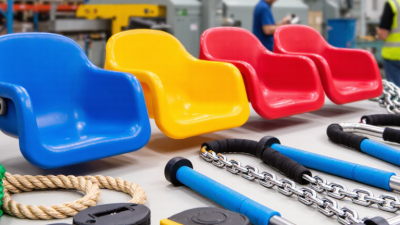
This guide compares practical swings for swing set buyers across several purchasing needs. It considers molded seats, belt seats, bucket seats, adaptive designs, and commercial-grade options. Details matter. Look for smooth edges, reinforced attachment points, covered chains, drainage holes, and clearly stated load information. Packaging also deserves attention. Bent hooks and scratched surfaces create avoidable costs.
The cheapest option is not always economical. Sometimes, it is only cheaper at checkout. A thoughtful buyer should request samples, inspect hardware, review testing documentation, and confirm regional requirements before placing a large order. Product claims can sound impressive. Evidence is better.
No supplier gets every decision perfect. Even experienced buyers may overlook storage conditions, assembly time, or replacement demand. That is why this 2026 overview focuses on useful evidence, realistic trade-offs, and details that can survive close inspection.
Swing Types and Their Uses in 2026
2026 Best Swings for Swing Set Wholesale Buyers
Swing Types and Their Uses in 2026
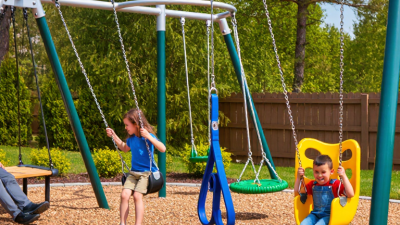
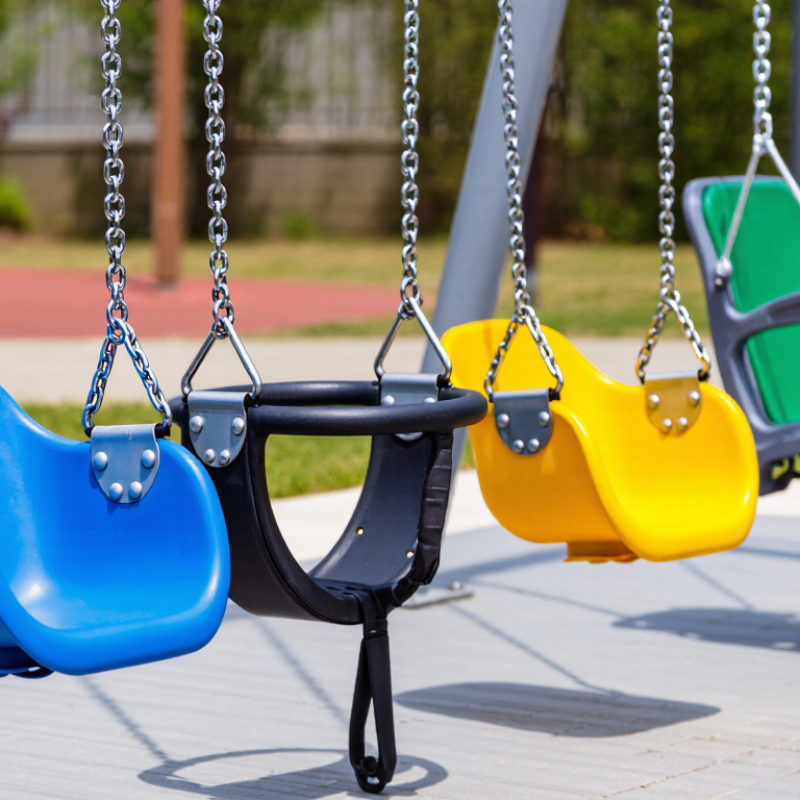
Wholesale buyers need more than attractive colors and low prices. Belt swings remain practical for schoolyards, parks, and residential sets because they support active, independent play. Bucket swings suit younger children, especially when paired with secure leg openings and back support. Nest swings create shared play opportunities, but their larger footprint requires stronger frames and wider safety zones. Disc and rope swings can add movement variety, though they demand careful load testing and supervision guidance.
The U.S. Consumer Product Safety Commission reported about 155,400 playground equipment injuries among children under 16 in 2021. Falls represented the leading injury mechanism. This makes platform height, surfacing, spacing, and connector strength important purchasing criteria. ASTM F1487 and ASTM F2373 provide useful benchmarks for public and home playground equipment, but buyers should still verify local requirements. Certification documents must match the exact model, not a similar product.
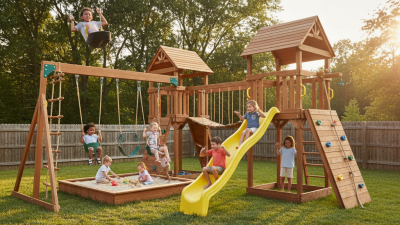
Market forecasts from Grand View Research indicate continued growth in playground equipment demand through 2030. Buyers may therefore consider modular swing sets with replaceable seats and adjustable configurations. Replacements can reduce long-term waste and maintenance delays. However, modular claims need evidence. A cheaper swing is not always economical. UV exposure, rain, rough edges, and unclear weight limits can create avoidable costs. Product sheets sometimes look complete, yet omit hardware-grade details. That is where careful review matters.
2026 Best Swings for Swing Set Wholesale Buyers
Swing Types and Their Common Uses in 2026
The chart shows common age bands associated with major swing-seat types in public and residential playground planning. Toddler bucket seats are typically used for children from 6 to 23 months, preschool seats commonly serve ages 2 to 5, and flat belt seats are generally intended for school-age children from 5 to 12. Wholesale buyers should confirm local safety standards, installation requirements, and product certifications before placing an order.
Key Features Wholesale Buyers Should Evaluate
2026 Best Swings for Swing Set Wholesale Buyers
Key Features Wholesale Buyers Should Evaluate
Wholesale buyers should evaluate swing seats as working equipment, not decorative accessories. Start with the frame connection, seat strength, and suspension hardware. Ask for tested load limits, material specifications, and inspection records before placing a large order. Check the welds. Details matter.
Look for weather-resistant surfaces that handle sunlight, rain, and repeated cleaning. Smooth edges reduce snagging risks, while flexible seats should remain comfortable during long play sessions. Chains need protective coverings or carefully finished links to reduce pinching hazards. Confirm that each swing matches the intended age range and installation height. Clear assembly instructions also reduce retailer complaints and return costs.
Packaging deserves practical attention. A seat may pass quality checks but arrive scratched after poor carton protection. Request sample cartons, replacement-part policies, and photographs of packed units. Product dimensions should fit common shipping limits without excessive empty space. Our early buying decisions sometimes overvalued bright colors and underestimated hardware consistency. That mistake can become expensive across hundreds of sets. Ask suppliers how they control batch quality, record material changes, and handle failed inspections. Do not rely on attractive photos alone. Compare samples with the written specifications, especially seat thickness, connector size, and mounting points. Local safety requirements may differ, so buyers should verify applicable rules before distribution.
Safety, Materials, and Certification Requirements
For 2026 swing set wholesale buyers, safety documentation should guide every purchasing decision. The U.S. Consumer Product Safety Commission’s Public Playground Safety Handbook reports about 200,000 playground-related injuries treated in emergency departments each year. It also identifies falls as the leading injury mechanism, representing roughly 79% of reported cases. A swing seat should therefore include a suitable impact area, stable suspension points, and controlled movement.
Material selection affects both safety and service life.
Commercial buyers should request test evidence for UV resistance, corrosion protection, weld strength, and plastic impact performance. ASTM F1487 and EN 1176 provide useful benchmarks for playground equipment design. EN 1177 also addresses impact-attenuating surfacing. Check the actual test scope, not only a certificate title. Some documents look impressive but cover a different product model.
Certification is more than paperwork.
Ask for batch traceability, installation instructions, load testing records, and inspection procedures. Hardware should resist loosening, while chains need protective sleeves near small hands. Measure openings carefully, because entrapment risks can hide in ordinary-looking gaps. I have seen buyers focus on unit price and overlook replacement parts. That approach often becomes expensive later. A stronger process includes factory audits, sample testing, and independent verification before shipment. Mistakes still happen. The inspection plan should admit that.
Sizing, Compatibility, and Installation Considerations
For 2026 swing-set wholesale buying, sizing starts with the complete bay, not the seat alone. Measure beam height, seat width, chain length, and the available fall zone. The U.S. Consumer Product Safety Commission’s Public Playground Safety Handbook reports about 200,000 playground-related emergency-department injuries annually, with falls representing roughly 75 percent. That figure makes clearance planning a commercial priority.
Compatibility can fail in small ways. A heavy-duty seat may not fit existing hangers. A coated chain can also require different connectors. ASTM F1487 guidance for public playground equipment recommends checking swing spacing, structural strength, pinch points, and use-zone dimensions. For many layouts, the front and rear swing zones extend about twice the pivot height. Local requirements may differ. Confirm them before container loading.
Ask suppliers for load ratings, connector dimensions, material thickness, and installation drawings. Check whether the frame accepts toddler, belt, or accessible seats. One overlooked detail is beam deflection. A beam that appears strong can still move under repeated loading. Installation crews should verify anchor depth, bolt torque, and surfacing depth on site. CPSC guidance commonly identifies six feet of protective surfacing around play equipment, but swing movement may demand more space. Measurements are rarely perfect on the first order. Recheck the site.