Menu
Monday
9:00-5:00
Tuesday
9:00-5:00
Wednesday
9:00-5:00
Thursday
9:00-5:00
Friday
9:00-5:00
Saturday
9:00-4:00
Sunday
CLOSED
Outdoor playset choices are changing as families seek safer, more durable, and developmentally useful backyard equipment. Grand View Research identifies rising demand for outdoor recreational products, while market reports from Allied Market Research show continued investment in residential and commercial playground equipment. Their estimates differ because product definitions vary. Some include slides and swings, while others include complete modular systems.
Safety remains the practical starting point. The U.S. Consumer Product Safety Commission reports more than 200,000 playground-related emergency-department injuries annually. Falls account for a substantial share of these incidents. This makes platform height, guardrails, anchoring, impact-absorbing surfacing, and age suitability important buying details. Small mistakes matter.
Dr. Joe L. Frost, a respected playground researcher, famously stated, “Play is the business of childhood.” His observation supports a broader view of the outdoor playset: it should encourage movement, imagination, cooperation, and manageable challenge. Global buyers must also examine climate resistance, replacement parts, installation instructions, and recognized safety standards. Wood may offer warmth and visual appeal, but it needs regular inspection. Metal can provide strength, yet hot surfaces and corrosion require attention. Plastic may simplify maintenance, although ultraviolet exposure can weaken some materials. The ten types below compare these trade-offs for different spaces, budgets, climates, and user ages. No single design fits every family. That is worth remembering.
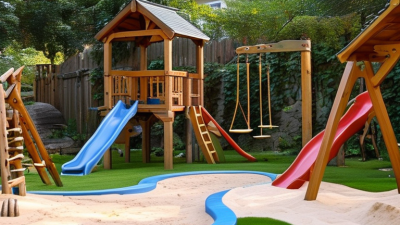
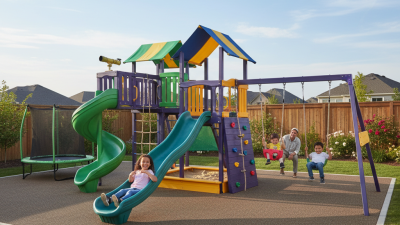
Outdoor playsets are freestanding structures designed for children’s active play in open-air spaces. They commonly combine platforms, slides, swings, climbing walls, ladders, bridges, or sand areas. Unlike single-purpose equipment, a playset usually creates several play routes within one footprint. That difference matters for buyers comparing homes, schools, hotels, and public parks.
Classification usually begins with use setting: residential, educational, commercial, or public recreation. It can also follow age range, capacity, material, installation method, and play function.
Timber sets offer a natural appearance, while metal and molded plastic often support intensive use. Modular systems allow replacement parts and future expansion.
Fixed-ground units need professional anchoring and impact-absorbing surfacing. Portable units require stricter attention to stability. Small details matter.
The Centers for Disease Control and Prevention reports that more than 200,000 children receive U.S. emergency treatment annually for playground-related injuries, with falls among the leading causes. This makes safety classification more than a marketing label.
Buyers should review ASTM F1148 or EN 1176 guidance, fall height, entrapment risks, guardrails, and maintenance access. Grand View Research’s playground equipment market analysis identifies outdoor play demand as a major growth area, reflecting investment in family recreation and institutional spaces.
However, market growth does not prove product quality. A colorful, oversized set may still fit poorly in a narrow yard. Classification is helpful, but it is not perfect. Local climate, user behavior, supervision, and installation quality can change the real risk.
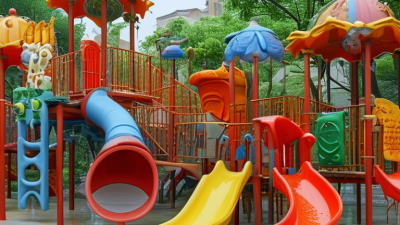
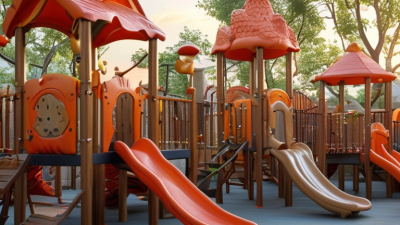
Outdoor playsets vary widely by design, space, age group, and intended activity. The ten leading types include swing sets for movement, slide towers for climbing confidence, climbing frames for strength, treehouse sets for imaginative play, and sandbox combos for sensory exploration. Toddler playsets offer lower platforms and shorter slides. Fitness playsets add ladders, rings, and balance elements. Inclusive playsets support children with different mobility needs. Nature-inspired sets use timber textures and earth-tone colors. Water-play sets encourage active cooling in warm climates.
Tips: Check platform height, guardrails, grip surfaces, and fall zones before comparing prices. Confirm the materials suit local humidity, sunlight, rain, or snow. Ask for installation guidance and maintenance details. A small garden may need a compact layout, not the largest structure.
From practical site evaluations, drainage often matters more than appearance. Soft ground can weaken posts over time. Steel may resist insects, while treated wood can feel warmer and more natural. However, every material needs inspection. A beautiful set may still fail if bolts loosen or shade is missing. Buyers should verify age recommendations, weight limits, replacement-part access, and applicable safety standards in the destination country. Some designs look versatile but serve only one age group. That is easy to overlook.
Typical core play functions by design and intended use
The chart compares common outdoor playset categories by the number of core play functions typically included in their design. Functions include activities such as climbing, sliding, swinging, balancing, imaginative play, sand play, and physical training. Values are representative category-level references rather than company or market-share data.
Top 10 Types of Outdoor Playsets for Global Buyers
Outdoor playsets differ in structure, materials, and suitable ages. A classic swing set suits children aged three to eight, especially with adjustable seats and soft-grip chains. A tower-and-slide set adds height, so it needs stable anchors, guardrails, and impact-absorbing ground cover. Climbing domes develop balance, but their openings must match the child’s body size. A sandbox works well for toddlers when made from smooth, splinter-resistant plastic or treated timber. A seesaw should have cushioned handles and controlled movement.
Keep materials practical. Powder-coated steel resists rain and insects, while solid timber offers warmth but needs regular checks for cracks and moisture. Recycled plastic is easy to clean and usually resists rot. However, some plastic surfaces become hot under direct sunlight. That detail is easy to overlook. A compact obstacle course may include stepping pods, ropes, and low climbing walls for ages five to twelve. Ropes should remain firm, dry, and securely attached.
A small outdoor playhouse supports imaginative play for ages three to seven. Ventilation, rounded edges, and a wide doorway matter more than decoration. A water-play table suits younger children, but it requires close supervision and frequent cleaning. Multi-level adventure sets combine climbing, sliding, and crawling areas for older children, often from five years upward. Check the manufacturer’s age guidance and local playground standards before purchase. In real inspections, installation quality often matters as much as the equipment itself. Even a strong frame can become unsafe on uneven ground. Parents should recheck bolts, anchors, surfaces, and drainage throughout the year.
Outdoor playsets vary widely, from swings and slides to climbing towers, balance beams, rope structures, sand tables, and modular activity centers. Each type creates different fall, entrapment, impact, and pinch-point risks. The U.S. Consumer Product Safety Commission’s Public Playground Safety Handbook estimates about 200,000 playground injuries receive emergency treatment annually in the United States. Falls remain the leading cause.
Global buyers should request compliance evidence before purchasing. ASTM F1487 is widely used in North America, while EN 1176 guides public playground equipment across Europe and other markets. These standards address structural strength, openings, sharp edges, guardrails, surfacing, and safe-use zones. Installation must follow the supplier’s drawings, but local soil conditions still matter. Anchors need stable foundations, drainage must prevent standing water, and impact-absorbing surfacing should extend beyond every elevated platform.
Maintenance is not optional. Inspect bolts, welds, chains, platforms, and slide exits regularly. Check surfacing depth after heavy rain or frequent use. The CPSC recommends routine visual checks, operational inspections, and periodic detailed inspections by qualified personnel. Small movements can signal a serious failure. A checklist may still miss hidden corrosion. Photographing defects and recording repairs improves traceability. Buyers should also confirm spare-part availability, installer training, age guidance, and local inspection duties before shipment. Safety labels alone cannot compensate for poor assembly.
| No. | Outdoor Playset Type | Typical Users / Capacity | Main Safety Risks | Relevant Safety Standards and Guidance | Installation Requirements | Surfacing and Clearance | Maintenance Requirements | Global Buyer Considerations |
|---|---|---|---|---|---|---|---|---|
| 1 | Combination Tower or Multi-Playset | Usually ages 3–12; approximately 6–12 children, depending on design. | Falls from height, entrapment, collisions, sharp edges, and structural instability. | ASTM F1148 for home playground equipment; EN 71-8 for activity toys where applicable; EN 1176 for public-use playgrounds; local building and product laws. | Level, well-drained ground; secure anchoring; full assembly according to the supplied instructions; post-installation inspection of every fastener. | Impact-attenuating surface under and around elevated activities; maintain the manufacturer’s fall zone and access-route clearances. | Monthly visual checks; tighten hardware; inspect wood, welds, ropes, platforms, barriers, and anchors; replace damaged components promptly. | Confirm age grading, maximum user load, packaging dimensions, climate suitability, spare-part availability, and translated instructions. |
| 2 | Swing Set | Usually ages 2–12; one child per swing seat unless specifically designed otherwise. | Falls, impact from moving swings, seat or hanger failure, and finger pinching. | ASTM F1148; EN 71-8 for applicable domestic activity toys; EN 1176-2 for public-use swings; CPSC playground safety guidance. | Use a stable frame with engineered anchors; install seats at the specified height; verify hanger alignment and smooth movement. | Provide impact-absorbing surfacing across the complete swing-use zone; keep the front, rear, and side clearance free of obstacles. | Inspect chains, ropes, seats, hangers, welds, and anchors; lubricate suitable moving joints; remove cracked or excessively worn parts. | Check UV resistance, corrosion protection, chain coating, replacement-seat compatibility, and whether the design supports one or multiple swings. |
| 3 | Slide Tower or Freestanding Slide | Typically ages 2–12; one user at a time unless the product is specifically designed for multiple users. | Falls at the platform, collisions at the exit, hot surfaces, sharp edges, and clothing or cord entanglement. | ASTM F1148; EN 71-8 for applicable domestic products; EN 1176-3 for public-use slides. | Secure the platform and ladder; maintain the specified slope and exit height; ensure the slide is firmly attached without exposed hardware. | Use protective surfacing beneath the exit and at elevated access points; keep the exit area unobstructed and properly drained. | Check for cracks, deformation, rough seams, loose bolts, heat buildup, and water accumulation; clean the sliding surface with non-abrasive materials. | Consider climate-related surface temperatures, UV stability, molded-part packaging, installation orientation, and age-specific slide height. |
| 4 | Climbing Dome or Geodesic Climber | Generally ages 5–12; approximately 4–8 users, subject to the rated load. | Falls, finger or limb entrapment, overturning, and impact with the frame or other users. | ASTM F1148; EN 71-8 where applicable; EN 1176-1 and EN 1176-4 for public climbing equipment. | Assemble joints in the correct sequence; use all specified connectors; anchor the structure where required; verify frame geometry before use. | Install impact-attenuating surfacing beneath the fall area; maintain clearance from walls, fences, trees, and other equipment. | Inspect joints, welds, coatings, anchors, and deformation; remove rust and repair damaged protective finishes using approved methods. | Check corrosion resistance for humid or coastal regions, maximum static load, assembly tools, and whether ground anchoring is mandatory. |
| 5 | Rope Climber or Cargo-Net Playset | Usually ages 5–12; capacity varies according to rope diameter, connection design, and rated load. | Falls, rope abrasion, broken strands, entanglement, and insufficiently secured connections. | ASTM F1148; EN 71-8 where applicable; EN 1176-1 and EN 1176-11 for public-use rope and net systems. | Pre-tension ropes as specified; protect connection points; prevent access to exposed wire ends; verify anchors and attachment hardware. | Use a compliant impact-absorbing surface across the full fall area; avoid hard landscaping, drainage covers, and trip hazards below. | Inspect every rope strand and knot or fitting; check tension and abrasion after severe weather; replace complete rope sections when damage is found. | Evaluate resistance to moisture, salt, mold, UV exposure, and temperature changes; request clear rope-replacement procedures. |
| 6 | Seesaw or Spring Rider | Typically ages 2–8; one or two users depending on the model and balance system. | Crushing or pinching at moving joints, impact at the ground, falls, and spring or handle failure. | ASTM F1148; EN 71-8 where applicable; EN 1176-6 for public-use rocking equipment. | Anchor the central pivot or spring base securely; install protective caps; ensure movement is smooth and does not contact nearby objects. | Provide impact-attenuating surfacing around the full movement zone; maintain adequate side and front clearance. | Check pivots, springs, handles, seats, welds, and anchors; inspect for metal fatigue, corrosion, loose fittings, and degraded caps. | Confirm balance or spring specifications, user weight limits, replacement-part availability, and suitability for commercial or residential use. |
| 7 | Trampoline Playset | Commonly ages 6 and above; one user at a time is generally recommended for recreational trampolines. | Falls from the frame, collisions, failed springs, frame instability, and unsafe access. | ASTM F381 for consumer trampolines; EN 71-14 for domestic trampolines; applicable national consumer-product requirements. | Place on level ground; secure against wind uplift; install the enclosure, padding, ladder, and frame components exactly as specified. | Maintain a clear overhead and lateral zone; keep the area free from trees, structures, hard surfaces, and other play equipment. | Before each use, inspect the mat, springs, frame, padding, net, zipper, and anchors; remove from service when any structural or fabric damage appears. | Verify wind-rating guidance, enclosure design, UV resistance, storage requirements, warning labels, and local restrictions on trampoline installation. |
| 8 | Sand and Water Activity Table | Usually ages 2–8; approximately 2–4 children, depending on table size. | Slips, ingestion of sand or water, contamination, drowning hazards in deep containers, and sharp or detachable parts. | EN 71 series, especially EN 71-1 for mechanical and physical properties; ASTM F963 may apply to toy versions; local hygiene requirements. | Place on a stable, level, non-slip surface; ensure drainage; assemble lids, plugs, basins, and accessories securely. | Use slip-resistant flooring and keep water away from electrical equipment; avoid deep water and maintain unobstructed supervision. | Empty and clean water after use; cover sand; remove contaminated material; inspect for cracks, mold, sharp edges, and loose accessories. | Consider drainage, water restrictions, sanitation practices, freeze protection, food-contact concerns, and outdoor material durability. |
| 9 | Accessible or Inclusive Playset | Designed for mixed abilities; capacity depends on transfer platforms, ramps, seats, and activity layout. | Falls, transfer difficulties, wheelchair tipping, inaccessible routes, entrapment, and collisions. | EN 1176; ASTM F1487 for public-use equipment; ISO 21542 and applicable accessibility laws for routes and facilities; local playground regulations. | Provide firm, stable access routes; install ramps, transfer platforms, handrails, and guardrails according to the approved design and site plan. | Use firm, continuous, slip-resistant surfacing on accessible routes and impact-attenuating surfacing in fall zones; avoid abrupt level changes. | Inspect route surfaces, ramps, handrails, transfer points, barriers, drainage, and clearances; repair settlement and surface deterioration promptly. | Verify compliance with destination-country accessibility rules, clear route widths, installation tolerances, user transfer needs, and inclusive-use instructions. |
| 10 | Adventure Course or Obstacle Playset | Generally ages 5–12; capacity depends on obstacle spacing, fall height, and manufacturer rating. | Falls, collisions, rope or net entanglement, fatigue-related failure, and unsafe sequencing between activities. | ASTM F1148 for home equipment; EN 71-8 where applicable; EN 1176-1 and relevant activity-specific parts for public installations. | Use a professionally reviewed layout for complex or elevated systems; anchor each module; verify load paths, connections, and fall heights. | Install continuous impact-attenuating surfacing in all fall zones; separate conflicting traffic flows and maintain safe entry and exit areas. | Carry out frequent inspections of ropes, nets, platforms, grips, fasteners, and anchors; document defects and close unsafe sections immediately. | Request engineering documents, rated loads, installation drawings, inspection schedules, weather limitations, and training guidance for supervisors. |
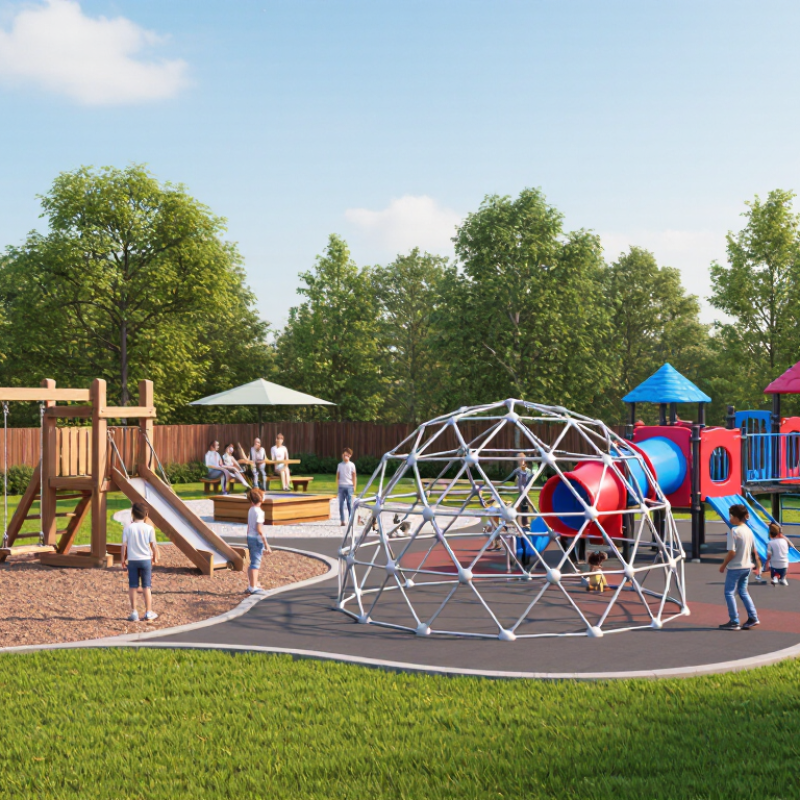
Global buyers rarely choose an outdoor playset by appearance alone. They compare safety evidence, materials, installation support, and long-term operating costs. The U.S. Consumer Product Safety Commission’s Public Playground Safety Handbook reports that falls cause about 79% of playground injuries. This makes platform height, guardrails, impact-absorbing surfacing, and drainage important purchasing criteria.
The ten common categories include swing sets, slides, climbing frames, seesaws, balance equipment, rope structures, sensory panels, toddler units, fitness-style playsets, and modular systems.
Buyers should ask suppliers which components meet ASTM F1487 or EN 1176 requirements. Request recent test reports, load calculations, coating specifications, and installation drawings.
A supplier with clear traceability is easier to evaluate than one offering only attractive photographs.
Material choices also affect total cost. Hot-dip galvanized steel suits humid areas, while UV-stabilized plastic may perform better in brightly exposed zones.
Check weld quality, fastener protection, replacement-part availability, and packaging strength.
A low quotation can hide difficult assembly or expensive maintenance. It happens often.
Supplier audits should include factory capacity, quality records, and sample inspections before mass production. However, paperwork is not proof of perfect performance; buyers still need independent verification and realistic site testing.