Menu
Monday
9:00-5:00
Tuesday
9:00-5:00
Wednesday
9:00-5:00
Thursday
9:00-5:00
Friday
9:00-5:00
Saturday
9:00-4:00
Sunday
CLOSED
Choosing a playhouse swing set in 2026 requires more than comparing colors, prices, and platform heights. Global buyers must examine safety design, material durability, installation quality, and long-term maintenance. The U.S. Consumer Product Safety Commission reports over 200,000 playground-related injuries annually in the United States. Its Public Playground Safety Handbook highlights fall zones, entrapment risks, protective surfacing, and proper supervision. These details matter.
Market outlooks also show continued demand for residential outdoor play equipment. Grand View Research identifies rising interest in home recreation products, supported by urban families seeking convenient outdoor activities. However, market reports can simplify real purchasing decisions. They may not fully reflect tropical moisture, intense sunlight, freezing winters, or uneven installation surfaces. A wooden playhouse swing set may look attractive, yet untreated timber can deteriorate quickly in wet climates. Steel frames need corrosion protection. Plastic components need UV testing.
Safety researcher David Ball has written, “Risk is an integral part of play.” That principle deserves careful interpretation. Children need manageable challenges, not careless hazards. Buyers should review ASTM F1148 guidance, relevant EN 1176 requirements, supplier test records, and local installation instructions. Certification alone is not enough. Maintenance still decides performance.
This guide compares leading playhouse swing set types for global buyers. It considers timber, metal, plastic, modular, compact, and inclusive designs. Each option has strengths and weaknesses. Bigger is not automatically better. A thoughtful choice matches the child’s age, available space, climate, budget, and supervision needs. Some recommendations may require reconsideration after local inspection. That is a limitation worth admitting.
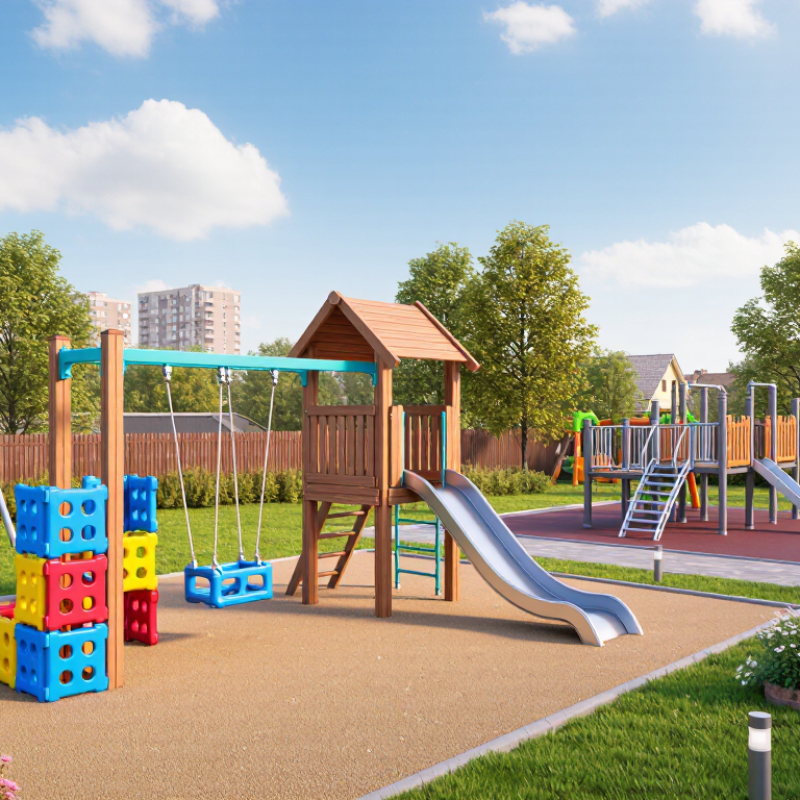
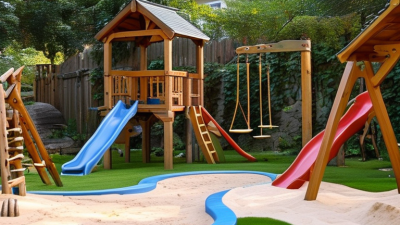
A playhouse swing set combines imaginative play, climbing, sliding, and gentle swinging in one outdoor structure. For global buyers, the basic layout should match children’s ages, available space, and local weather conditions.
Toddlers need low platforms, short slides, and enclosed steps with easy handholds. Older children may use climbing walls, rope ladders, and higher decks, but these features require careful supervision.
Measure twice.
A strong design uses rounded timber or weather-resistant composite materials, smooth surfaces, and secure fasteners. The swing beam should resist twisting, while seats need flexible connections and comfortable edges.
A playhouse roof should provide shade without trapping excessive heat. Ventilation matters, especially in hot regions. Drainage holes can prevent standing water after rain.
Small details matter.
Reliable installation begins with stable anchoring and a generous impact-absorbing surface around active zones. Buyers should check local safety requirements, recommended age ranges, weight limits, and maintenance guidance before ordering.
In my experience, assembly instructions often receive less attention than the product itself, which can create avoidable problems. I would also inspect bolts, ropes, and ground anchors regularly.
No design is perfect; even a well-planned set may need seasonal tightening, repainting, or repositioning. A compact footprint can be useful, but squeezing too many features together may reduce safe movement and make supervision harder.
Top Playhouse Swing Set Types Available in 2026
In 2026, compact playhouse swing sets suit urban gardens and smaller outdoor areas. They combine a raised cabin, slide, and one or two swings. Modular sets offer more flexibility, allowing buyers to add climbing walls, monkey bars, or extra platforms later. This option works well for growing families, although added components require careful structural checks.
Tower playhouse sets remain popular for active children. Their elevated decks create space for slides, rope features, and imaginative play. Timber models provide a warm, natural appearance, while powder-coated metal frames usually offer consistent strength and easier cleaning. Both materials need inspection. Timber can split, and metal may corrode near salty coastal air.
Toddler-focused sets use lower platforms, shorter slides, and enclosed steps. They can reduce climbing risks, but adult supervision remains essential. Inclusive designs are also gaining attention, with transfer platforms, wider access points, and ground-level play panels. These features support broader participation, though they may require more installation space.
For global buyers, local climate matters as much as style. Check drainage, ultraviolet resistance, anchoring systems, and replacement-part availability before ordering. Confirm that the design follows relevant playground safety requirements in the destination country. Installation quality often affects safety more than appearance. I have found that attractive sets can disappoint when instructions are vague or the fall zone is too small. No type is perfect. Measure the site twice, and question any specification that seems unclear.
For global buyers, material choice affects durability, maintenance, and child comfort. CPSC’s Public Playground Safety Handbook reports that falls cause about 79% of playground injuries. Therefore, a steel playhouse swing set needs secure anchors, rounded edges, and impact-absorbing surfacing. Powder-coated steel suits humid or high-use locations, but exposed scratches may rust quickly. Cedar or treated timber feels warmer and blends into gardens. However, timber requires regular checks for splinters, cracks, and moisture damage. Plastic components resist corrosion and stay lightweight, though intense sunlight can cause fading or brittleness.
Size should match both the yard and the children’s movement patterns. Compact sets often include one swing, a short slide, and a small platform. They suit younger children and limited urban spaces. Larger structures add climbing walls, dual swings, and taller decks. ASTM F1148 and EN 1176 emphasize fall zones, structural stability, and safe spacing around equipment. A larger frame is not automatically better. It can create blind spots and demand deeper protective surfacing. Measure the full use area, not only the frame footprint. That mistake is common.
Age-range labels require careful reading. Toddlers need low platforms, enclosed openings, short slides, and gentle access steps. Children aged five to twelve can usually manage higher decks and more challenging climbing features, depending on supervision and ability. The CPSC handbook recommends separating equipment by age group where possible. Labels alone are imperfect. A confident four-year-old may still lack safe judgment, while an older child may need accessible features. Buyers should compare material, platform height, swing clearance, and maintenance records together.
2026 Top Playhouse Swing Set Types for Global Buyers
Global Safety Standards and Installation Requirements
Playhouse swing sets vary by layout, but safety requirements remain non-negotiable. A compact tower may suit small gardens, while a larger playhouse needs wider fall zones. The U.S. Consumer Product Safety Commission reports about 200,000 playground-related injuries receive emergency treatment annually. Falls account for roughly 79% of reported cases. That figure deserves attention, especially when buyers focus too heavily on appearance.
Global buyers should check ASTM F1148 for home playground equipment and EN 1176 for public-use installations. These standards address structural strength, entrapment risks, sharp edges, swing clearances, and impact-absorbing surfaces. ISO guidance can support risk management, but it does not replace local requirements. Compliance is not universal by default. A product approved for one market may still need testing elsewhere.
Installation details often decide real-world safety. Set posts in stable ground, follow the specified anchoring depth, and keep swings away from fences, walls, and tree branches. CPSC guidance commonly recommends at least six feet of protective surfacing around play equipment, with extra clearance near swings. Use engineered wood fiber, rubber tiles, or another tested impact surface. Concrete is unsuitable beneath elevated play areas. Inspect bolts, ropes, platforms, and surfacing before use.
Small errors matter. Uneven ground can weaken anchors. Poor drainage can shift loose-fill surfacing. Installation manuals also deserve careful review; some instructions remain too general for different climates and soils. Buyers should request load tests, material documentation, and region-specific installation guidance before ordering.
| Playhouse Swing Set Type | Typical Configuration | Typical User Age | Typical Platform Height | Typical Overall Footprint | Recommended Use | Primary Installation Requirements | Relevant International Safety Frameworks |
|---|---|---|---|---|---|---|---|
| Traditional A-Frame Swing Set | Two or three swing seats on an A-frame structure, usually without an elevated platform. | Approximately 3–12 years, subject to the seat design and manufacturer instructions. | Usually 1.5–2.4 m above ground at the top beam; the actual swing-seat height varies. | Approximately 3.0–4.5 m wide × 2.5–4.0 m deep, excluding the safety-use zone. | 家庭庭院、社区小型户外游乐区域和住宅花园。 | Install on stable, level ground; secure each leg with approved anchors; maintain the manufacturer’s front, rear and side clearance; use impact-attenuating surfacing beneath and around the swing path. | ASTM F1487 / ASTM F1292, EN 1176 / EN 1177, AS 4685 / AS 4422, or CSA Z267, depending on the destination market. |
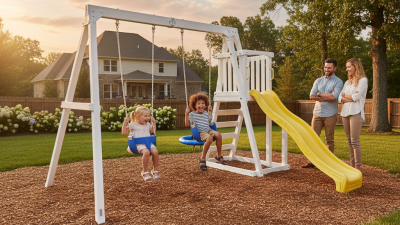
| Playhouse-and-Swing Combination | Elevated playhouse or small tower connected to one or two swings, often with a ladder and slide. | Approximately 3–10 years, based on platform access, slide type and fall height. | Commonly 0.9–1.5 m; designs above this range require additional fall-height evaluation. | Approximately 3.5–5.5 m wide × 3.5–5.5 m deep, excluding the safety-use zone. | 家庭用户,希望将 imaginative play、攀爬、滑行和荡秋千整合在一个结构中。 | Use a level base; anchor posts to the ground as specified; tighten and recheck structural fasteners; protect openings and elevated access points; install compliant impact surfacing at all designated fall zones. | ASTM F1487, ASTM F1292, ASTM F1951 where applicable, EN 1176, EN 1177, AS 4685 and CSA Z267. |
| Fort-Style Playhouse with Slide | Enclosed or semi-enclosed upper fort with roof, climbing access, slide and optional swing beam. | Approximately 4–12 years, depending on access difficulty and equipment height. | Commonly 1.2–1.8 m; the fall height must be measured from the highest designated play surface. | Approximately 4.0–6.0 m wide × 4.0–6.5 m deep, excluding the safety-use zone. | Active play areas requiring climbing, sliding, role play and moderate physical challenge. | Provide continuous guarding or protective barriers where required; eliminate entrapment hazards; anchor all structural posts; check slide exit clearance; provide impact attenuation certified for the calculated critical fall height. | EN 1176 / EN 1177, ASTM F1487 / ASTM F1292, AS 4685 / AS 4422 and CSA Z267. |
| Toddler Playhouse with Bucket Swings | Low platform or ground-level playhouse paired with full-support bucket seats and low-access steps. | Approximately 18 months–5 years, only where the equipment is specifically designed for that age group. | Usually below 0.9 m; low height does not remove the need for compliant surfacing and supervision. | Approximately 2.5–4.0 m wide × 2.5–4.5 m deep, excluding the safety-use zone. | Early-years settings and home gardens with close adult supervision. | Use age-appropriate enclosed seats; install on a level, impact-attenuating surface; prevent access to older-child equipment; keep moving swing components separated from walkways and stationary play elements. | Applicable age-grading provisions within ASTM F1487, EN 1176, AS 4685 or CSA Z267; surfacing performance is commonly evaluated under ASTM F1292 or EN 1177. |
| Multi-Bay Modular Playhouse Set | Two or more connected play bays with multiple swing positions, climbing features, slides and a playhouse deck. | Approximately 3–12 years, with separate zones recommended for different age groups. | Approximately 0.9–1.8 m; the highest play surface determines the critical fall-height requirement. | Approximately 5.0–8.0 m wide × 4.5–8.0 m deep, excluding the safety-use zone. | Large residential gardens, hospitality properties and small community play areas. | Prepare a site plan before assembly; verify underground utilities; use engineered footings or approved ground anchors; maintain separation between active components; provide inspection and maintenance access. | ASTM F1487, EN 1176, AS 4685 or CSA Z267 for equipment; ASTM F1292 or EN 1177 for impact surfacing; ASTM F1951 may apply to accessible routes. |
| Inclusive or Accessible Swing Set | Swing bay combined with transfer platforms, accessible routes, supportive seats or other inclusive play components. | Age range depends on the selected equipment; use separate age and ability assessments for each component. | Varies by component; accessible routes and transfer areas should be designed to the applicable local accessibility rules. | Approximately 4.0–7.0 m wide × 4.0–7.0 m deep, excluding the safety-use zone and connecting route. | Public, educational and residential environments intended for broader participation. | Provide a firm, stable and slip-resistant route; coordinate transfer and wheelchair clearances; avoid trip edges; use impact surfacing that supports the applicable accessibility requirements; confirm local planning and access rules. | ASTM F1487, ASTM F1292, ASTM F1951, EN 1176, EN 1177, AS 4685, AS 1428 and applicable national accessibility regulations. |
Choosing a playhouse swing set for an international market requires more than attractive photos. Buyers should match the set to children’s ages, available space, and daily use. Measure the installation area, including swing clearance and walking paths. A compact yard may need a straight layout, while a larger property can support climbing features. Check platform height, guardrails, handgrips, and maximum user weight. Ask for test reports, assembly instructions, and replacement-part information. Clear documents signal a more reliable supplier.
Climate changes the decision. In humid regions, treated wood or corrosion-resistant metal needs close inspection. Coastal air can accelerate rust. Strong sunlight can weaken some plastics and fade surfaces. In cold areas, frozen ground may affect anchoring. Confirm drainage, shade, and foundation requirements before ordering.
Shipping dimensions matter too. A set that looks affordable may become expensive after freight, duties, storage, and local installation. Request a packed-size list and realistic lead time.
International buyers should compare safety requirements in the destination country, not assume one certificate works everywhere. Ask who performed the testing and when it was completed. Review warranty limits, maintenance schedules, and technical support hours. A responsive supplier should explain missing details without pressure. Consider access for repairs; hidden bolts and unusual parts can create long delays. The best choice is not always the biggest set. Children may use a simpler layout more often. I have seen buyers focus on bright colors and overlook anchoring. That is an easy mistake. Rechecking the plan with an installer can expose problems before the container leaves.