• Monday

    9:00-5:00

  • Tuesday

    9:00-5:00

  • Wednesday

    9:00-5:00

  • Thursday

    9:00-5:00

  • Friday

    9:00-5:00

  • Saturday

    9:00-4:00

  • Sunday

    CLOSED

What Is the Best Wooden Swing Set With Slide?

Choosing the best wooden swing set with slide is not simply a matter of counting swings or picking the tallest tower. The right fit depends on children’s ages, available yard space, materials, and how much maintenance a family can manage. A cedar frame may look inviting beside a lawn, but wood still needs regular checks for splinters, loose fasteners, and weather damage. Small details matter.

Safety deserves more than a passing glance. The CDC has reported that more than 200,000 children aged 14 and younger receive emergency care for playground-related injuries each year; that figure covers playground injuries broadly, not wooden sets alone. The CPSC’s Home Playground Safety Handbook offers practical guidance on supervision, safe surfacing, and equipment placement. ASTM F1148 also provides a recognized safety standard for home playground equipment, though a standards reference does not guarantee that every product or installation is risk-free.

This guide compares wooden swing sets with slides by looking at construction, age range, play features, assembly, and long-term upkeep. It also considers the space around the equipment: a slide needs a clear exit area, and swings need room to move without striking fences or branches. Product specifications can be useful, but they do not tell the whole story. Installation quality and routine inspection matter, too. There is no perfect set for every yard, and some trade-offs are easy to miss in glossy product photos. The goal is a practical choice that suits your space and the children who will use it.
What Is the Best Wooden Swing Set With Slide?

What Makes a Wooden Swing Set With a Slide the Best Choice?

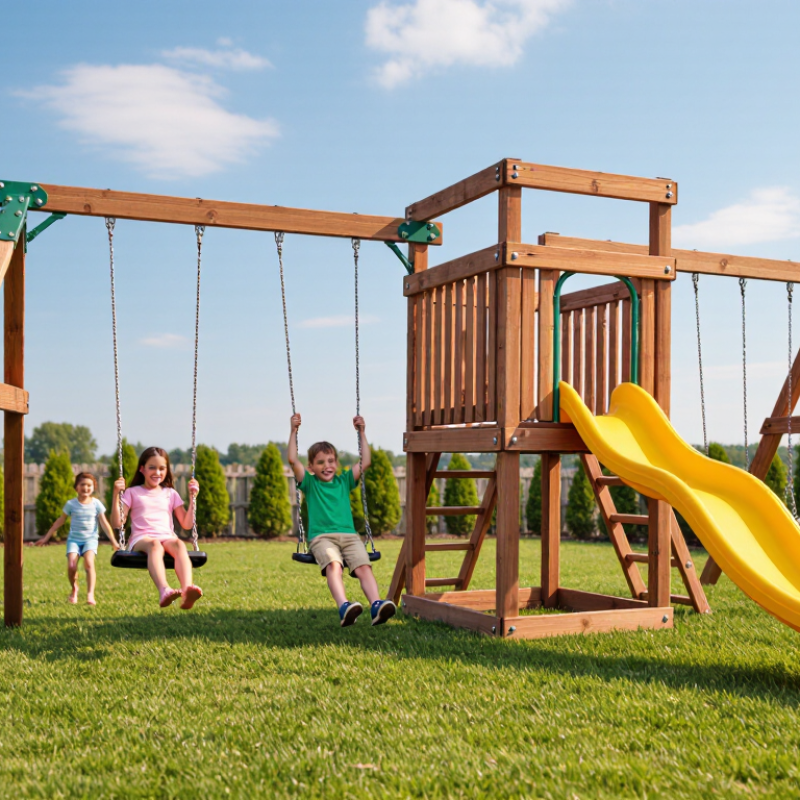
A wooden swing set with a slide works best when it fits the yard, children’s ages, and family routines. Wood can blend into a garden, while swings and a slide invite different kinds of movement. Picture a child stepping from a ladder onto a cool slide, then returning to the swing. That variety is useful. Yet a large frame can crowd a small yard, and wood still needs care. Check for splinters, loose bolts, rot, secure anchors, and guardrails before play. Maintenance is easy to underestimate.

207,100 The U.S. Consumer Product Safety Commission’s Public Playground Safety Handbook reported an estimated 207,100 emergency-room-treated injuries associated with playground equipment in 2001.

Safety deserves equal weight with appearance. That figure covers many equipment types, not wooden sets alone, and it is historical. The same handbook advises protective surfacing and clear use zones; for swings, the front and rear zones should extend twice the pivot height. Measure before buying. A slide needs a clear exit area, too. A beautiful set is not the best choice if children cannot move around it safely, or if an adult cannot inspect it easily.

Wood Types, Construction Quality, and Weather Resistance

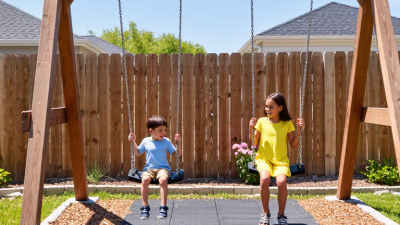
A wooden swing set with a slide must handle more than a child’s weight. Rain collects on horizontal rails, and damp leaves can hide at post bases. Cedar and redwood heartwood naturally resist decay better than sapwood, but quality varies within each board. Pressure-treated pine can offer another option when treatment is suitable for the intended use. Check that cut ends are sealed and that posts sit clear of standing water.

The USDA Forest Products Laboratory’s Wood Handbook notes that wood-decay fungi generally need moisture levels above about 20 percent. That figure makes drainage and ventilation more than cosmetic details. Look for rounded, sanded edges, tight joints, and sturdy braces that do not wobble when pushed. Galvanized or stainless-steel fasteners help limit rust, especially around slide supports and swing hangers. Small gaps matter.

Weather protection takes upkeep. A water-repellent finish can slow moisture uptake, but it does not make wood waterproof. Inspect the underside of platforms, ladder rungs, and post connections each season; these spots often stay damp longest. I would not trust a glossy finish alone. Recheck loose bolts and splintered edges after harsh weather, and follow the finish maker’s guidance before applying another coat.

Safety Features, Anchoring, and Required Play Space

A wooden swing set with a slide should fit the yard before it wins over the children. Measure the full play area, including the swing’s travel path and the slide exit. The U.S. Consumer Product Safety Commission’s Public Playground Safety Handbook recommends a swing use zone extending twice the distance from the pivot point to the ground, both in front and behind. Although written for public playgrounds, it offers a useful planning benchmark—not a substitute for the set’s installation manual. That space adds up quickly.

Anchoring is not optional just because the frame feels heavy. Follow the manufacturer’s instructions for the soil and anchor type, and check that the legs stay level after rain or freeze-thaw cycles. A slight wobble can grow. Keep anchors and exposed bolts from creating new trip or snag hazards, and inspect connections, wood splinters, and slide fasteners regularly. CPSC guidance emphasizes suitable impact-absorbing surfacing in play areas; grass alone may not cushion falls reliably.

Look for a slide with secure handholds, a stable ladder, and no sharp edges or gaps that could trap clothing. Leave clear space at the slide’s runout, away from fences, tree roots, and paving stones. Measure twice. One imperfect detail: yards rarely stay perfectly level, so reassess the layout after installation and seasonal ground changes.

What Is the Best Wooden Swing Set With Slide? - Safety Features, Anchoring, and Required Play Space

Decision Factor What to Look For Practical Safety Check
Overall design A sturdy wooden frame with a slide and play features suited to the children’s ages, abilities, and number of users. Check the product instructions for age limits, maximum user numbers, weight limits, and assembly requirements before buying.
Frame and hardware Sound, appropriately treated structural lumber; smooth, finished surfaces; and corrosion-resistant connectors suitable for outdoor use. Look for splinters, cracks, protruding bolts, sharp edges, and openings that could trap a child’s head, neck, fingers, or clothing.
Swing attachments Purpose-designed hangers and connectors that attach securely to a properly supported top beam. Confirm that every connector is installed as directed and moves freely without excessive wear, looseness, or contact with the frame.
Slide A slide matched to the structure’s platform height, with secure attachment, a clear exit area, and no exposed fasteners or sharp edges. Keep the slide’s path and landing area unobstructed. Check the instructions for the required clearance around the slide.
Anchoring Anchors or ground stakes specified for the set and suitable for the site’s soil and installation conditions. Install all required anchors according to the manufacturer’s instructions. Check periodically for movement, loose hardware, soil erosion, or exposed anchor parts.
Required play space Enough clear, level space for the frame, slide exit, and each moving swing—not just the footprint of the wooden structure. The U.S. Consumer Product Safety Commission’s home-playground guidance describes swing use zones extending at least twice the pivot height in front of and behind the swing. Follow the set’s instructions for the complete layout.
Protective surfacing A suitable impact-absorbing surface across the equipment’s use zones, selected and maintained for the site and fall height. Grass and bare soil can become compacted and may not provide dependable impact protection. Follow surfacing guidance for the chosen material and keep it at the recommended depth.
Installation location A level site away from fences, trees, buildings, driveways, overhead wires, and other hazards. Measure the full use zones before installation. Make sure swings, the slide exit, and other play activities have clear, non-overlapping space as directed by the instructions.
Ongoing maintenance A set that can be inspected and maintained, with replacement parts and care instructions available. Inspect regularly for loose fasteners, splintering or rotting wood, rust, worn swing parts, damaged surfacing, and shifting anchors. Stop use until hazards are repaired.
Best overall choice A well-built set that fits the children and the available yard, includes secure swing connections and anchoring, and leaves room for appropriate surfacing and use zones. Prioritize installation instructions, safety clearances, and a realistic yard layout over extra play features. No single set is the best fit for every site.

Planning note: Required space varies with the set’s dimensions, swing pivot height, slide design, and installation instructions. Measure the planned use zones before purchasing, and consult the product manual and applicable safety guidance.

Slide Designs and Other Features for Different Ages

What Is the Best Wooden Swing Set With Slide?

Slide Designs and Other Features for Different Ages

The best wooden swing set matches children’s current abilities, not just their wish for a bigger slide. For younger children, a low, gently sloped slide with raised sides can feel less intimidating. Choose equipment marked for their age and size, and check that the steps are easy to climb. A small platform is often enough. More height is not always better.

Older children may enjoy a longer, steeper slide and a higher platform, but those features need sturdy rails and a stable ladder. Look for smooth, splinter-free wood, secure fasteners, and swings that can be adjusted as children grow. Leave clear space around the slide’s exit, where running feet can skid on grass or mulch. Set size matters, too; a crowded yard can make even a good design awkward. I’d weigh that more carefully than an extra play feature.

Tips: Check age and weight limits in the product instructions. Keep the landing area clear, inspect bolts and wood regularly, and supervise play. If children differ in age, choose features for the youngest user first. It can feel limiting, but safer play usually lasts longer.

How to Compare Models, Maintenance Needs, and Costs

Choosing the best wooden swing set with a slide starts with your yard and the children who will use it. Compare the full footprint, not just the frame dimensions. Leave clear space around moving swings and at the slide exit. Measure twice. Check the lumber, hardware, weight limits, and assembly instructions for each model. A compact set may suit a small yard, but offer less room for children to play together. Consider where the slide will face: afternoon sun can make its surface hot, while damp shade may slow wood drying. Small details matter.


Compare the total cost, including delivery, tools, anchoring, and any recommended wood treatment. The lowest price may not be the best value. Still, a higher price does not guarantee easier upkeep. Ask whether replacement hardware is available, and check how often the maker recommends inspecting or treating the wood. After assembly, tighten loose bolts as needed and look for splinters, cracks, or shifting supports. Keep the inspection routine simple; a calendar reminder helps. I would give extra weight to clear instructions and sturdy construction, even if one feature looks less exciting. A perfect choice is hard to judge from photos alone.