2026 Top Playground Accessories Types for Global Buyers?
For global buyers, choosing playground accessories in 2026 will involve more than comparing colors, prices, and shipping times. Buyers must examine safety performance, material durability, accessibility, maintenance needs, and local climate conditions. A steel climber may suit a dry inland site, yet require stronger corrosion protection near the coast. Small details matter.
Tim Gill, a respected play consultant and author, states, “Risk is not the same as hazard.” This distinction should guide every purchasing decision. A well-designed playground allows children to test balance, movement, and confidence without exposing them to preventable dangers. Therefore, buyers should assess slides, swings, climbing nets, interactive panels, sensory elements, inclusive equipment, shade structures, seating, and safety surfacing as one connected environment.
The 2026 market is becoming more practical. Recycled materials, modular components, low-maintenance finishes, and inclusive designs are receiving greater attention. Smart features may attract interest, but technology cannot replace thoughtful supervision or reliable construction. Sometimes, simpler equipment works better.
This guide introduces the leading playground accessories types for global buyers. It considers user age, installation space, weather exposure, cleaning routines, spare-part availability, and supplier documentation. Product certificates and test reports deserve careful review, not casual trust. Standards also differ between countries, so one document may not satisfy every project requirement.
There is no perfect purchase.
Budget pressure can encourage compromises, and those compromises may appear years later. A realistic buying process should compare initial cost with lifecycle value, repair access, and long-term safety. This overview aims to support informed decisions, while recognizing that each playground site has different children, risks, and possibilities.
Playground Accessory Categories and Their Core Functions
2026 Top Playground Accessories Types for Global Buyers
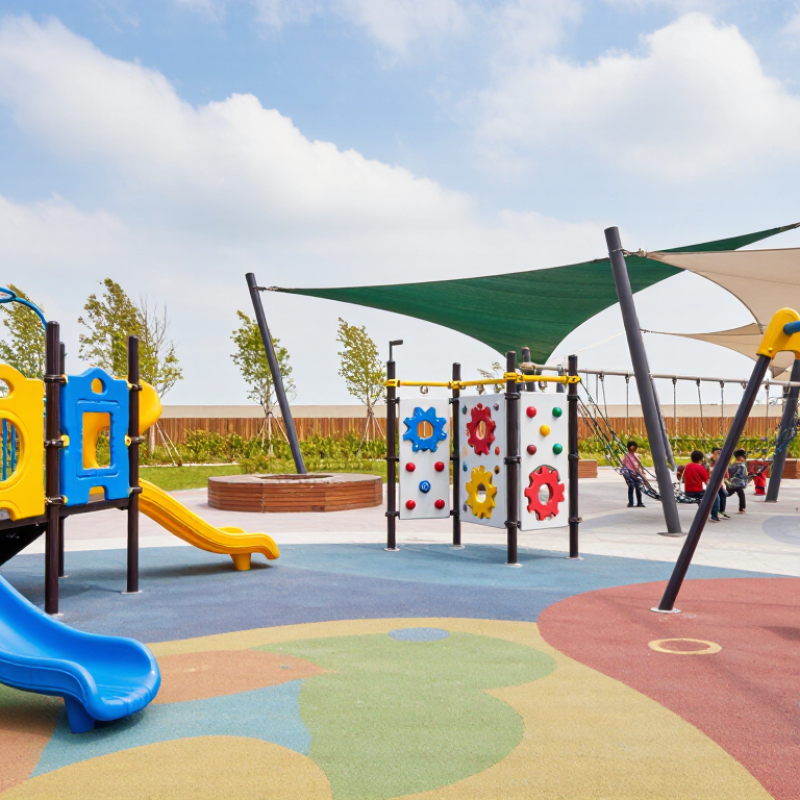
Playground accessories should be selected by function, not appearance alone. Climbing panels, rope nets, and overhead rings build grip strength, coordination, and controlled risk-taking. They also create different challenge levels for younger and older children. Adjustable climbing features can support longer use, but they need careful inspection after installation.
Small hardware matters.
Slides mainly develop movement confidence and spatial awareness. Swings support balance and rhythm through repeated motion. Inclusive basket swings can offer secure seating for children with varied physical abilities. Balance beams, stepping pods, and bridges improve body control. Their heights, surfaces, and spacing should match the intended age group.
Sensory panels, musical elements, and role-play accessories encourage communication and imaginative learning. Shade structures and seating improve comfort for children, caregivers, and supervisors. For global buyers, material quality, drainage, rounded edges, and secure anchoring deserve close review.
Request installation instructions, maintenance schedules, load information, and independent test documentation. Local safety requirements may differ. Verify them before purchase.
In practical site reviews, poor circulation often causes avoidable conflicts between active and quiet zones. A colorful layout can still feel crowded.
That is worth reconsidering.
Suppliers should also explain replacement-part access, surface wear, and inspection intervals. Reliable accessories are not simply attractive; they remain usable, observable, and maintainable across changing climates.
Safety, Accessibility, and Age-Appropriate Design Standards
For global playground buyers in 2026, accessories should be judged by safety, access, and age fit. Popular choices include slides, swings, climbing grips, sensory panels, ramps, and protective shade. A bright finish is not enough. Every accessory needs a clear purpose and a documented risk review. Inspectors commonly check pinch points, sharp edges, entrapment gaps, fall heights, and impact protection. Loose surfacing should remain level below active play equipment. Specifications should match current local and international playground standards.
Accessibility must be planned into the route, not added beside the playground later. A firm, wide path can connect the entrance with transfer platforms, ramps, and quiet play zones. Ground-level activities help children who cannot use climbing structures. Handrails need suitable height, secure grips, and enough space for adult assistance. Tactile details and simple signs can support children with visual, hearing, or cognitive differences. However, one universal layout rarely serves every community well. Local consultation is essential.
Age separation also reduces avoidable conflict and injury. Toddler areas need low platforms, gentle slides, shorter falls, and clear caregiver visibility. Older children may need stronger climbing challenges, but difficulty should increase gradually. Use age labels, measured equipment heights, and barriers against unsafe shortcuts. Buyers should request test records, installation instructions, maintenance schedules, and replacement guidance. Monthly checks can find loose bolts, worn ropes, fading surfaces, and drainage problems early. I would not treat any checklist as perfect. Weather, crowded use, and imperfect supervision can expose weaknesses that drawings miss.
2026 Top Playground Accessories Types for Global Buyers
Safety, accessibility, and age-appropriate design benchmarks
The chart presents recognized accessibility dimensions in millimetres: a 1,220 mm minimum clear route width, a 460–610 mm transfer-platform height range, and 864–965 mm handrail height range based on ADA accessibility criteria. For age-appropriate planning, the U.S. Consumer Product Safety Commission commonly distinguishes preschool equipment for ages 2–5 and school-age equipment for ages 5–12. Safety surfacing should be tested against the equipment’s critical fall height under the applicable local standard, such as ASTM F1292 or EN 1177. Requirements may vary by country, so buyers should verify local regulations before procurement.
Popular Playground Accessories for Different Global Markets
2026 Top Playground Accessories Types for Global Buyers?
Popular Playground Accessories for Different Global Markets
Global buyers are choosing playground accessories by climate, age range, and daily usage. In 2026, swings, slides, climbing panels, balance beams, sensory boards, and shade structures remain practical choices. Modular accessories also help schools adjust layouts as children grow. From project experience, the best selection starts with local site conditions, not catalog popularity. A coastal playground needs corrosion-resistant hardware. A hot region needs shaded platforms and surfaces that reduce heat absorption. Small details matter.
European and North American buyers often prioritize inclusive access, low-maintenance materials, and varied challenge levels. Wide ramps, transfer platforms, sensory panels, and quiet play corners can support broader participation. In dense Asian cities, compact climbing units, vertical play walls, and multi-use structures can save valuable space. Urban buyers should measure circulation paths carefully. Crowded equipment creates avoidable risks.
In Middle Eastern and African markets, shade, drainage, dust resistance, and UV-stable components deserve close attention. Covered seating can improve comfort for caregivers. In colder regions, flexible rubber surfaces and enclosed play elements may extend seasonal use. Rural projects may favor durable swings, rope bridges, and simple balance equipment because repairs can take longer. This assumption can fail when local skills or spare parts are limited. Buyers should request material data, maintenance schedules, installation guidance, and safety test records before ordering. Local children may also use equipment differently than planners expect. Watching real behavior is often more useful than relying on drawings alone.
Materials, Durability, and Maintenance Requirements
2026 Top Playground Accessories Types for Global Buyers: Materials, Durability, and Maintenance Requirements
Global buyers are choosing slides, swings, climbing panels, balance equipment, and shade structures with maintenance in mind.
Powder-coated galvanized steel handles heavy use and humid conditions better than untreated metal. High-density polyethylene resists splintering, moisture, and many cleaning chemicals. However, strong sunlight can still fade weaker plastic surfaces. Recycled rubber tiles provide impact protection, but they need proper drainage and regular surface checks.
Material selection should match local climate, user volume, and installation quality.
In coastal areas, inspect metal joints more often because salt air accelerates corrosion. In cold regions, freezing water can expand inside cracks and loosen anchors. Check swing seats, chains, fasteners, and floor edges every month. Clean smooth surfaces with mild soap and water. Avoid harsh solvents, which may damage protective coatings. A small crack can become a safety concern quickly.
Tips:
Keep a simple inspection log with dates and photos. Tighten loose hardware early. Replace damaged parts instead of hiding them with paint. Test drainage after heavy rain. Shade fabric also needs attention; dust and trapped moisture can weaken stitching. Buyers sometimes focus on attractive colors and forget repair access. That is a practical mistake. Even durable equipment needs scheduled care, and maintenance plans may require adjustment after the first busy season.
Sourcing, Compliance, and Selection Criteria for International Buyers
In 2026, global buyers will compare more than slides, swings, climbers, spring riders, and inclusive play panels. They will examine how each accessory performs in its intended climate. A coastal site needs corrosion-resistant hardware. A hot region needs UV-stable plastics and shaded waiting areas. Details decide outcomes.
During supplier evaluation, request current test reports, material declarations, installation drawings, and maintenance instructions. Standards such as EN 1176 or ASTM F1487 may guide assessment, but local authorities can impose additional requirements. Verify the applicable edition before placing an order. Check fall zones, entrapment points, handrail spacing, impact-attenuating surfacing, and accessible routes. Ask for evidence. A polished catalog proves little.
Sourcing also involves packaging, spare parts, lead times, and installation support. Confirm whether bolts, anchors, replacement seats, and touch-up materials are included. Request production photos and traceability records for critical components. Independent inspection before shipment can identify weak welds or damaged coatings. It adds cost, but rework overseas costs more. Looks can mislead.
Selection should match age groups, capacity, supervision patterns, and available space. Measure the site carefully, including drainage and emergency access. Some buyers focus on bright colors and low prices, then discover difficult cleaning or unavailable replacement parts. That mistake is common. I would also question overly precise delivery promises, because weather, customs, and port delays remain unpredictable. Reliable decisions come from documented performance, not attractive claims.