What Are the Best Playground Accessories for 2026?
The best playground accessories for 2026 will do more than fill space. They should invite children to move, imagine, and play together, while fitting the site’s age range, layout, and maintenance capacity. A climbing net may look exciting on a plan; its value depends on safe placement, usable surfacing, and regular checks. Small details matter.
Safety data should shape every shortlist. The U.S. Consumer Product Safety Commission’s National Electronic Injury Surveillance System tracks emergency-department injuries involving playground equipment. Its Public Playground Safety Handbook identifies fall height, impact-absorbing surfacing, and entrapment risks as key design concerns. These references make a useful starting point, not a guarantee. Local conditions still matter: drainage, shade, heavy use, and the space around each accessory can change how it performs.
Play researchers also remind us that equipment serves children, not catalog photographs. Dr. Stuart Brown, founder of the National Institute for Play, writes, “The opposite of play is not work—the opposite of play is depression.” His point supports a broader question for 2026: does an accessory offer open-ended play, or only one scripted action? That is not enough. The strongest choices may include inclusive spinners, sensory panels, balance elements, and imaginative play features, selected for the children who actually use the site. A perfect accessory does not exist. A thoughtful, well-maintained mix comes closer.
What Playground Accessories Are and How They Support Children’s Play
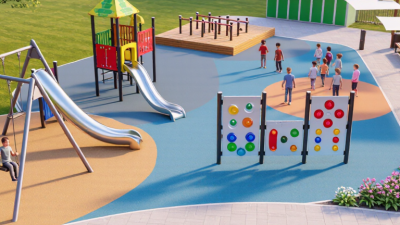
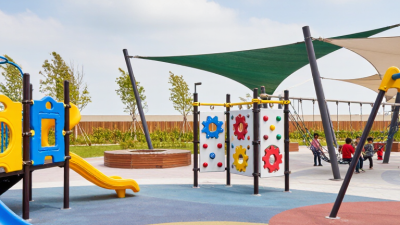
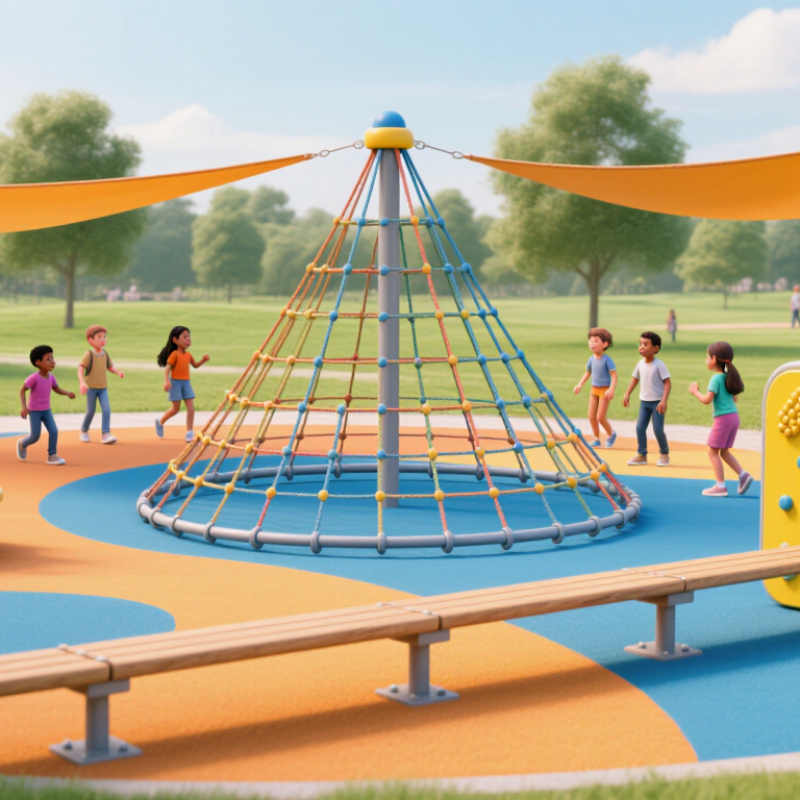
Playground accessories are the features that enrich a play area beyond its main structures. They may include activity panels, low balance elements, music-making parts, shaded benches, or imaginative play panels. Each offers a different way to explore. A child might turn a wheel, trace a shape, or invent a story beside a friend.
These details can support movement, coordination, communication, and pretend play. A low stepping path encourages children to plan where each foot will land. A shared panel can prompt conversation and turn-taking. Quiet corners and sensory elements may also give children more ways to join in, especially when active climbing is not appealing. Small choices matter.
Good accessories suit the children who use them and fit the space around them. Check that equipment is age-appropriate, firmly installed, and free of sharp edges or loose parts. Keep clear routes between play features, and use suitable impact-absorbing surfacing beneath fall zones. Regular checks help catch wear early. A crowded playground is not automatically a better one; too many features can make movement awkward. It is worth asking whether each accessory invites meaningful play or simply fills space.
What Are the Best Playground Accessories for 2026?
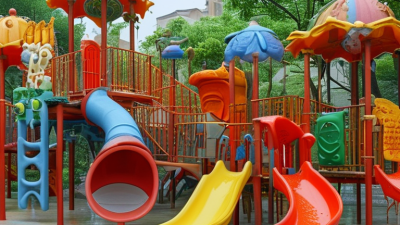
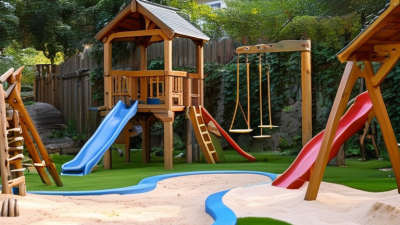
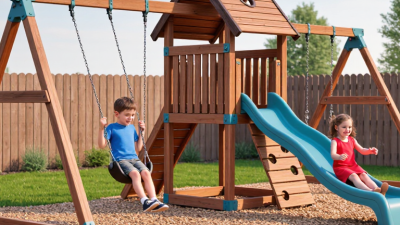
Playground accessories are features such as swings, climbers, and sensory panels that invite children to move, explore, and play together.
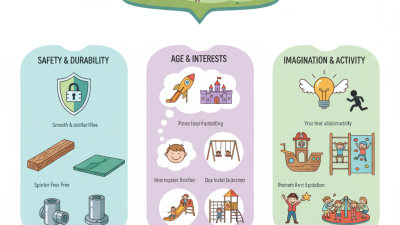
How to read this chart: Bars count the potential play domains represented for each accessory—movement, balance, sensory exploration, imagination, social interaction, fine-motor skills, and problem-solving. These are planning categories, not measured outcomes; the best mix depends on children’s ages, abilities, interests, and the space available.
Which Safety and Site Requirements Should Guide Accessory Selection in 2026?
Accessory selection should start with the site, not a catalog. The U.S. Consumer Product Safety Commission’s Public Playground Safety Handbook cites more than 200,000 annual emergency-department visits associated with playground-equipment injuries. This broad estimate is not a forecast for one park. It does, however, make fall height, entrapment gaps, protruding hardware, and equipment condition essential selection checks. Small details matter.
For a 2026 project, confirm current requirements with the design team and local authorities. ASTM F1487 addresses public-use playground equipment, while ASTM F1292 covers impact-attenuating surfacing. The U.S. Access Board’s accessibility standards and play-area guidance inform accessible routes and play components. Check that routes remain clear of swing paths and that surfacing suits both the equipment’s fall height and users’ mobility needs. A drawing can miss a real-world pinch point.
Walk the site at different times of day. Look for drainage problems, exposed roots, sharp edges, and sightlines blocked by planting or structures. Check after rain. In hot climates, shade over waiting areas and touch surfaces can improve comfort, but trees may also drop debris or obscure supervision. Keep space for maintenance access, and ask who will inspect fasteners, surfacing depth, and moving parts. A perfect checklist cannot capture every site condition; document what you observe and revisit the choices after installation.
How Do Materials, Accessibility, and Maintenance Affect Accessory Choices?
Choosing playground accessories for 2026 means looking beyond appearance.
Materials must suit local weather, heavy use, and regular cleaning. UV-resistant plastics can reduce fading, while corrosion-resistant metal hardware matters near salty air or frequent rain. But no material is maintenance-free. Check for sharp edges, loose fasteners, cracks, and worn surfaces during routine inspections. Small details matter. The U.S. Consumer Product Safety Commission’s Public Playground Safety Handbook recommends regular inspection and maintenance of equipment and protective surfacing. A bright new panel may still hide a loose bolt.
Accessibility should shape the layout, not be added as an afterthought. The U.S. Access Board’s 2010 play-area guidelines require accessible routes to at least 50% of elevated play components in covered play areas. That affects choices such as transfer platforms, ground-level play panels, and clear paths between accessories. CDC estimates that more than 200,000 children aged 14 and younger receive emergency-department treatment for playground-related injuries each year in the United States. The figure is not a forecast for any single site, but it makes impact-absorbing surfacing and careful upkeep hard to ignore. A textured panel may invite exploration, yet become difficult to clean in damp, shaded corners. That trade-off deserves a real site check, not guesswork.
How to Build a Safe, Inclusive, and Engaging Playground Accessory Plan
A strong 2026 playground plan begins with how children move, pause, and play together—not with a shopping list. The U.S. Consumer Product Safety Commission’s Public Playground Safety Handbook reports about 200,000 playground-related emergency-room visits annually. That figure makes fall zones, impact-absorbing surfaces, and clear sightlines essential design choices. Keep climbing routes away from swing paths, and check that surfacing remains deep beneath busy exits. Small details matter.
Inclusion needs more than one accessible feature. UNICEF’s 2021 report, Seen, Counted, Included, estimates that nearly 240 million children worldwide have disabilities. Plan continuous routes to play areas, firm turning spaces, transfer points, and activities children can use side by side. Add tactile panels, musical elements, and quiet seating near—not apart from—the action. A broad ramp helps, but it does not make every game reachable. Ask children and caregivers to test the layout before ordering equipment.
Choose accessories for varied ages and energy levels: low balance beams, shaded benches, social play panels, and swings with supportive seating. Provide shade where families actually wait, and position benches where caregivers can see several play zones. Inspect moving parts and surfacing on a written schedule, then record repairs. A plan can look inclusive on paper and still miss real needs; adjust it after observing how children use the space.