2026 How to Choose Backyard Playground Equipment?
In 2026, choosing backyard playground equipment is not about buying the biggest set. It is about matching play to your yard, children, and routines. A compact swing may suit a narrow lawn, while a climbing frame needs clear space around it. Measure the usable area, including room for movement, access, and safe landing surfaces. Think beyond the first afternoon. Will children still enjoy the equipment as they grow, and can you maintain it through wet seasons? These practical questions often matter more than bright colors or bundled accessories.
A thoughtful choice starts with the users: their ages, abilities, confidence, and favorite kinds of play. Check the manufacturer’s age guidance, installation instructions, weight limits, and recommended surfacing before comparing prices. Look closely at fasteners, edges, moving parts, and materials; small details can shape years of use. Ask how often the structure needs inspection, tightening, cleaning, or replacement of worn parts. No product is maintenance-free. A well-reviewed set can still be a poor fit for a sloped or crowded yard. Consider who will assemble it, where children will play, and how adults can supervise. Even careful plans can miss something. This guide offers a practical way to compare equipment, safety features, durability, and total cost. Still, no checklist can predict every family’s habits. Pause over one question: what will your family actually use, week after week?
Assess Children’s Ages, Abilities, and Play Needs
Choosing equipment starts with the child, not the catalog. The U.S. Consumer Product Safety Commission’s Public Playground Safety Handbook groups users into age ranges: 6–23 months, 2–5 years, and 5–12 years. These distinctions can guide equipment choices. Broad steps may suit a cautious preschooler, while an older child may enjoy a climber with several routes. Age is only a starting point, though. A child who tires easily, uses a mobility aid, or avoids heights may need accessible paths, reachable play panels, and a place to rest—not merely smaller equipment.
Play needs include movement, imagination, and social interaction. The World Health Organization’s 2020 guidelines recommend that children aged 5–17 average at least 60 minutes of moderate-to-vigorous physical activity daily across the week. A backyard structure cannot provide all of that, but swings, stepping stones, and open ground can encourage active games. CPSC guidance also emphasizes age-appropriate design and protective surfacing; match the surfacing and fall area to the equipment. Check whether a child can climb down independently. That sounds obvious. It gets missed. Watch how children use the space and adapt it over time; age charts cannot capture every child’s confidence or changing interests.
Measure the Yard and Review Site Conditions
2026 How to Choose Backyard Playground Equipment?
Measure the Yard and Review Site Conditions
Start with a tape measure, not a catalog. Record the usable length and width, then mark the equipment footprint with stakes or chalk. Include room for doors, fences, garden beds, and the route children will use to reach the play area. A compact yard can feel generous on paper and cramped in use. I have learned that the awkward corner often matters more than the total square footage.
Check slope, drainage, shade, and overhead branches before choosing a layout. Avoid placing equipment where rainwater pools or where roots make the ground uneven. The U.S. Consumer Product Safety Commission’s Public Playground Safety Handbook recommends protective surfacing extending at least 6 feet around stationary equipment. For swings, it recommends extending surfacing in front and behind by twice the height of the pivot point. These clearances can change the usable footprint substantially. Check the equipment instructions too; residential products may have specific spacing requirements.
Tips: Measure twice, then mark the safety zone. Walk the marked area at child height. Look for low branches, hard edges, and muddy patches. Small details matter. Recheck after rain; a spot that looks level in dry weather may not drain well.
Compare Playground Equipment Types and Materials
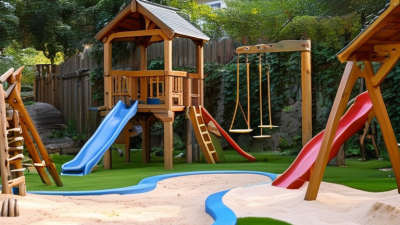
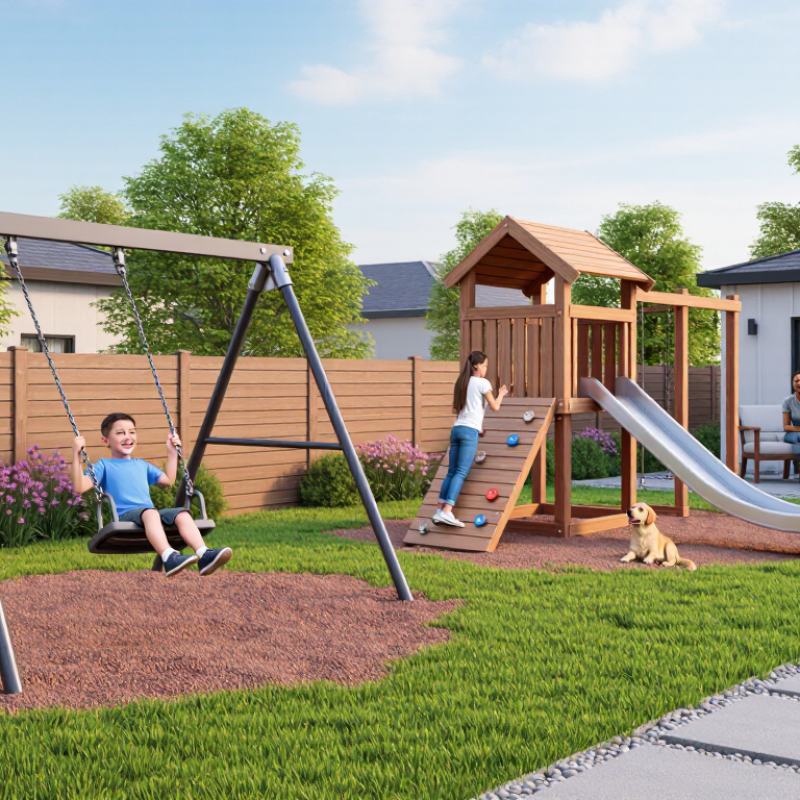
A backyard play area works best when equipment matches children’s ages, available space, and play habits. A compact swing set suits repeated movement, while climbing frames encourage balance and coordination. Slides add quick excitement but need a clear landing area. Check age guidance and weight limits before choosing. Small details matter.
Wooden structures can blend into a garden and feel sturdy, but surfaces may splinter or weather. Inspect joints and finish them as directed. Steel frames are often strong and relatively easy to clean; however, exposed metal can become hot in direct sun. Plastic components resist rust and usually need little upkeep, though sunlight may fade or weaken some materials over time. No material is maintenance-free.
Think about the ground beneath the equipment, too. Grass may look soft, but it does not provide reliable impact protection. Follow the equipment maker’s guidance for fall zones and suitable surfacing, and keep those areas clear of fences, paving, and tree roots. Measure the yard before ordering, including room for swings to move. A common planning mistake is choosing the biggest set available; it can leave too little space for safe movement. Check fasteners and wear regularly, especially after harsh weather.
2026 How to Choose Backyard Playground Equipment?
Compare common playground materials. Ratings are qualitative planning guidance, not standardized test results; actual performance depends on product grade, coatings, climate, and maintenance.
Higher ratings indicate better relative performance for weather resistance, ease of routine maintenance, or structural strength. Choose equipment suited to children’s ages and available space, and verify that the installation and protective surfacing meet applicable safety requirements.
Verify Safety Features, Standards, and Installation Needs
Before comparing features, verify that the equipment is designed for children’s ages and weights.
Read the safety labels and installation manual, not just the product description. In the United States, check whether the guidance references relevant CPSC recommendations or ASTM standards for residential playground equipment. Requirements vary by location, so confirm which standards apply where you live. Ask for documentation if it is missing.
Inspect the structure for openings that could trap a child’s head or fingers, exposed bolts, sharp edges, and pinch points around moving parts. Check the recommended fall zone around swings and slides. Measure it in your yard; a fence, tree trunk, or patio edge can leave less room than expected. The surface matters, too. Use the material and depth specified for the equipment, and avoid assuming that grass is protective enough. That detail is easy to miss.
Installation needs a careful site check.
Look for sloping ground, buried utilities, low branches, and drainage problems before digging or anchoring anything. Use the specified anchors and hardware, and follow the manual’s leveling and spacing instructions. If the ground is uneven or the steps are unclear, get help from a qualified installer rather than improvising. Keep the instructions for later inspections. I would still recheck every connection after the first few weeks; settling can loosen things, even when the original setup looked solid.
Set a Budget and Plan for Maintenance and Future Use
A playground budget should cover more than the equipment price. Include delivery, ground preparation, installation, and suitable surfacing. A small yard may still need leveling or drainage work. Get those costs checked before choosing a structure. Leave a reserve for replacement fasteners, worn swings, or repairs after rough weather. A low purchase price can become expensive if parts are difficult to replace.
Maintenance takes time, too. Set aside money for regular checks of bolts, ropes, moving parts, and the surface beneath climbing areas. Keep a simple calendar for inspections, and follow the equipment maker’s care instructions. A quick glance is not always enough. I might miss a loose connection when rushing, so a written checklist helps. Think about who will use the equipment in three or five years. Younger children may outgrow a toddler slide, while older children may want more challenging play. Choose a layout that can adapt, but do not buy features your yard cannot safely fit. Measure the space, including room for movement around swings. Plans change. Leave some budget and space for that.